Aluminum Windows
Summary
Aluminum windows use extruded aluminum frames and sashes, separated by polyamide or poured-and-debridged thermal breaks, in fixed, casement, awning, hung, and sliding types up to AW performance class. They are the standard commercial window for strength, slim sightlines, and durable finishes, but thermal break quality, glazing, and finish choice decide energy and condensation performance.
Cols
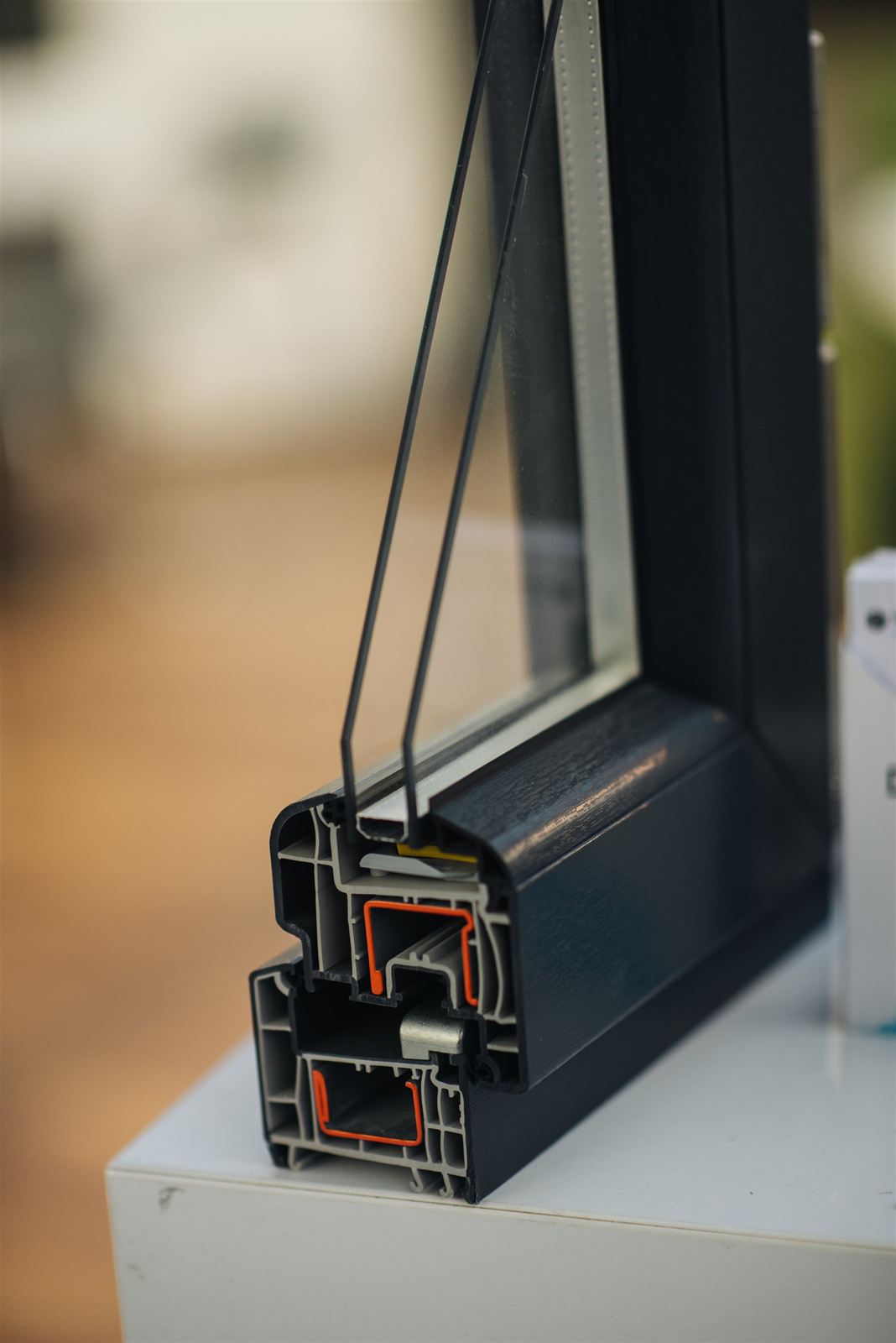
Terminology
- Thermal break: low-conductance barrier between inner and outer aluminum
- Polyamide strut: glass-fiber-reinforced nylon strips crimped between extrusions
- Pour and debridge: polyurethane poured into a channel, then the aluminum bridge is cut away
- Dual thermal break: two breaks in one profile for lower U-factors
- Window wall: floor-to-ceiling windows set between slabs, with slab-edge covers
- Punched opening: individual window set in a masonry, panel, or framed wall
- Receptor / subsill: perimeter channels that take building movement and drain water
- Performance class AW: NAFS architectural class for high-rise and heavy-use buildings
- CRF: condensation resistance factor (AAMA 1503)
- Anodize / PVDF: AAMA 611 anodized or AAMA 2605 fluoropolymer paint finishes
Standards
Ratings
| NAFS class | Typical use |
|---|---|
| R | Single-family residential |
| LC | Light commercial, low-rise multifamily |
| CW | Commercial, mid-rise, schools |
| AW | High-rise, hospitals, heavy-use buildings |
- Thermally broken aluminum windows range from about U-0.35 with triple low-E glazing to U-0.64 with clear double glazing; high-performance fixed units reach about U-0.31
- Specify CRF where interior humidity is high (healthcare, natatoriums, labs)
Test standards
- AAMA/WDMA/CSA 101/I.S.2/A440 (NAFS-22)
- ASTM E283, E331, E330; AAMA 501.2 field water test
- AAMA 1503: thermal transmittance and condensation resistance
- AAMA TIR-A8: structural performance of composite thermal barrier framing
- NFRC 100, 200, and 500
- AAMA 2605 and AAMA 611: finishes
Materials
- 6063 aluminum extrusions: frames and sashes
- Thermal barriers: polyamide struts or poured polyurethane
- Finishes: AAMA 2605 PVDF for exterior color; AAMA 611 Class I anodize for exterior anodized
- Glazing: low-E IGUs, triple glazing for high-performance targets, laminated for acoustic, security, or impact
- Hardware: stainless steel hinges, operators, and multipoint locks
Detailing
- Set windows at the plane of the wall's air and water barrier; align the thermal break with insulation
- Use receptors and subsills with end dams for drainage and movement
- Seal perimeter with backer rod and sealant inside and out; interior air seal tied to the air barrier
- Check condensation at frames in cold climates; specify CRF and frame temperature analysis
- Coordinate anchor spacing with structural backup and wind load
Uses
Specific uses
- Office, school, and healthcare punched openings
- Multifamily window walls and balcony doors
- Historic replacement (custom aluminum hung windows)
- Blast, impact, or acoustic windows
- Operable vents in curtain wall systems
Pros and cons
Pros
- Strong; large sizes and high design pressures
- Slim sightlines and durable factory finishes
- Noncombustible
- Wide range of operating types and custom shapes
Cons
- Higher U-factor than vinyl, fiberglass, or wood without high-performance breaks
- Frame condensation risk in cold climates
- Higher cost than vinyl in residential
- Galvanic corrosion with dissimilar metals if not isolated
Manufacturing and cost
Construction
- Profiles extruded, thermally broken, finished, cut, and assembled with corner keys or screws
- Glazed in the shop or field with gaskets and tapes
- Installed with anchors, receptors, and perimeter sealant
Main manufacturers and suppliers
- Kawneer
- YKK AP America
- Graham Architectural Products
- Winco Window
- Wausau Window and Wall Systems
- Quaker Windows and Doors
Trade association: Fenestration and Glazing Industry Alliance.
Typical costs
- Residential aluminum window, installed: $400 to $850 per window
- Commercial thermally broken aluminum windows are usually priced per project; costs rise with AW class, triple glazing, and custom finishes
Sources
- Construction Specifier: window and storefront thermal performance, https://constructionspecifier.com/window-and-storefront-thermal-performance-what-every-specifier-needs-to-know
- FacilitiesNet: EFCO 2700 series thermally broken window, https://www.facilitiesnet.com/site/pressreleases/EFCO-2700-Series--56795
- Ohio OFCC: 08 51 13 aluminum windows specification, https://dam.assets.ohio.gov/image/upload/ofcc.ohio.gov/OSDM/Files/08_51_13-aluminum_windows.pdf
- FGIA: performance class overview, https://fgiaonline.org/resources/technical-resources/performance-class-overview/
- Oknoplast: window cost by material, https://oknoplast.us/?p=25119
- Wikimedia Commons: Detailed view of a cross-section of a modern window frame shows multiple materials and insulation layers.jpg, by Shixart1985 (CC BY 2.0), https://commons.wikimedia.org/wiki/File:Detailed_view_of_a_cross-section_of_a_modern_window_frame_shows_multiple_materials_and_insulation_layers.jpg