Hardboard
Summary
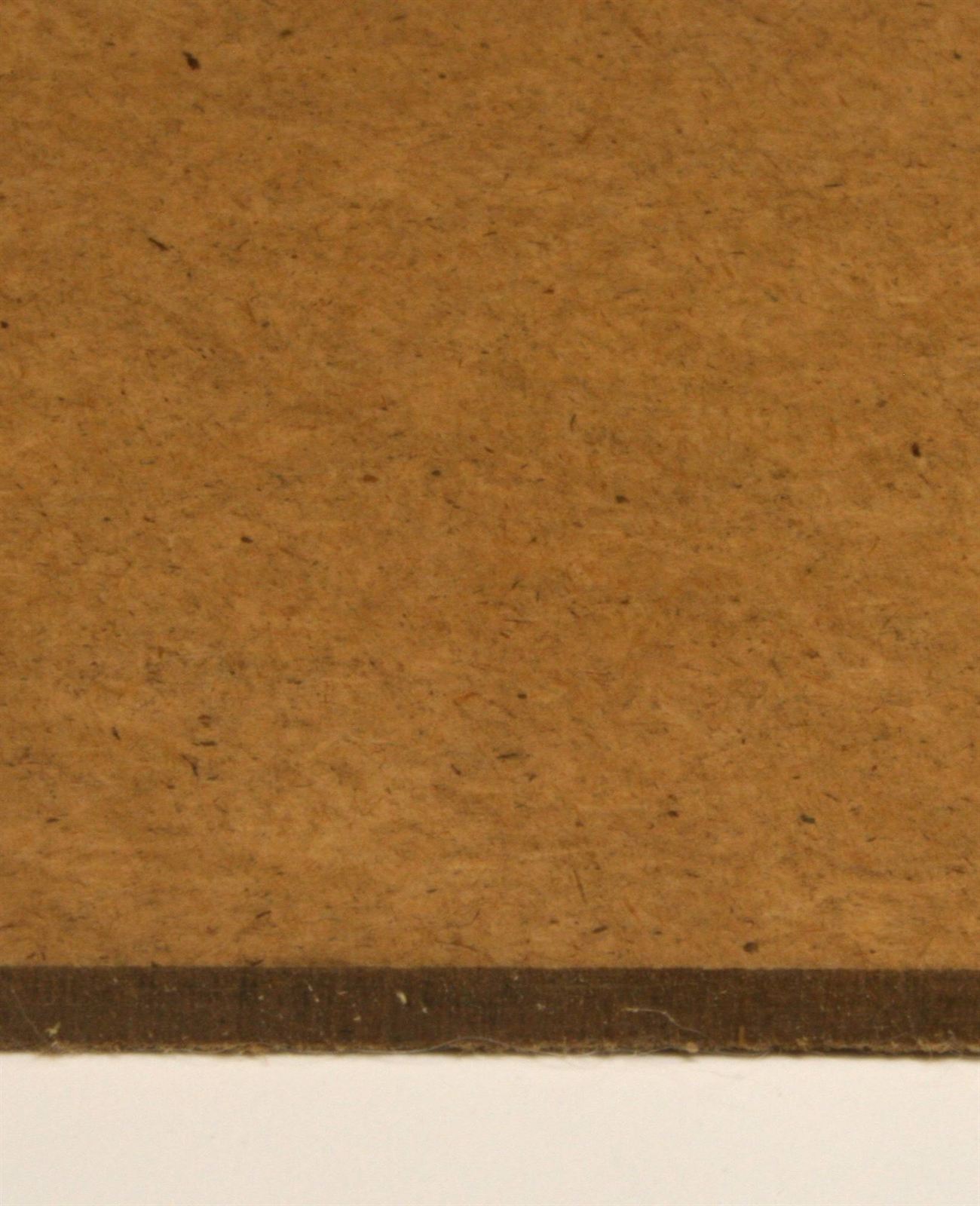
Hardboard is a dense, hard fiberboard made from exploded wood fibers highly compressed, at about 800 to 1,040 kg/m³. Lignin binds the fibers, and tempered hardboard resists water and impact, so it serves as siding, underlayment, and pegboard.
Cols
Terminology
- HDF: high-density fiberboard
- Wet process (Mason method): leaves one smooth side and one textured side from the drying screen
- Dry process: smooth on both sides
- Tempered hardboard: coated with linseed oil and baked
- Perforated hardboard (pegboard): uniform holes for hanging tools
History and demand
Invention
- 1898: a similar product first made in England by hot-pressing waste paper
- Early 1920s: improved high-temperature compression of wet pulp produced a denser board
Composition and production
Manufacturing process
- Wood fibers exploded and compressed by wet or dry process; lignin binds the fibers, though resin is often added
Properties
Physical
- Density: usually about 800 to 1,040 kg/m³ (50 to 65 lb/ft³), denser, stronger, and harder than particleboard and MDF
Thermal and moisture
- Tempering improves water resistance, impact resistance, hardness, rigidity, and tensile strength
Standards
Material specifications
- ANSI A135.4, A135.5, and A135.6: hardboard product types named in the building code
Uses in buildings
Building elements
- Wall Cladding: tempered hardboard siding
- Cabinetry and Casework: panels and backs
Pros and cons
Pros
- Denser and harder than MDF and particleboard
- Needs no added adhesive for binding
- Tempered grades resist water
Cons
- One textured face in the wet process
Sources
- Wikipedia: Hardboard, https://en.wikipedia.org/wiki/Hardboard
- UpCodes: 2024 IBC Chapter 23 wood, https://up.codes/viewer/department-of-defense/ibc-2024/chapter/23/wood
- Wikimedia Commons: Hardboard.jpg, photo by Dave Pape (Public domain), https://commons.wikimedia.org/wiki/File:Hardboard.jpg