Open-Web Steel Joists
Summary
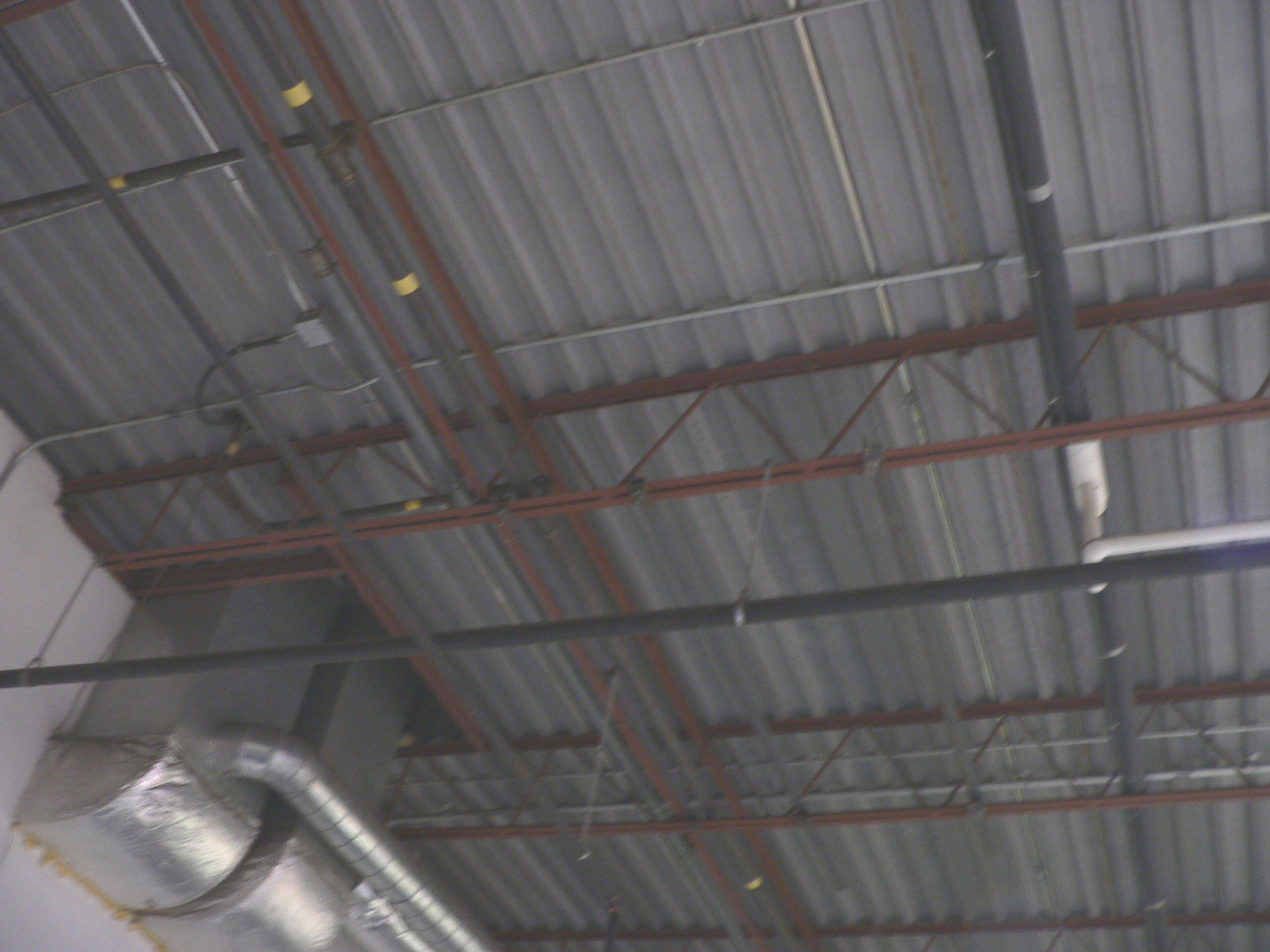
Open-web steel joists are shop-fabricated trusses of angle chords and round or angle web members, spaced along beams or joist girders and topped with steel deck. They are the most economical long-span framing for warehouses, schools, and big-box roofs, but special loads, bridging, uplift, and MEP routing must be specified for the joist supplier.
Cols
Terminology
- K-series: standard joists for short to moderate spans
- LH-series: long-span joists
- DLH-series: deep long-span joists
- Joist girder: heavy primary truss supporting joists at panel points
- KCS joist: K-series joist with constant shear for concentrated loads
- Designation: depth, series, and size number, for example 24K6
- Bridging: horizontal or diagonal bracing between joists for stability during erection and service
- Bearing seat / shoe: joist end that sits on a beam, girder, or wall
- Uplift: net upward wind load on roof joists; requires bottom chord bracing
- Panel point: web-to-chord joint where concentrated loads should be applied
Standards
Sizes
| Series | Depth | Span range |
|---|---|---|
| K | 10 to 30 in. | 10 to 60 ft |
| LH | 18 to 48 in. | 22 to 96 ft |
| DLH | 52 to 120 in. | Up to 240 ft |
- Typical spacing 4 ft to 12 ft o.c.; K-series floor joists commonly about 4 ft or less
Test standards
- SJI 100: K, LH, and DLH joists
- SJI 200: CJ composite joists
- SJI load tables and joist girder tables
- AWS D1.1 welding
Materials
- Hot-rolled angles: top and bottom chords
- Round bars or angles: web members
- Steel deck: roof deck or form deck spanning between joists
- Bridging: angles or bars per SJI tables
Detailing
- Show special loads, concentrated loads, uplift, and drift loads on drawings; the joist supplier designs to them
- Hang MEP loads at panel points or provide added web members
- Coordinate duct passage through web openings with joist geometry
- Provide bottom chord bridging for uplift and seismic
- Design roof drainage slope into joist geometry or seat heights
Uses
Specific uses
- Warehouse and distribution roofs
- School gyms and cafeterias
- Big-box retail
- Light floors in offices and mid-rise buildings
- Long-span roofs over open spaces
Pros and cons
Pros
- Light and economical for long spans
- Fast erection
- Open webs pass ducts and pipes
- Standard load tables simplify design
Cons
- Limited capacity for heavy concentrated loads without special design
- Floor vibration on long spans
- Fire protection usually by rated ceilings or spray
- Lead times and supplier-designed elements require coordination
Manufacturing and cost
Construction
- Chords and webs cut and welded in the shop to SJI tables or special designs
- Erected on beams or girders; welded or bolted at seats; bridging installed before loading
Main manufacturers and suppliers
Trade association: Steel Joist Institute.
Sources
- SJI: properly specifying steel joists, https://steeljoist.org/wp-content/uploads/SJI_Properly-Specifying-Steel-Joists_Final_021819.pdf
- SJI: steel joist applications and capabilities for floor systems, https://steeljoist.org/wp-content/uploads/2021/06/SJI_Updated-Steel-Joist-Applications-and-Capabilities-for-Floor-Systems_June_2021_FINAL_1Slide.pdf
- AISC Modern Steel: open web joists, https://www.aisc.org/globalassets/modern-steel/archives/2012/01/2012v01_open_web.pdf
- UpCodes: 2024 IBC Chapter 22 steel (Section 2207 joists), Chapter 22 Steel: Department of Defense Building Code 2024 | UpCodes
- Wikimedia Commons: Open web steel joists q deck.jpg, by Achim Hering (CC BY 3.0), https://commons.wikimedia.org/wiki/File:Open_web_steel_joists_q_deck.jpg