Leather
Summary
Leather is animal hide, mostly cattle, stabilized by tanning so it resists rot. It gives a durable, repairable interior surface, but tanning chemistry, substrate, and fire performance drive specification.
Cols
Terminology
- Full-grain: hide with the grain layer intact; typically the highest quality
- Top-grain: grain layer sanded or buffed to remove blemishes
- Split: leather from the corium layer below the grain
- Bonded leather: 10 to 90 percent leather fibers, depending on the mix
- Wet white: chrome-free aldehyde-tanned leather
- Ounce (leather thickness): 1/64 in. (about 0.4 mm)
History and demand
Sourcing
- Cattle supply about 65 percent of leather, sheep 13 percent, goats 11 percent, pigs 10 percent; China and India are the leading producers
Composition and production
Manufacturing process
- Chrome tanning: most common method; about 80 percent of leather is chrome tanned
- Vegetable tanning: bark tannins
- Aldehyde tanning: chrome-free
- Alum tawing is not true tanning; the material reverts to rawhide if the alum is washed out
Product forms
- Sides and hides for upholstery, wrapped wall panels, and floor and wall tiles
Grades and types
- Full-grain: grain layer intact
- Top-grain: grain layer sanded
- Split: from the corium; thick hides split into middle and flesh splits
- Bonded: leather fibers in a binder
- Synthetic alternatives: polyurethane or vinyl coating on cloth backing
Properties
Physical
- Thickness: upholstery cowhide about 1.1 to 1.6 mm (0.043 to 0.063 in.)
Durability
- Lasts decades with maintenance; below 40 percent relative humidity leather can dry out
- Takes 25 to 40 years to decompose
Uses in buildings
Building elements
- Wall Cladding: leather-wrapped wall and ceiling panels on Baltic birch plywood or fire-rated substrate, hung with Z-clips
- Resilient Flooring: leather floor and wall tiles
Pros and cons
Pros
- Durable for decades; repairable
- Natural material in many finishes
Cons
- Tanning wastewater and chromium pollution when poorly managed
- Dries out below 40 percent relative humidity
- Slow to biodegrade
Sustainability
Embodied carbon
- Bovine leather carbon footprint 65 to 150 kg CO₂e per square meter
Health
- Tanning wastewater: 20 to 80 m³ per tonne of hide, chromium 100 to 400 mg/L, sulfide 200 to 800 mg/L; solid waste up to 70 percent of wet hide weight
- Trivalent chromium used in tanning is not toxic; other byproducts can be
- Formaldehyde tanning is being phased out
Manufacturing and cost
Main manufacturers and suppliers
Trade association: Leather Working Group.
Sources
- Wikipedia: Leather, https://en.wikipedia.org/wiki/Leather
- Spinneybeck: about us, https://www.spinneybeck.com/about-us
- Garrett Leather: leather wallcoverings, https://garrettleather.com/blog/post/leather-wallcoverings
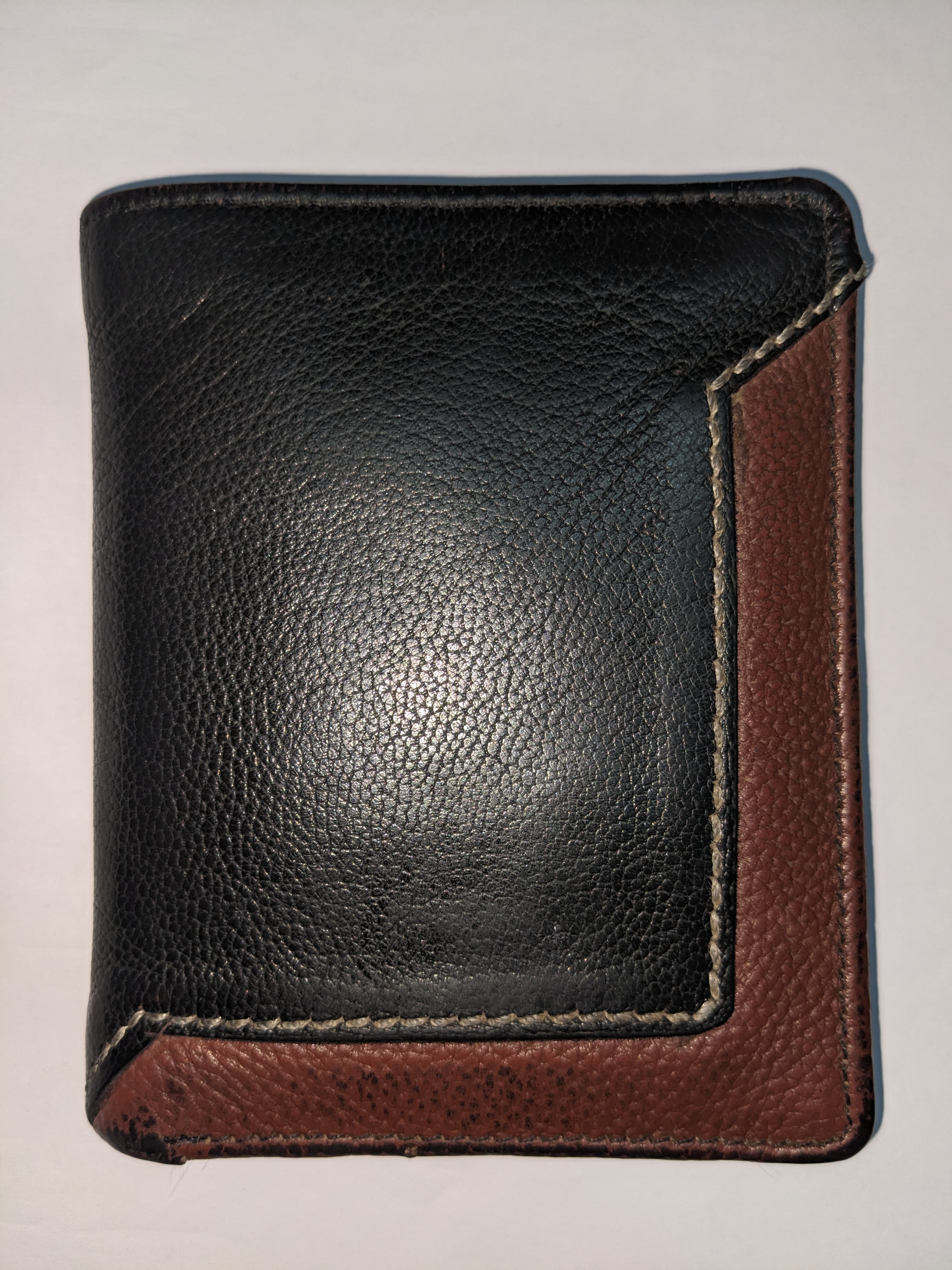
- Wikimedia Commons: Aarong leather wallet.jpg, photo by Nafis Fuad Ayon (CC BY-SA 4.0), https://commons.wikimedia.org/wiki/File:Aarong_leather_wallet.jpg