Grading and Stormwater Strategy
Summary
Grading and stormwater strategy shapes the ground so water drains away from buildings and uses green infrastructure to hold and infiltrate runoff. Grade, setbacks from foundations, and soil infiltration set what is practical, and the adopted code and local stormwater rules govern the numbers.
Cols
Types
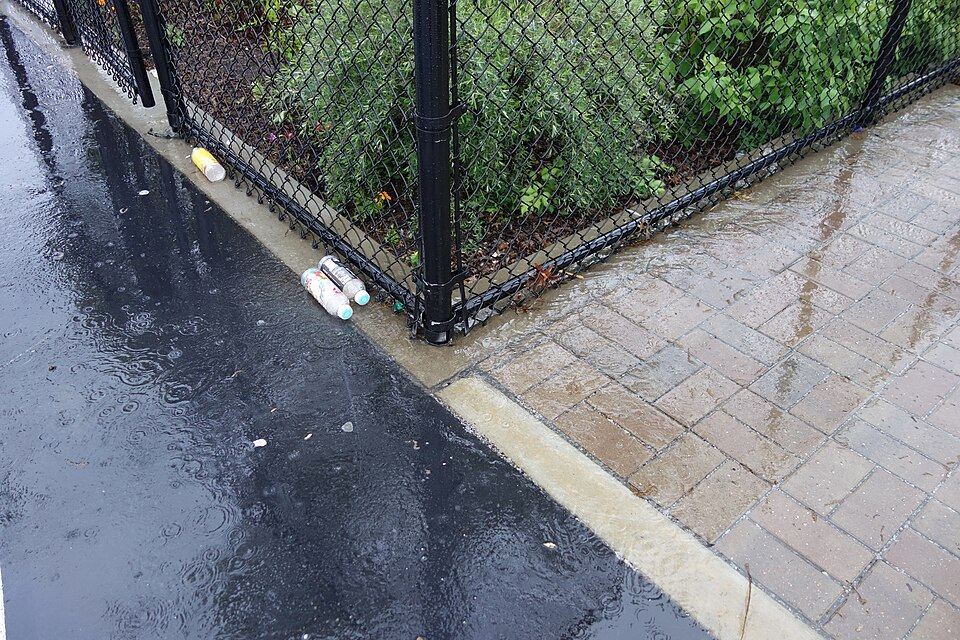
- Rain garden: engineered sunken area that collects rainwater from roofs, walks, and streets
- Bioswale: long, narrow vegetated channel with absorbent soils
- Permeable pavement: water flows through the gravel layers and infiltrates or drains to an underdrain
Detailing
- Rain garden location: flat or gently sloped, downslope of the runoff source
- Rain garden setbacks: one municipal manual puts the inflow point at least 5 ft from the foundation and the ponding area about 10 ft away; local setbacks vary
- Grade at the building: slope away from foundations; the minimum slope and distance are set by the adopted building code and differ by edition and local amendment
- Impervious surfaces near buildings: drain away from the foundation
Coordination
- Soils: infiltration depends on soil type; see the soils note
- Floodplain: grading in a mapped flood hazard area follows local floodplain rules
- Hardscape: permeable paving needs a base designed for storage and drainage
Sources
- City of Gresham, OR: rain garden manual, https://greshamoregon.gov/globalassets/city-departments/environmental-services/rain-garden-manual.pdf
- U.S. EPA: types of green infrastructure, https://www.epa.gov/green-infrastructure/types-green-infrastructure
- Wikimedia Commons: IS 250 Playground td (2019-05-13) 41 - Rain Garden.jpg, by Tdorante10 (CC BY-SA 4.0), https://commons.wikimedia.org/wiki/File:IS_250_Playground_td_(2019-05-13)_41_-_Rain_Garden.jpg