Ceramic and Porcelain Tile
Summary
Ceramic and porcelain tile are fired clay bodies, glazed or unglazed, set in cement mortar or thinset over a prepared substrate, with grout joints and movement joints. Tile is hard-wearing and water resistant, but substrate flatness, mortar coverage, movement joints, and slip resistance decide whether it cracks, debonds, or causes falls.
Cols
Terminology
- Porcelain: dense, low-absorption tile body; through-body or glazed
- Ceramic (non-porcelain): higher absorption; mainly walls and light-duty floors
- Quarry tile: extruded unglazed tile for kitchens and industrial floors
- Large-format tile (LFT): tile with any side 15 in. or longer; needs flatter substrates and larger-notch trowels
- Gauged porcelain tile / panels (GPT): thin, large porcelain panels
- Thinset: cement mortar; modified thinset contains latex polymers
- Uncoupling membrane: sheet that separates tile from substrate movement
- Crack isolation membrane: liquid or sheet bridging small substrate cracks
- Movement joint: soft, sealant-filled joint through tile and setting bed (TCNA EJ171)
- DCOF: dynamic coefficient of friction; slip resistance metric in ANSI A326.3
- Lippage: height difference between adjacent tile edges
Standards
Ratings
- Slip resistance: ANSI A326.3 sets wet DCOF of 0.42 or more for level interior floors walked on wet; products below 0.42 only where kept dry; 0.55 often cited for interior wet areas
- Movement joints (TCNA EJ171): interior about every 20 ft to 25 ft each way; exterior and sun-exposed interior every 8 ft to 12 ft; designer shows locations on drawings
- Water absorption: porcelain is the low-absorption class for exterior and freeze-thaw use
Test standards
- ANSI A137.1: ceramic tile specifications (includes A326.3 slip resistance)
- ANSI A137.3: gauged porcelain tile and panels
- ANSI A108 series: installation of ceramic tile
- ANSI A118 series: setting materials and grouts
- TCNA Handbook: installation methods and movement joint guidance (EJ171)
Materials
- Porcelain tile: floors, exterior, and high traffic
- Glazed ceramic: walls and light-duty floors
- Quarry tile: commercial kitchens with epoxy grout
- Setting materials: modified thinset, large-and-heavy-tile mortars, epoxy
- Grouts: cementitious, high-performance, or epoxy for chemical and stain resistance
- Membranes: waterproofing, crack isolation, and uncoupling
Detailing
- Specify substrate flatness, especially for large-format tile
- Show movement joints at perimeters, changes of plane, over structural joints, and at EJ171 spacing
- Waterproof wet areas and slope to drains
- Select tile by DCOF and use category for entries, wet areas, and ramps
- Set tile depressions in slabs for thick-bed installations
- Detail transitions to adjacent floors without trip edges
Uses
Specific uses
- Restrooms, showers, and locker rooms
- Lobbies and corridors
- Commercial kitchens (quarry tile with epoxy grout)
- Healthcare and lab support spaces
- Exterior plazas and pool decks (porcelain rated for exterior)
Pros and cons
Pros
- Very durable and water resistant
- Wide range of sizes, colors, and textures
- Low maintenance; resists stains and chemicals with proper grout
- Fire resistant and inert
Cons
- Hard, cold, and noisy underfoot
- Cracks if substrate moves or movement joints are missing
- Grout joints stain without proper grout and sealing
- Labor-intensive installation; large-format tile needs skilled setters
Manufacturing and cost
Construction
- Clay bodies pressed or extruded, glazed or unglazed, and kiln fired
- Set over prepared substrates with thinset or mortar bed; grouted and sealed
Main manufacturers and suppliers
- Daltile
- Crossville
- Florim
- LATICRETE (setting materials)
- MAPEI (setting materials)
- Custom Building Products (setting materials)
Trade association: Tile Council of North America.
Typical costs
- Porcelain tile, installed: $8 to $30 per sq ft depending on size, format, substrate prep, and pattern
- Labor alone: about $4 to $22 per sq ft
Sources
- Crossville: measuring for slip prevention (DCOF), https://CrossvilleInc.com/Resources/Tile-101/DCOF
- Creative Materials: ANSI A326.3 product classification standard, https://www.creativematerialscorp.com/tile-talk/tile-talk-february-2022-new-ansi-a326-3-product-classification-standard/
- TileLetter: going deeper into TCNA EJ171, https://www.tileletter.com/?p=36958
- LATICRETE: a quick look at movement joints, https://cdn.laticrete.com/blog/2017/september/a-quick-look
- Rubi: average cost to install tile floors, https://www.rubi.com/us/blog/average-cost-to-install-tile-floors/
- Inch Calculator: tile floor cost, 2026, https://www.inchcalculator.com/how-much-does-a-tile-floor-cost
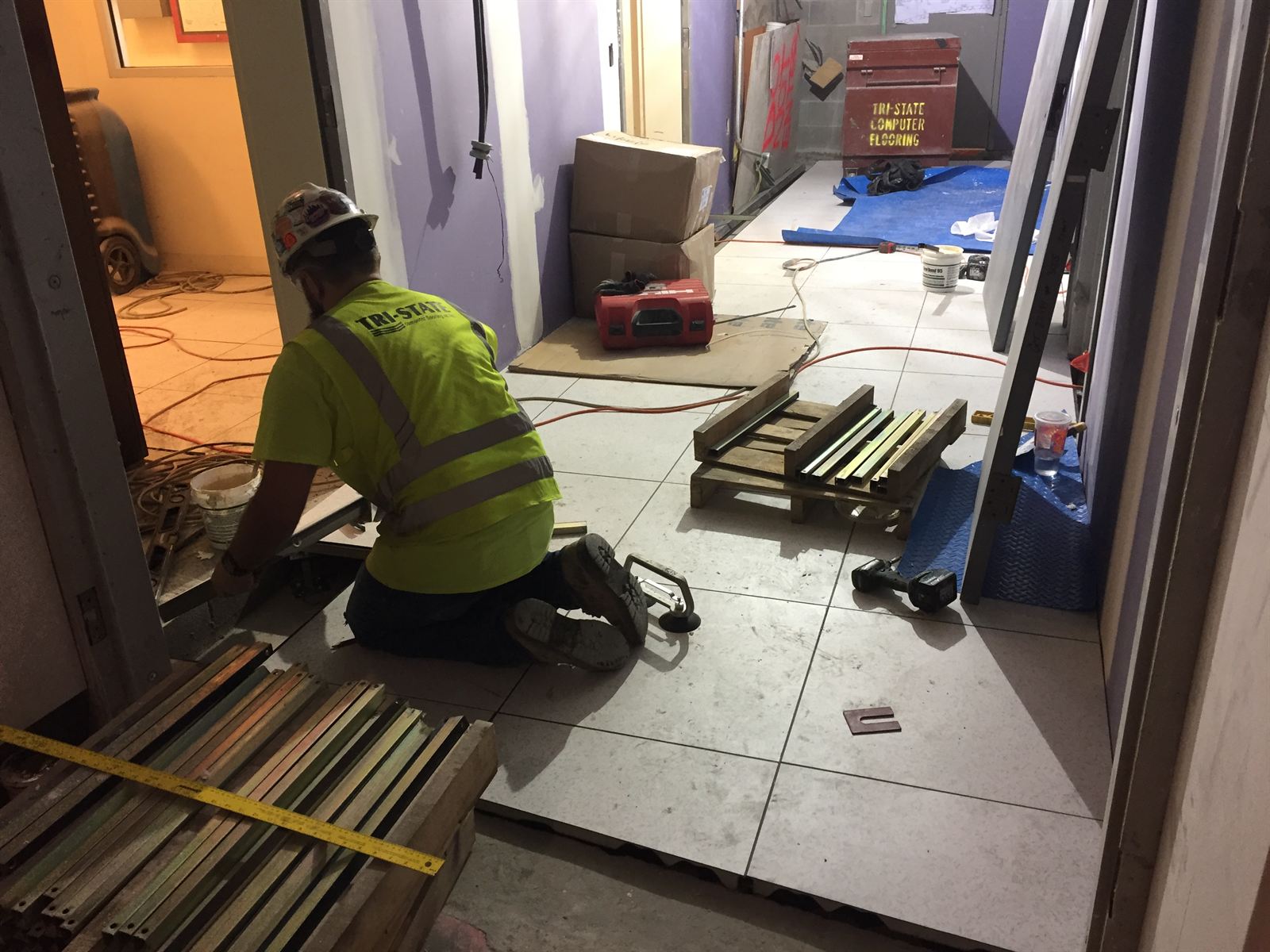
- Wikimedia Commons: Floor tile installation in the back of house area of the LIRR passenger concourse. 08-29-2019 (48647691101).jpg, by MTA Capital Construction Mega Projects (CC BY 2.0), https://commons.wikimedia.org/wiki/File:Floor_tile_installation_in_the_back_of_house_area_of_the_LIRR_passenger_concourse._08-29-2019_(48647691101).jpg