Switchboards
Summary
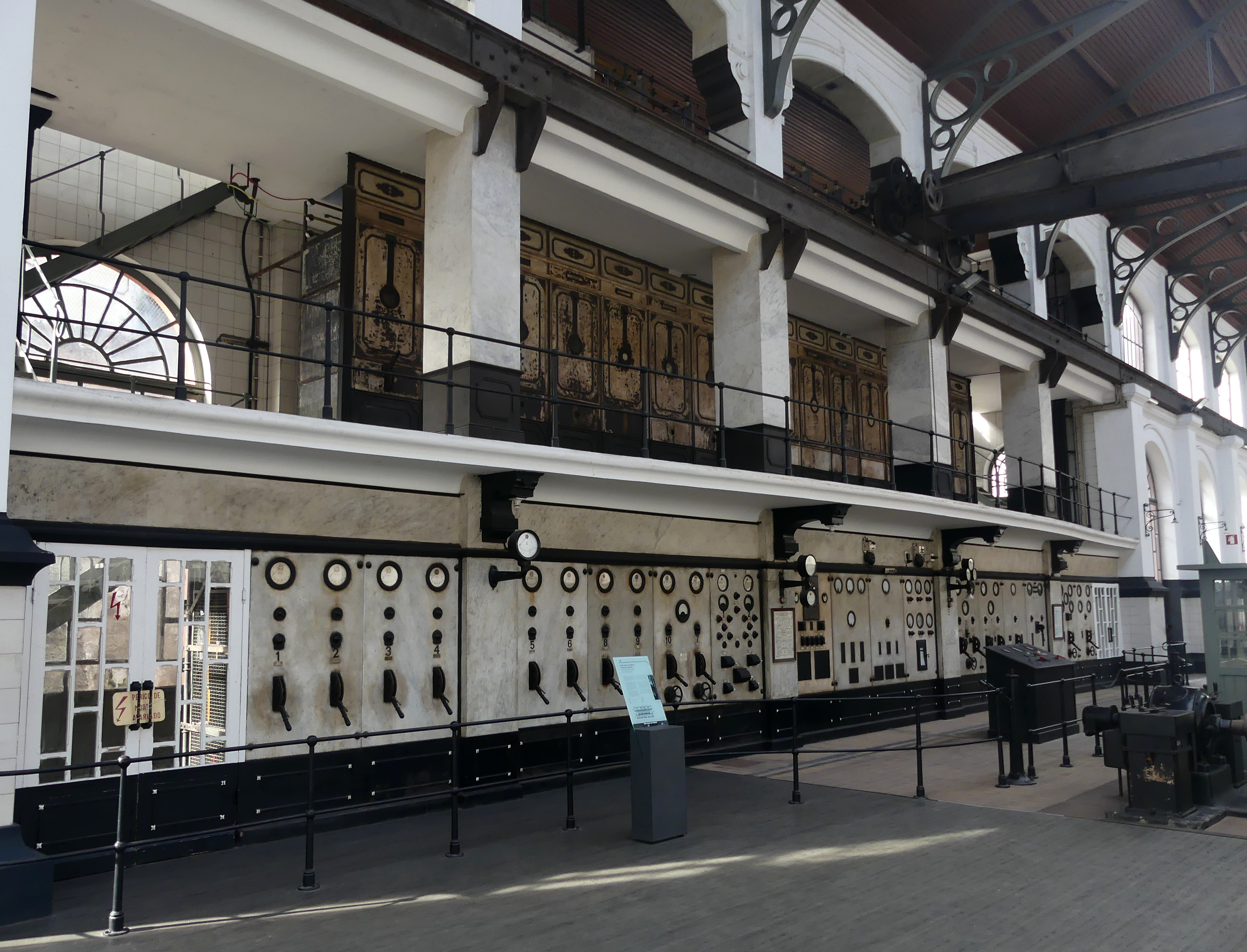
Switchboards are freestanding sections of vertical and horizontal bus with a main device and feeder breakers or fused switches, typically used as service equipment or main distribution in commercial buildings, while heavier switchgear serves critical and large facilities. They set the size of the main electrical room, so lineup length, front and rear access, working clearances, egress doors, and delivery paths must be planned early.
Cols
Terminology
- Dead-front: no exposed live parts on the front
- Switchboard / switchgear: UL 891 switchboards versus UL 1558 metal-enclosed low-voltage switchgear with draw-out breakers
- Main device: main breaker or fused switch; or up to multiple disconnects in older service arrangements
- Bus: copper or aluminum bars that carry current through the sections
- Front-accessible / rear-accessible: whether connections can be reached from the front only
- Group-mounted / individually mounted: feeder devices in shared or separate compartments
- Short-circuit current rating (SCCR): maximum fault current the assembly can withstand
- Ground-fault protection of equipment: required on large solidly grounded services
- Metering section / utility CT compartment
Standards
Ratings
- Voltage typically 208Y/120 V or 480Y/277 V; switchboards rated up to 1,000 V
- Bus ratings commonly from several hundred to several thousand amperes
- Short-circuit rating must equal or exceed the available fault current
- Large equipment rooms need entrances at each end of the working space
Test standards
- UL 891: dead-front switchboards
- UL 1558: metal-enclosed low-voltage power circuit breaker switchgear
- NFPA 70 (NEC): switchboards, working space, and arc-flash labeling
- NFPA 70E: electrical safety in the workplace (owner operations)
Components
- Main and distribution sections: bus, main device, and feeder devices
- Breakers or fused switches: molded-case, insulated-case, or power circuit breakers
- Metering: utility metering and power monitoring
- Surge protective device: integral or adjacent
- Enclosure: steel sections on a housekeeping pad
Detailing
- Size rooms for the lineup, required working space, and future sections
- Provide two exits from large equipment working spaces, with doors swinging out and panic hardware where required
- Keep piping and ducts out of the dedicated space above equipment
- Set equipment on a housekeeping pad; coordinate conduit stub-ups and pull boxes
- Plan delivery routes for shipping splits through doors and corridors
Uses
Specific uses
- Commercial service entrance and main distribution
- Hospitals and data centers (switchgear)
- Industrial plants
- Multifamily buildings with meter centers
- Campus and mixed-use main electrical rooms
Pros and cons
Pros
- Distributes large services in one lineup
- Expandable with added sections
- Monitoring and metering integration
Cons
- Large footprint and clearance requirements
- Long lead times for custom lineups
- Arc-flash hazards require labeling and safe work practices
Manufacturing and cost
Construction
- Factory-built to the one-line diagram, shipped in sections, set on pads, bolted together, terminated, tested, and energized
Main manufacturers and suppliers
Trade associations: NFPA and NECA.
Sources
- Payapress: UL 891 vs UL 1558 vs UL 67, panelboard vs switchboard vs switchgear, https://payapress.com/panelboard-vs-switchboard-vs-switchgear/
- ComplianceGate: UL 891 switchboards standard overview, https://www.compliancegate.com/ul-891/
- University of Houston: 26 24 13 low-voltage switchboards specification, https://www.uh.edu/facilities-planning-construction/vendor-resources/owners-design-criteria/master-specs/pdf/26-24-13-low-voltage-switchboards.pdf
- EC&M: NEC requirements for working clearances, https://www.ecmweb.com/national-electrical-code/code-basics/article/21259374/nec-requirements-for-working-clearances
- Wikimedia Commons: STCP - Electrical Switchboard.jpg, by wdwd (CC BY-SA 4.0), https://commons.wikimedia.org/wiki/File:STCP_-_Electrical_Switchboard.jpg