Titanium
Summary
Terminology
- CP titanium: commercially pure, unalloyed grades (Grade 1 to 4)
- Grade 5 / Ti-6Al-4V: alloy with about 6 percent aluminum and 4 percent vanadium
- Grade 23: extra-low-interstitial (ELI) version of Ti-6Al-4V
- Kroll process: magnesium reduction of titanium tetrachloride to titanium sponge
- UNS R50250 / R50400: Grade 1 / Grade 2
History and demand
Invention
- 1910: Matthew Hunter produced 99.9 percent pure titanium
- 1932: William Kroll produced titanium with calcium, then refined the process with magnesium about 1940; the Kroll process remains the main commercial route
Sourcing
- 2024 world titanium sponge output was about 320,000 metric tons; China about 220,000 tons (69 percent), Japan 55,000 tons (17 percent)
- United States sponge imports in 2025 through July came from Japan (73 percent), Kazakhstan (13 percent), and Saudi Arabia (13 percent); no sponge has been produced in the US since 2024 (USGS)
Composition and production
Manufacturing process
- Ilmenite and rutile ore reduced to sponge by the Kroll process, then melted and rolled
Product forms
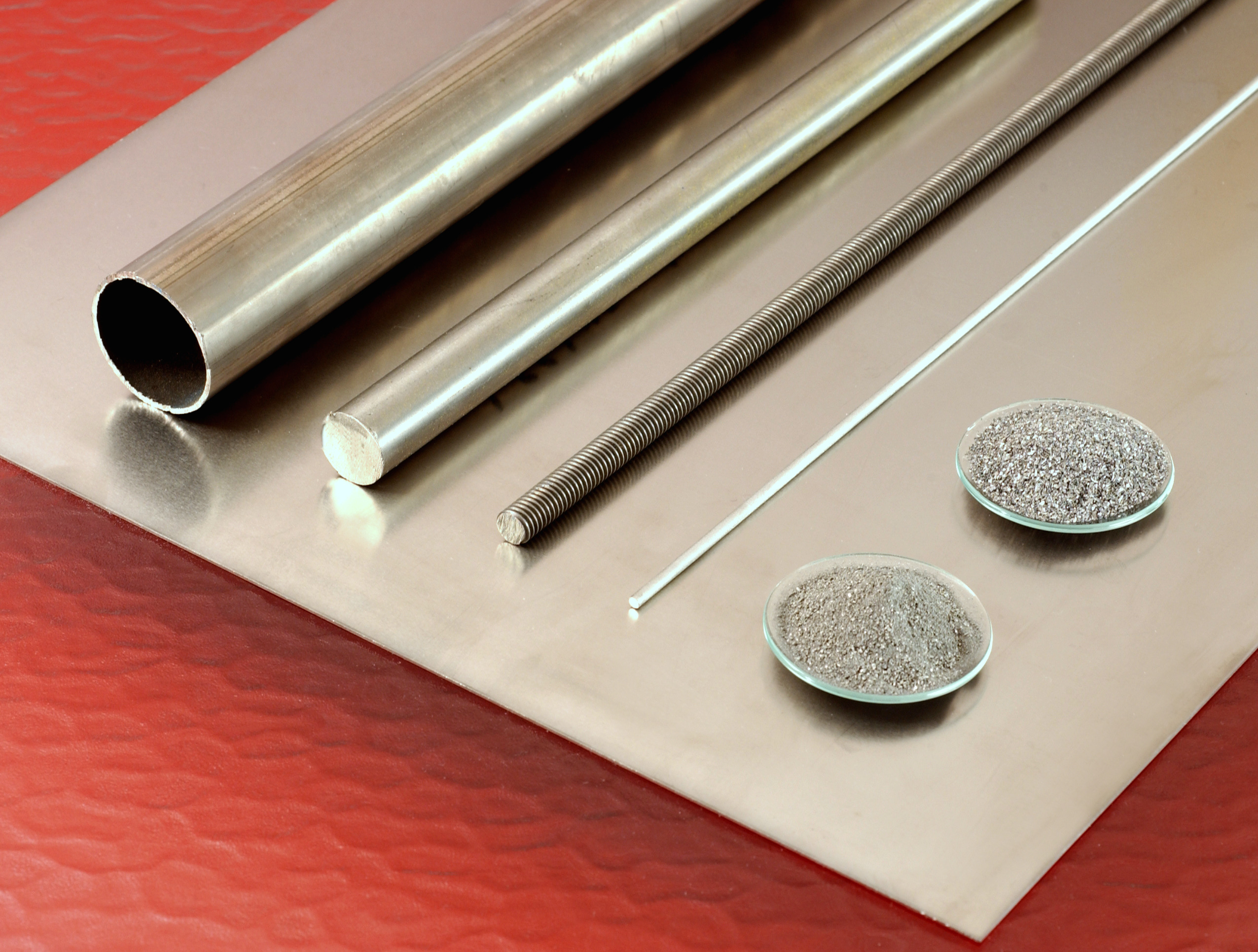
- Strip, sheet, and plate (ASTM B265), bar, and powder
Grades and types
- Grade 1 and Grade 2: unalloyed titanium; Grade 2 is the common architectural sheet grade
- Grade 2H: Grade 2 with 58 ksi minimum tensile strength
- Grade 5: Ti-6Al-4V alloy
- Grade 23: ELI variant of Ti-6Al-4V
- Beta C: alloy with tensile strength above 1,400 MPa (203 ksi)
Properties
Physical
- Density: 4.502 g/cm³ (281 lb/ft³) at 68°F
- Melting point: 1,668°C (3,034°F)
Mechanical
- Tensile strength (99.2 percent CP): about 434 MPa (63 ksi)
- Modulus: 120 GPa (17,400 ksi)
- More than twice as strong as 6061-T6 aluminum at about 60 percent greater density
- Strength decreases above 430°C (806°F)
Thermal and moisture
- Thermal conductivity: 21.9 W/(m·K), about 152 Btu·in./(h·ft²·°F)
- Thermal expansion: 9.68 × 10⁻⁶/K at 68°F, about 5.4 × 10⁻⁶ in./in./°F
Durability
- Passive oxide film 1 to 2 nm thick, growing to about 25 nm over four years
- Resists sea water, aqua regia, and chlorine
- Dissolves in dilute hydrofluoric acid and in hot hydrochloric and sulfuric acid
Standards
Material specifications
- ASTM B265: titanium and titanium alloy strip, sheet, and plate (B265-25)
Uses in buildings
Building elements
- Metal Wall Panels: sheet cladding and facade elements
- Standing Seam Metal Roofing: roofing sheet
Pros and cons
Pros
- Passive oxide film resists sea water and chlorine
- High strength relative to weight
Cons
- High market value
- Attacked by hydrofluoric acid and hot hydrochloric or sulfuric acid
- Strength falls above 430°C
Sustainability
Recycled content and end of life
- Scrap titanium can be recycled into powder
Manufacturing and cost
Main manufacturers and suppliers
Trade association: International Titanium Association.
Sources
- Wikipedia: Titanium, https://en.wikipedia.org/wiki/Titanium
- ASTM: B265 listing, https://store.astm.org/b0265-02.html
- Performance Titanium Group: ASTM B265 grade 2, https://performancetitanium.com/astm-b265-grade-2/
- Wikimedia Commons: Titanium products.jpg, photo by Mark Fergus (CC BY 3.0), https://commons.wikimedia.org/wiki/File:Titanium_products.jpg
- USGS: Mineral Commodity Summaries 2026, titanium, https://pubs.usgs.gov/periodicals/mcs2026/mcs2026-titanium.pdf