Natural Gas and Fuel Service
Summary
Natural gas reaches a building through a service line from the utility's main, a meter, and a regulator, with piping beyond the meter owned by the customer. Meter and regulator vent clearances to openings and ignition sources, and the utility's rules for relocating or abandoning a service, set the layout.
Cols
Scope
- Source: the utility gas main, operated by a regulated gas utility
- Delivery: tap and service line to a meter set with a regulator, then customer piping to appliances
- Other fuels: propane and fuel oil are delivered to tanks on the site and are not covered here
Terminology
- Service line: pipe from the main to the meter set
- Meter set / regulator: meter and pressure regulator at the building
- Regulator vent: relief vent that must terminate where gas can disperse safely
- Inactive / abandoned service: a service no longer supplying gas
- Purging: removing gas from a line before cutting or abandoning it
- Shutoff: the service valve at the meter
Components
- Tap and service line: PE or steel pipe in a trench
- Meter and regulator set
- Meter protection: bollards where vehicles can reach it
- Customer piping: after the meter
Coordination
- Application: request service from the gas utility, who sets meter location, pressure, and connection fees
- Clearances: summary tables give a regulator vent clearance of 3 ft from windows and openings and 10 ft from mechanical air intakes; NFPA 54 (2009 edition) Section 5.8.5.1 calls for a regulator vent at least 3 ft from a source of ignition; confirm against the adopted code and the utility's requirements
- Meter placement: gas must not be able to migrate into building openings, and meters are not placed in breezeways where it can
- Electrical equipment: keep meters and vents clear of electric meters and panels as the utility requires
- Locates: call 811 before excavating; gas lines are marked yellow in the standard color code
Relocation and disconnection
- Abandoned service defined: one state regulation treats a service as abandoned when it is cut off at or as near as practical to the main, purged of gas except where the volume is so small that there is no hazard, and sealed
- Inactive services: another state requires an inactive service to be physically disconnected at the main and purged within two years
- Alternative to cutting: a federal interpretation accepted an expandable plastic device inserted into a low-pressure service line to stop flow under 49 CFR 192.727(d)(2)
- Relocating a meter or service: a request to the utility, which moves the meter set and may replace the service line
- Replacing a main: services are moved to the new main before the old main is cut and abandoned and purged
- Before demolition: have the utility shut off and abandon the service; do not cut or cap lines yourself
- Who pays: relocation caused by private development is generally charged to the developer; confirm with the utility's rules
Sources
- Massachusetts: 220 CMR 107, abandonment of gas service lines, https://www.mass.gov/doc/220-cmr-107-abandonment-of-gas-service-lines-and-leakage-survey-procedures/download
- Wisconsin: PSC 135.727 inactive service lines, https://regulations.justia.com/states/wisconsin/psc/chapter-psc-135/subchapter-ii/section-psc-135-727
- PHMSA: 1983 interpretation on shutting off service lines, https://www.phmsa.dot.gov/sites/phmsa.dot.gov/files/legacy/interpretations/Interpretation Files/Pipeline/1983/PI83019.pdf
- InspectApedia: gas meter clearances, https://inspectapedia.com/plumbing/Gas_Meter_Clearances.php
- Vermont Electric Cooperative: clearance to natural gas, https://vermontelectric.coop/client_media/files/401_Clearance_Natural_Gas.pdf
- Wisconsin Public Service: meter placement diagram, https://www.wisconsinpublicservice.com/services/pdf/meter-placement-diagram.pdf
- Williams: excavator safety guide, https://www.williams.com/wp-content/uploads/sites/8/2023/07/English-Excavators.pdf
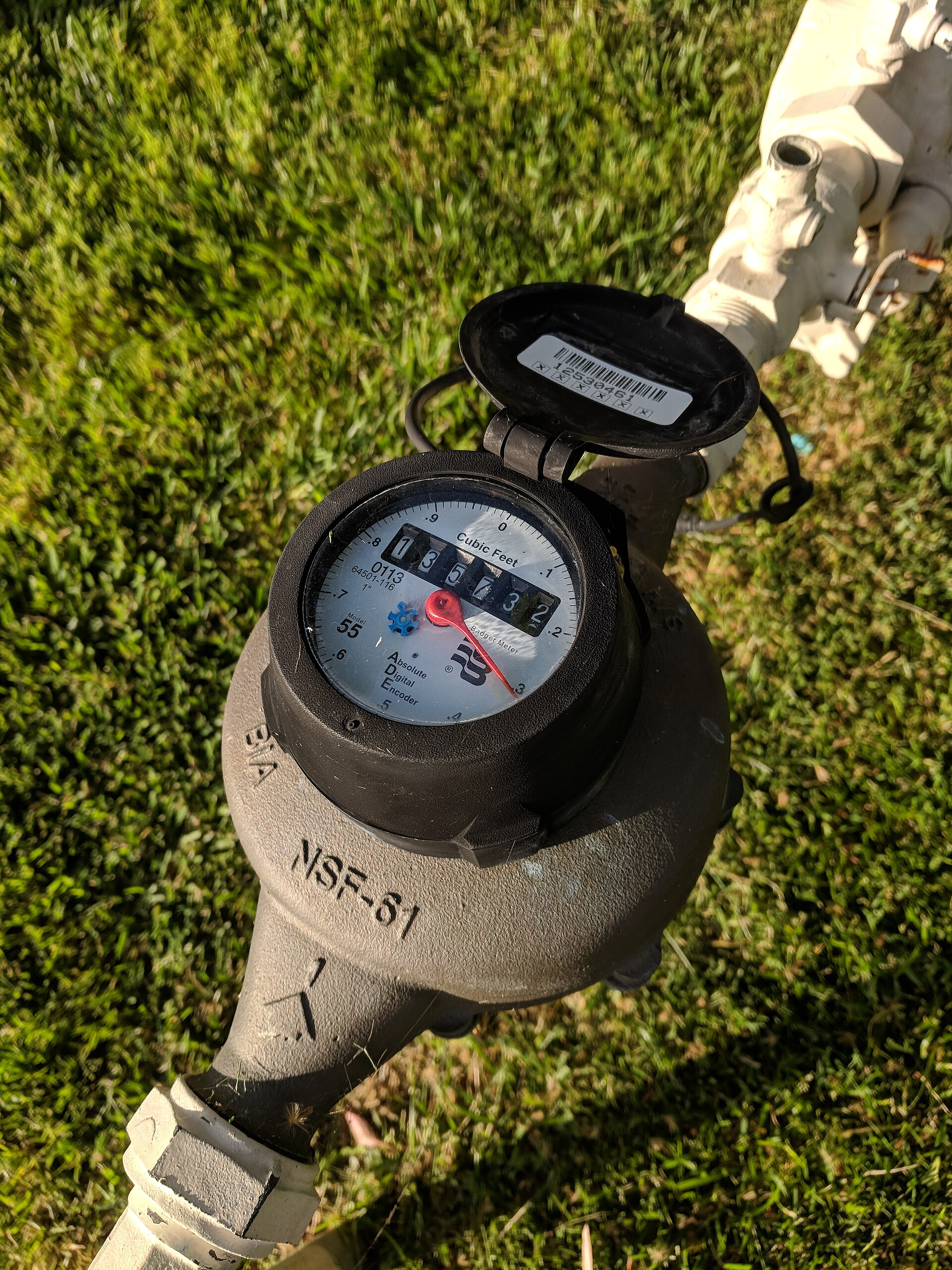
- Image: Gas meter on lawn.jpg, Grendelkhan, CC BY-SA 3.0, https://commons.wikimedia.org/wiki/File:Gas_meter_on_lawn.jpg