PVC Roofing
Summary
PVC roofing is a plasticized, reinforced polyvinyl chloride sheet, mechanically attached, adhered, or ballasted, with hot-air-welded seams; KEE-alloyed versions use a more permanent polymer plasticizer. It is chosen over TPO where grease, chemicals, or fire performance matter, and for long welded-seam reliability, at a higher cost.
Cols
Image
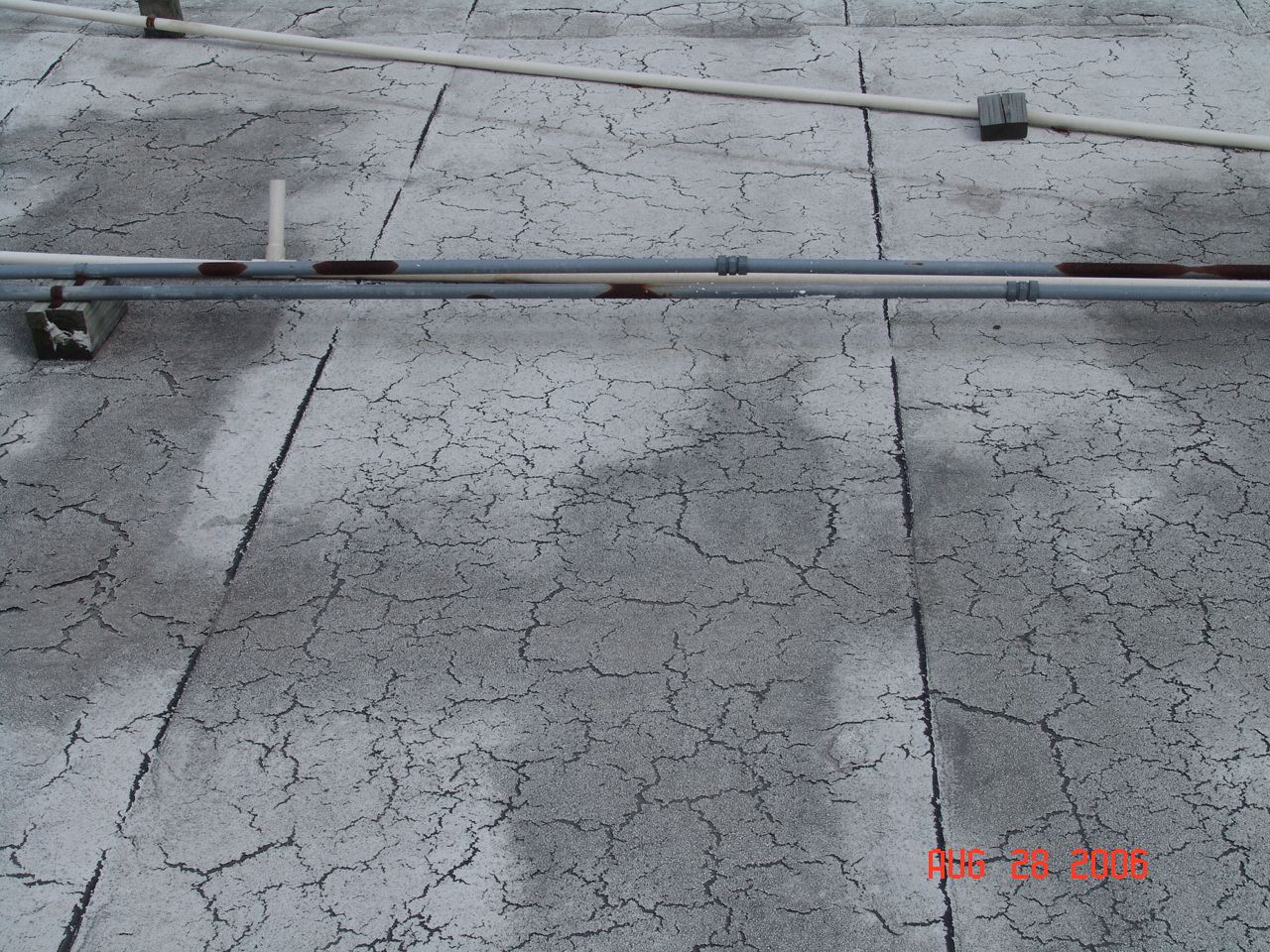
Terminology
- PVC: polyvinyl chloride; made flexible with plasticizers
- KEE: ketone ethylene ester; polymer alloy used in PVC/KEE membranes for plasticizer permanence
- Scrim-reinforced: polyester reinforcement for mechanically attached systems
- Fleece-backed: felt-backed sheet for adhered systems
- Plasticizer migration: loss of plasticizer over time; causes shrinkage and embrittlement in older or poor formulations
- Hot-air welding: fused seams; reweldable in service
- Incompatibility: PVC must be separated from asphalt, coal tar, and polystyrene insulation with slip sheets
- Coated metal: PVC-laminated sheet metal for edges and flashings, welded to the membrane
Standards
Thicknesses
- Sheet thickness set by manufacturer and warranty; specify both overall thickness and thickness over scrim
- ASTM D4434 requires at least 16 mils of material over the scrim, measured per ASTM D7635; thickness tolerance about plus or minus 10 percent
Ratings
- Wind uplift by tested assembly (FM, UL)
- Fire classification as an assembly; PVC is inherently fire-retardant
- Cool roof ratings from CRRC
Test standards
- ASTM D4434: PVC sheet roofing
- ASTM D6754: KEE-based sheet roofing
- ASTM D7635: thickness over scrim
- FM 4474, UL 580, UL 1897: wind uplift
- ANSI/SPRI ES-1 and RP-4
- ASTM E108 / UL 790
Materials
- Membrane: white, tan, gray, and custom colors; reinforced or fleece-backed
- PVC/KEE membranes: restaurants, chemical exposure, and long warranties
- Insulation and cover boards: polyiso with gypsum or high-density cover board; slip sheet over incompatible materials
- Accessories: PVC-coated metal, prefabricated boots, walkway rolls
- Decorative ribs: applied profiles that mimic standing seam on visible roofs
Detailing
- Separate from asphalt-based materials and EPS/XPS with approved slip sheets
- Weld flashings to coated metal edges and counterflashings
- Use walkway pads around rooftop units and grease exhaust
- Slope to drains with tapered insulation and crickets
- Fasten perimeters and corners per the tested assembly
Uses
Specific uses
- Restaurants and food processing (grease exposure)
- Hospitals, labs, and chemical exposure areas
- Vegetated roofs and plaza decks (root-resistant formulations)
- Visible roofs with color or rib profiles
- Reroofing over existing single-ply with slip sheets
Pros and cons
Pros
- Resistant to grease, many chemicals, and fire
- Strong, reweldable seams
- Long track record in Europe and the US
- Reflective and colorable
Cons
- Higher cost than TPO and EPDM
- Incompatible with asphalt and polystyrene without separation
- Plasticizer loss in lower-quality sheets
- Less flexible in cold weather during installation
Manufacturing and cost
Construction
- Calendered or extruded sheets with scrim or fleece; installed like TPO with welded seams
Main manufacturers and suppliers
Trade associations: National Roofing Contractors Association and SPRI.
Typical costs
- PVC roof, installed, with insulation: $6 to $16 per sq ft; higher with KEE membranes and long warranties
Sources
- Carlisle SynTec: understanding ASTM standards for roofing membranes, https://www.carlislesyntec.com/en/Resources/Media/Blog-Landing-Page/SpecTopics/2021/12/16/Understanding-ASTM-Standards-for-Roofing-Membranes
- ICC-ES: ESR-1463 Carlisle EPDM, PVC, and TPO roofing, https://icc-es.org/wp-content/uploads/report-directory/ESR-1463.pdf
- Professional Roofing: TPOs face a changing landscape, https://professionalroofing.net/articles/article/4063
- Roof Observations: single-ply roof cost guide, https://roofobservations.com/single-ply-roof-cost-guide/
- Fixr: flat roof materials and costs, 2026, https://www.fixr.com/articles/best-flat-roof-materials
- Wikimedia Commons: Roofing Membrane Failure 1.jpg, by GRALISTAIR (CC BY-SA 4.0), https://commons.wikimedia.org/wiki/File:Roofing_Membrane_Failure_1.jpg