Electric Service to the Site
Summary
Electric service reaches a site from the utility's distribution lines, either overhead or underground, through a transformer and a service conductor to the building's meter and service equipment. The utility designs and prices the service from a formal application, and transformer location, easements, and clearances must be coordinated with the utility long before construction.
Cols
Scope
- Source: the utility's distribution network, owned by an investor-owned, municipal, or cooperative utility
- Delivery: primary line, utility transformer on a pole or pad, service conductors to the meter, and the building service equipment
- Interface: the meter and service equipment are covered in Service Entrance and Metering and Switchboards
Terminology
- Service lateral / service drop: underground or overhead conductors from the utility to the building
- Primary / secondary: higher-voltage distribution and the lower-voltage side after the transformer
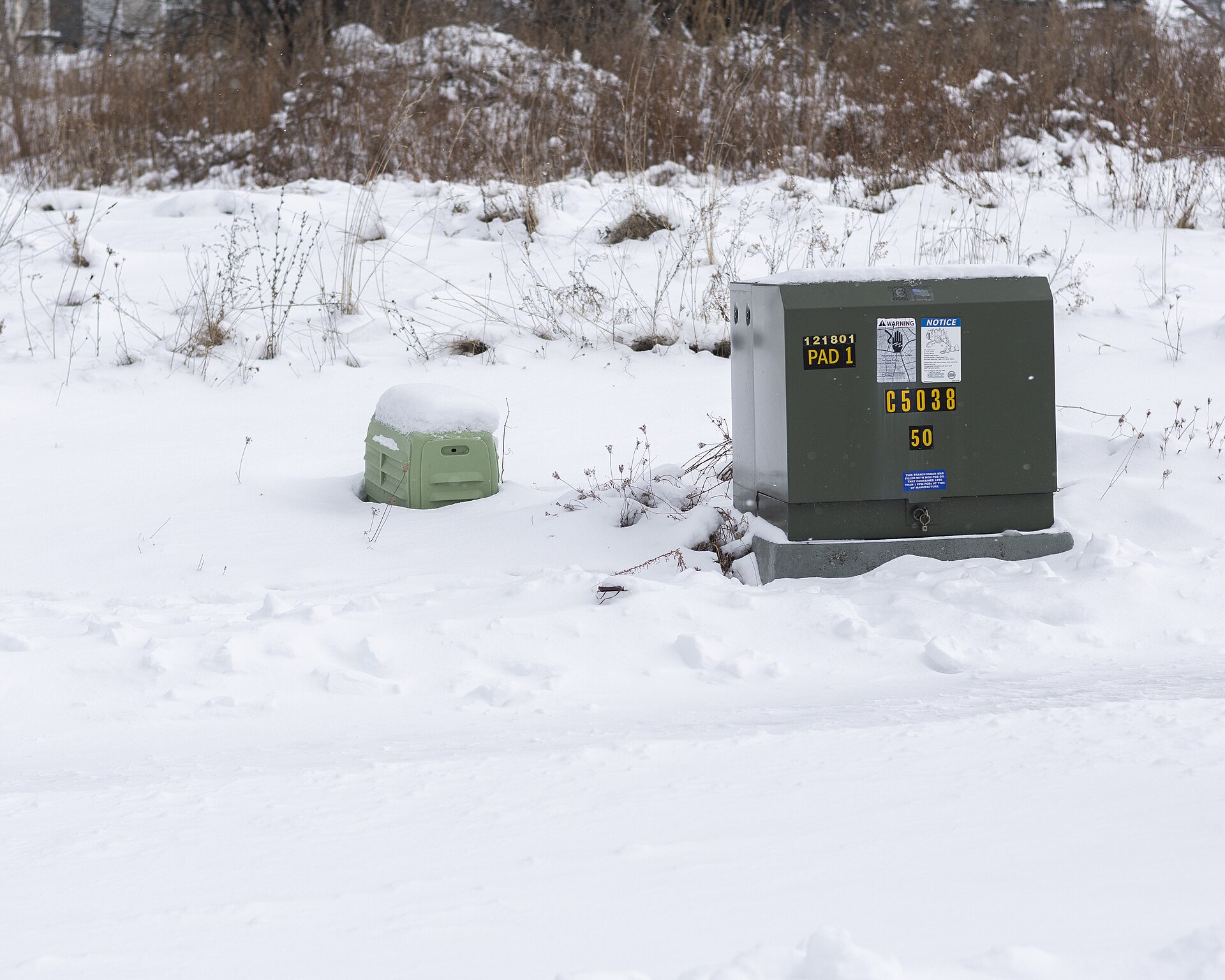
- Pad-mounted transformer: ground-level utility transformer on a concrete pad
- Point of delivery: where utility ownership ends and the customer's begins
- Line extension: utility construction needed to reach the site
- Easement: recorded right of the utility to place and maintain equipment on private property
Components
- Utility distribution line: pole line or underground primary
- Transformer: pole-mounted, pad-mounted, or vault
- Service conductors and conduit: customer or utility owned depending on the utility
- Meter and disconnect: at the building or at a metering location
- Concrete pad, bollards, and clear working space for pad-mounted equipment
Coordination
- Apply first: utilities want a formal new-service request before design, so they can choose the service method, price it, and assess system impacts
- Easements: pad-mounted transformers sit within an easement; examples include a 6 m by 6 m easement and a 16 ft by 20 ft pad for a 500 kVA unit with a 10 ft wide line easement; sizes vary by utility
- Clearances: one utility requires oil-filled pad-mounted equipment at least 3 ft from combustible building surfaces and 2 ft from noncombustible surfaces; another requires 10 ft from combustible buildings, windows, doors, and stairwells; plantings are kept clear of the equipment
- Responsibility split: the utility and the owner share trenching, conduit, and cable depending on the utility's rules; in one city the utility installs primary cable to the transformer and the developer installs secondary conduit and cable
- Lead time: transformers and line extensions can control the construction schedule; ask the utility for the lead time at the start
- Site lighting: site and pole lighting is fed from the building or a site panel; see the lighting note
- Locates: call 811 before excavating; electric lines are marked red
Relocation and disconnection
- Who pays: a utility generally moves its facilities at its own expense for public works; where private development necessitates the move, the developer bears the cost under several state laws and local ordinances; a utility may charge removal or relocation to the developer or customer when it is for the customer's convenience
- Prior rights: a utility with an easement or franchise that predates a public right-of-way may keep its claim; review the franchise and easement dates
- Process: submit a request to the utility for design and a cost estimate; the utility sets scope, clearances, and schedule
- Overhead to underground: relocating a line underground is a request to the utility, with new easements and pad space
- Disconnecting: the utility removes the meter and de-energizes the service; the owner removes the service equipment after the utility has disconnected
- Temporary power: request a temporary service for construction before the permanent one
- Overhead clearances: keep buildings, cranes, and scaffolds clear of overhead lines; ask the utility for required distances
Manufacturing and cost
Main manufacturers and suppliers
Sources
- Tacoma Public Utilities: new service tip sheet, https://mytpu.org/wp-content/uploads/5621_TP_NSE_TipSheet_REV_0125_OUT.pdf
- Pacific Gas and Electric: pad-mount transformer clearance guidance, https://PGE.com/assets/pge/docs/account/service-requests/051122.pdf
- Minnesota Lawyer: developers pay the cost of relocating utility lines, https://minnlawyer.com/2025/06/23/minnesota-becomes-the-latest-state-to-require-developers-to-pay-the-cost-of-relocating-utility-lines/
- U.S. Court of Appeals, Eighth Circuit: utility relocation opinion, https://ecf.ca8.uscourts.gov/opndir/09/07/083542P.pdf
- Transportation Research Board: managing the prior rights and prescriptive rights of utilities, https://rip.trb.org/View/2558399
- North Carolina 811: safe digging guide, https://nc811.org/wp-content/uploads/2025/11/2025_safe_digging_guide-ENGLISH.pdf
- Image: Pad-mounted electrical transformer and utility access cover.jpg, Tessa Bury, CC BY 4.0, https://commons.wikimedia.org/wiki/File:Pad-mounted_electrical_transformer_and_utility_access_cover.jpg