Steel
Summary
Steel is an iron-carbon alloy with 0.02 to 2.14 percent carbon by weight, rolled into shapes, plate, tube, and sheet. It is the primary structural metal in buildings, so grade selection, fire protection, and corrosion protection drive framing, enclosure, and exposed-steel decisions.
Cols
Terminology
- A992 / A36 / A572 / A500: ASTM specifications for structural shapes (A992), shapes and plate (A36), high-strength low-alloy shapes and plate (A572), and structural tube and pipe (A500)
- HSLA: high-strength low-alloy steel
- Fy / Fu: minimum yield and tensile strength
- Hot-dip galvanizing: zinc coating applied by immersion
- Weathering steel: alloy that forms a stable rust-colored surface and can be left unpainted
- Fireproofing: material that slows heat transfer to the steel
- Critical temperature: temperature at which yield stress falls to 60 percent of its room-temperature value
History and demand
Invention
- About 1800 BC: earliest known steel, in ironware from Kaman-Kalehöyük, Anatolia
- By the sixth century BC: large-scale wootz steel production in India
- Produced in bloomeries for thousands of years; industrial scale began after the 17th-century blast furnace and crucible methods
- 1855: Henry Bessemer's process made steel cheap in quantity; mild steel began replacing wrought iron for most uses
- 1952: the Linz-Donawitz basic oxygen process made earlier methods obsolete; electric arc furnaces now reprocess scrap
First uses in construction
- Late 19th century: the Home Insurance Building in Chicago (William Le Baron Jenney), widely called the first skyscraper, was the first tall building with structural steel in its frame, though most of the frame was cast and wrought iron; the "Chicago skeleton" frame weighed about one-third as much as masonry
Sourcing
- 2025 world crude steel output was about 1,849 million tonnes; China 960.8 million tonnes (about 52 percent), India 164.9, the United States 81.9, and Japan 80.7 (worldsteel)
Demand trend
- Flat in 2026: worldsteel's October 2026 outlook puts global demand at about 1.722 billion tonnes in 2026, then up 1.7 percent in 2027; China is forecast down 2 percent in 2026, and demand outside China up 1.5 percent
- Global crude steel output was about 1.63 billion tonnes in 2016; China produced 54 percent in 2023
Composition and production
Raw materials
- Iron with 0.02 to 2.14 percent carbon by weight (plain carbon steel); eutectoid steel is about 0.8 percent carbon
- Above about 2.1 percent carbon the product is cast iron
Product forms
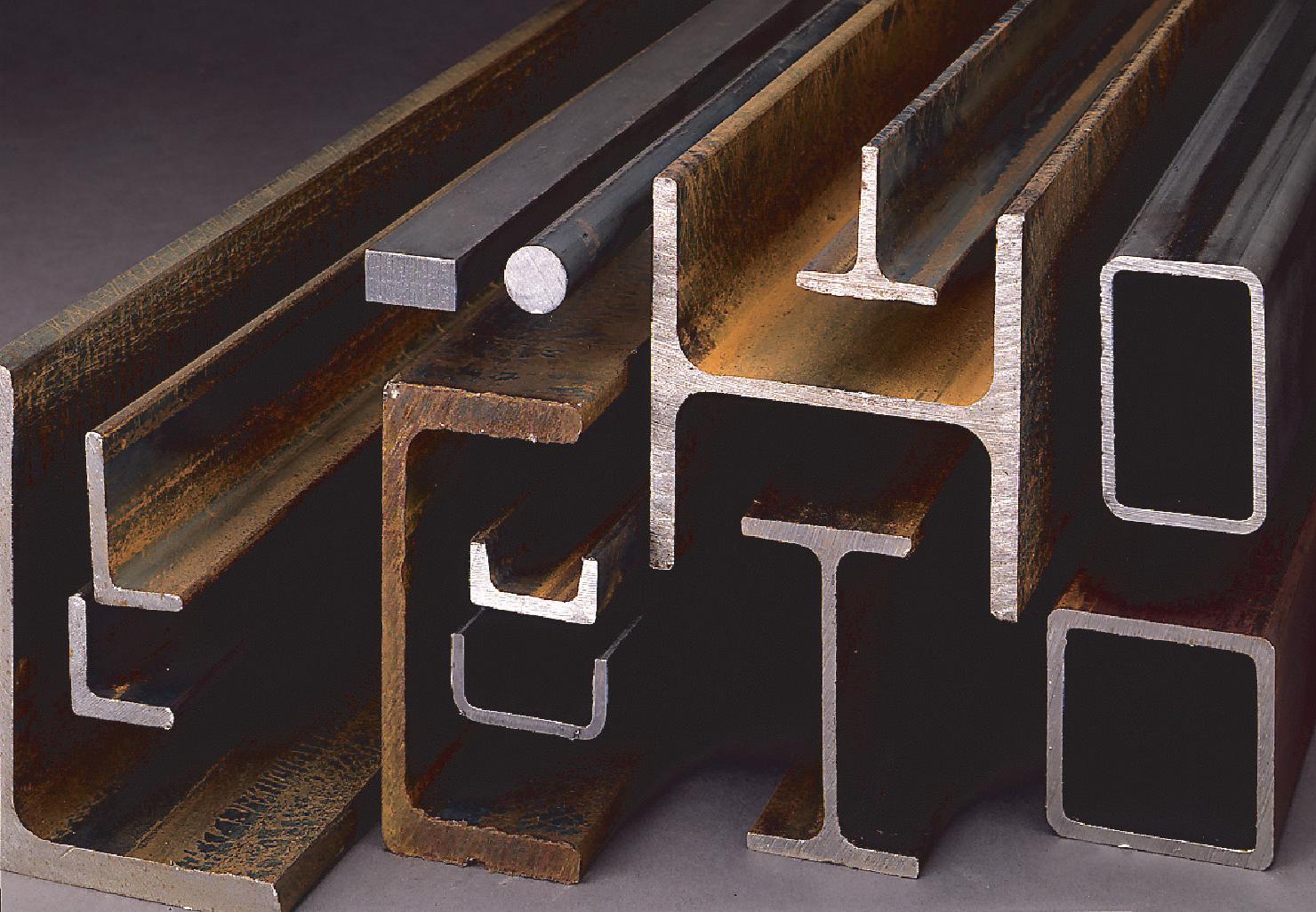
- Wide-flange and other shapes, plate, structural tube and pipe, sheet, and decking
Grades and types
- ASTM A992: shapes; Fy 50 ksi minimum, Fu 65 ksi minimum, maximum Fy/Fu ratio 0.85; preferred specification for wide-flange shapes
- ASTM A36: structural shapes and plate
- ASTM A572: HSLA shapes and plate
- ASTM A500: structural tube and pipe
Properties
Physical
- Density: 7.75 to 8.05 g/cm³ by alloy, about 484 to 503 lb/ft³; A992 about 490 lb/ft³ (0.2836 lb/in³)
Thermal and moisture
- Melting point: pure iron melts at about 2,800°F (1,540°C)
Fire behavior
- Combustibility: inherently noncombustible
- Strength at temperature: loses strength and stiffness at fire temperatures; critical temperature in North America cited at about 1,000 to 1,300°F (530 to 810°C), per ASTM E119 practice
- Thermal expansion of members: can compromise fire-resistance-rated assemblies at connections
Standards
Material specifications
- ASTM A992: structural steel shapes
- ASTM A36: carbon structural steel
- ASTM A572: high-strength low-alloy structural steel
- ASTM A500: cold-formed structural tubing
- ASTM A653: zinc-coated (galvanized) steel sheet
- AISC 360: specification for structural steel buildings
Uses in buildings
Building elements
- Wide-Flange Steel Beams, Steel Columns and HSS, Open-Web Steel Joists: primary framing
- Composite Metal Deck Floors, Metal Stud Walls: floor deck and cold-formed framing
- Cast-in-Place Concrete Walls, Cast-in-Place Concrete Beams and Columns, Precast Concrete, Spread and Continuous Footings, Retaining Walls, Shear Walls: reinforcement, form ties, embeds, and hold-downs
- Wood Trusses: galvanized steel connector plates
- Hollow Metal Doors, Overhead Sectional Doors: door faces and garage door sections
- Standing Seam Metal Roofing, Roof Drainage Systems: roof panels, gutters, and leaders
- Ductwork and Air Distribution, Conduit and Raceways: galvanized ducts and EMT conduit
- Panelboards, Switchboards, Transformers: enclosures and cores
- Water Heaters, Hydronic Boilers, Grease Interceptors: tanks and shells
- Site and Pole Lighting, Linear LED Fixtures, Recessed Troffers: poles and fixture housings
Pros and cons
Pros
- Fy 50 ksi in A992 shapes
- Noncombustible
- Zinc coatings and weathering alloys available for corrosion control
- Domestic recycling rate of 83 percent (2008)
Cons
- Loses strength at fire temperatures; rated assemblies need fireproofing
- Corrodes unless coated, galvanized, or a weathering grade
- Thermal expansion of members can compromise rated assemblies at connections
Finishes and treatments
- Hot-dip galvanizing: zinc coating for corrosion protection
- Zinc electroplating: thinner zinc coating for corrosion protection
- Weathering steel: unpainted exposed surfaces; develops a stable rust-colored patina
- Fireproofing: applied to slow heat transfer in rated construction
Sustainability
Embodied carbon
- Fabricated structural steel EPDs, Gerdau mills: 888 kg CO2e per metric ton (Midlothian) and 677 kg CO2e per metric ton (Petersburg); EPDs expire December 9, 2026
- Colorado state program GWP limit for fabricated hot-rolled steel: 1,220 kg CO2e per metric ton ("OSA GWP limit" on the state page)
- AISC industry-wide EPDs for domestic hot-rolled sections and fabrication: 2021 edition, then new Smart EPDs reported in December 2025 with embodied carbon more than 10 percent lower
Recycled content and end of life
- United States 2008: over 82 million metric tons recycled, an 83 percent rate
Manufacturing and cost
Main manufacturers and suppliers
Trade association: American Institute of Steel Construction.
Sources
- Wikipedia: Steel, Steel - Wikipedia
- SteelOrbis: worldsteel lowers global steel demand outlook, October 2026, Worldsteel lowers global steel demand outlook as China's downturn delays recovery
- Preservation Chicago: Chicago's first skyscraper, Chicago Magazine: What Was Chicago's First Skyscraper?
- Wikipedia: Structural steel, Structural steel - Wikipedia
- Wikipedia: ASTM A992, ASTM A992 - Wikipedia
- State of Colorado: fabricated hot-rolled steel GWP limit and mill EPDs, Fabricated Hot-Rolled Steel | Department of Revenue - Taxation
- Informed Infrastructure: structural steel embodied carbon, industry-wide EPDs, Structural Steels Embodied Carbon Down More Than 10 Since 2021 Industry Wide Epds - Informed Infrastructure
- UpCodes: 2024 IBC Chapter 22 steel, Chapter 22 Steel: Department of Defense Building Code 2024 | UpCodes
- Wikimedia Commons: Konstruktionsstål.JPG, photo by Steel Construction (Public domain), https://commons.wikimedia.org/wiki/File:Konstruktionsstål.JPG
- Expometals: the steel planisphere, the major steel-producing countries, https://ssr.expometals.net/en/news/the-steel-planisphere-the-major-steel-producing-countries-id17086
- worldsteel: December 2025 crude steel production, https://www.hellenicshippingnews.com/?p=1120593