Choosing and Combining Certifications
Summary
Programs certify different things: LEED scores broad sustainability, Passive House and ZERH set energy performance, WELL addresses occupant health, and the Living Building Challenge sets all-or-nothing performance. Choose by the project's main goal, then add programs only where their documentation overlaps.
Cols
Selection
| Program | Main focus | Result |
|---|---|---|
| LEED | Broad sustainability | Points to Certified, Silver, Gold, or Platinum |
| Passive House (PHI, PHIUS) | Energy and airtightness | Pass or fail to the standard |
| WELL | Occupant health | Preconditions plus points to Silver, Gold, or Platinum |
| Living Building Challenge | Whole-project performance | Core, Petal, or Living tier by Imperatives |
| ZERH | Residential energy | ENERGY STAR plus HERS Index target |
Coordination
- Energy overlap: PHIUS+ builds on ENERGY STAR and ZERH criteria; LBC Zero Energy and DOE zero energy use different accounting
- Materials overlap: LEED EPD credits, WELL materials features, and Living Building Challenge Red List screening all draw on product disclosure
- Light overlap: LEED daylight credits and WELL light features use related metrics
- Version risk: each program revises on its own schedule, and registration deadlines apply; confirm the version and sunset dates
- Documentation burden: programs with third-party verification need earlier team commitments; confirm cost and schedule with the certifier
Sources
- U.S. Green Building Council: LEED, https://www.usgbc.org/leed
- International WELL Building Institute: WELL, https://www.wellcertified.com/
- International Living Future Institute: Living Building Challenge, https://living-future.org/lbc/
- Passive House Institute US: PHIUS, https://www.phius.org/
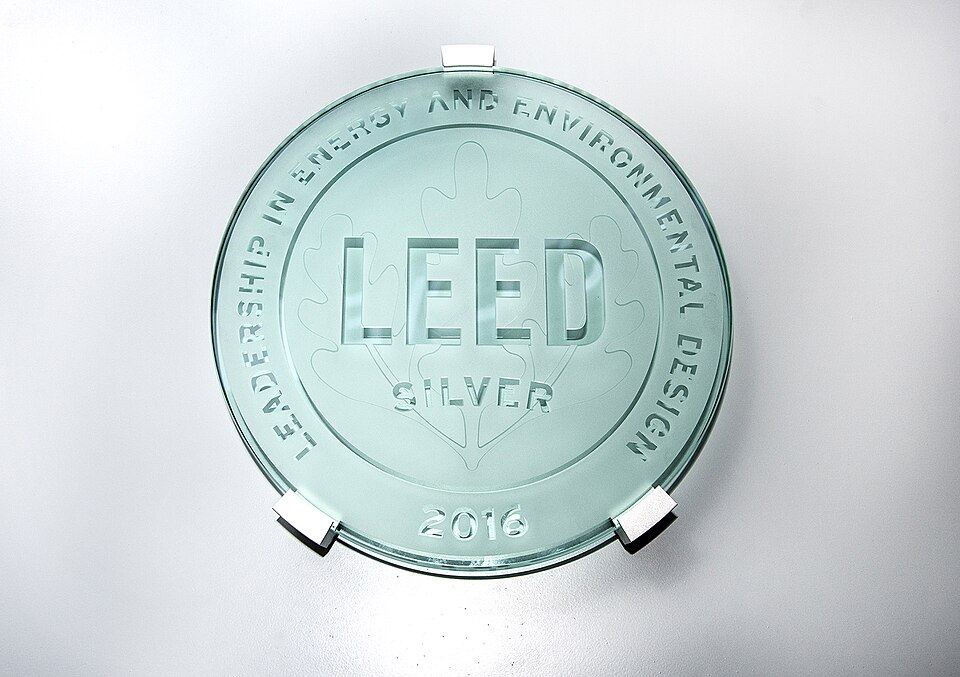
- Wikimedia Commons: Fulton Center LEED Certification (27820705205).jpg, by Metropolitan Transportation Authority of the State of New York (CC BY 2.0), https://commons.wikimedia.org/wiki/File:Fulton_Center_LEED_Certification_(27820705205).jpg