Clay
Summary
Clay is a fine-grained aluminosilicate earth that, mixed with shale and fired, becomes brick, tile, and terra cotta. Specify fired clay by ASTM grade and type (SW or MW for freeze-thaw exposure, FBS, FBX, or FBA for appearance) and by modular size.
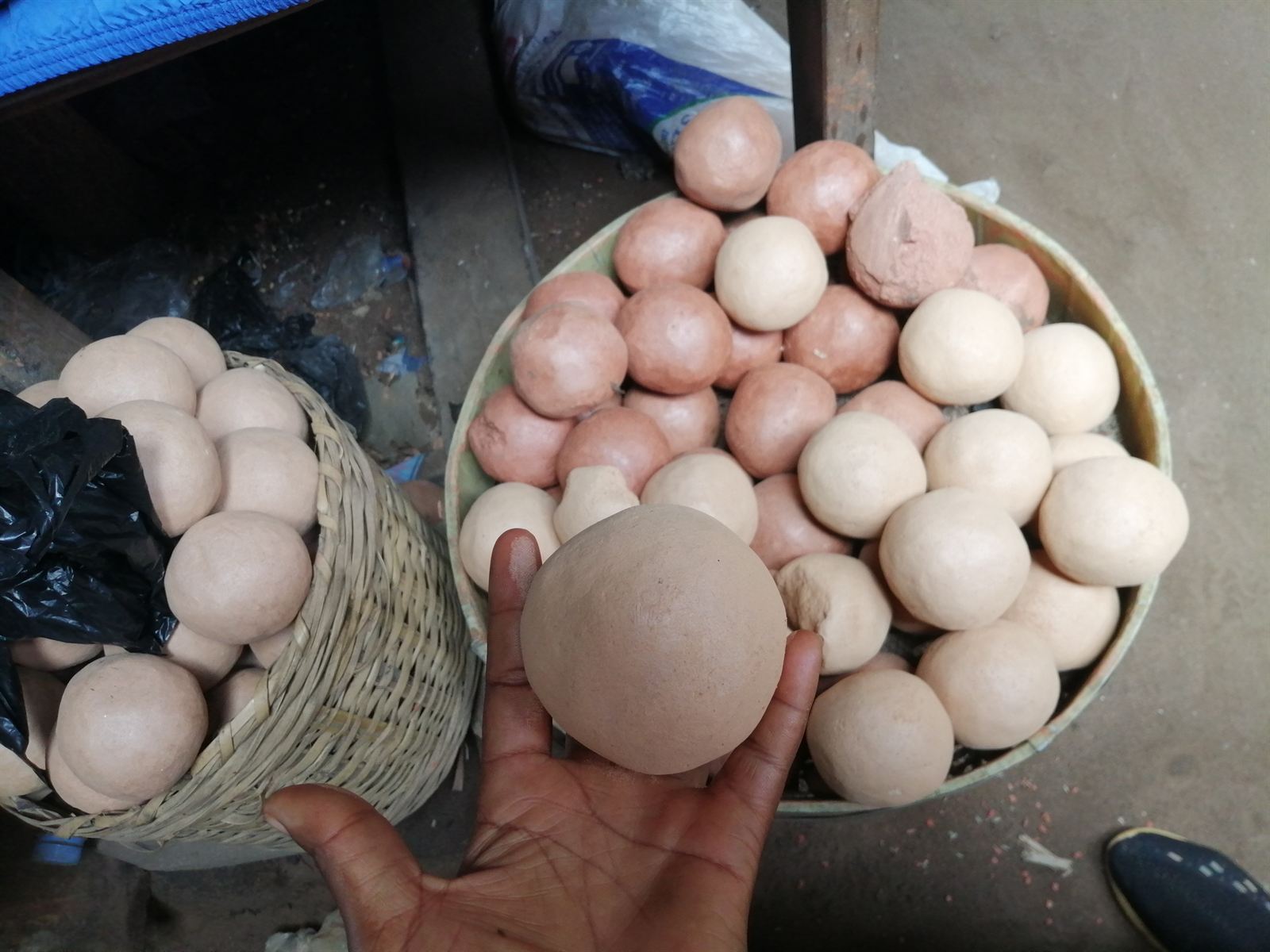
Terminology
- Brick: fired clay masonry unit; modular actual size 7-5/8 by 3-5/8 by 2-1/4 in., nominal 8 by 4 by 2-2/3 in. with a 3/8 in. joint
- Facing brick: brick for exposed walls; ASTM C216 types FBS, FBX, and FBA
- Grade SW / MW: freeze-thaw resistance grades in ASTM C216
- Shale: fine-grained rock fired with or in place of clay
- Terra cotta: fired clay used for cornices and cladding
- Structural clay tile: hollow fired clay unit
- Frog: recess in a brick face; frogged and hollow designs reduce density
History and demand
First uses in construction
- Before 7500 BC: earliest mudbricks, at Tell Aswad
- About 5000 to 4500 BC: Mesopotamia discovered fired brick; Chengtoushan, China had fired bricks around 4400 BC; Kalibangan, Indus Valley, about 3000 BC
- First half of the 19th century: mechanization began; Henry Clayton's machine made up to 25,000 bricks a day
- Industrial Revolution: brick became preferred over stone for speed and economy
- Mid-20th century: many United States cities replaced brick streets with asphalt; steel and concrete have largely replaced brick in high-rise construction
Sourcing
- China, India, Pakistan, and Bangladesh are among the major producers of fired clay brick; global output is estimated at 1.9 to 4.1 gigatonnes a year (Olsson et al., 2025)
Demand trend
- The industry-wide clay brick EPD captured 32 percent of 2018 production from 13 manufacturers
Composition and production
Raw materials
- Clay and shale: aluminosilicate, free silica (quartz), and decomposed rock
- One proposed optimal mix: silica 50 to 60 percent, alumina 20 to 30 percent, lime 2 to 5 percent, iron oxide up to 7 percent, magnesia under 1 percent
Manufacturing process
- Molded bricks fired at 900 to 1,000°C (1,650 to 1,830°F); color shifts through dark red, purple, and brown or gray at about 1,300°C (2,370°F)
- A continuous Bull's trench kiln fires about 15,000 to 25,000 bricks a day
Product forms
- Brick, structural clay tile, terra cotta, and pavers
Grades and types
- Grade SW and Grade MW: ASTM C216 classes by freeze-thaw resistance
- Types FBS, FBX, FBA: the three ASTM C216 facing brick types
Properties
Physical
- Density (solid clay brick): about 2,000 kg/m³, about 125 lb/ft³; hollow and frogged units are lighter
Mechanical
- Compressive strength: United States bricks range from about 1,000 to 15,000 psi (7 to 103 MPa) by use; common house brick 20 to 40 MPa (2,900 to 5,800 psi)
Standards
Material specifications
- ASTM C216: facing brick (C216-26a active)
- TMS 602: masonry units, mortar, and grout construction requirements
- TMS 504: architectural cast stone
Uses in buildings
Building elements
- Brick Veneer Walls: facing brick
- Ceramic and Porcelain Tile: fired tile bodies
- Clay and Concrete Tile Roofing: clay roof tile
- Lavatories and Sinks, Water Closets and Urinals: vitreous china fixtures
- Site Paving: brick pavers
Pros and cons
Pros
- Range of compressive strengths up to 15,000 psi
- Standard modular size of 7-5/8 by 3-5/8 by 2-1/4 in.
- Fired color is integral to the unit
Cons
- Heavy: about 125 lb/ft³
- Replaced by steel and concrete in high-rise construction
- Strength and grade vary by unit and use
Design considerations
Movement
- Brick expansion joints sized and spaced per BIA Technical Notes 18 and 18A
Finishes and treatments
- Firing color: dark red, purple, brown, or gray by kiln temperature
Sustainability
Embodied carbon
- Industry-wide clay brick EPD (Brick Industry Association, United States and Canada production, cradle to gate); the listed copy expired October 7, 2025 and the value was not retrieved
Manufacturing and cost
Main manufacturers and suppliers
Trade association: Brick Industry Association.
Sources
- Wikipedia: Brick, https://en.wikipedia.org/wiki/Brick
- ASTM International: C216-26a facing brick, https://store.astm.org/c0216-26a.html
- BD+C: new industrywide clay brick EPD launched, https://www.bdcnetwork.com/codes-and-standards/news/55163827/new-industrywide-clay-brick-epd-launched
- UpCodes: 2024 IBC Chapter 21 masonry, https://up.codes/viewer/department-of-defense/ibc-2024/chapter/21/masonry
- Wikimedia Commons: Argile de potière 03.jpg, photo by Bamouzou (CC BY-SA 4.0), https://commons.wikimedia.org/wiki/File:Argile_de_potière_03.jpg
- University of Leeds and White Rose: greenhouse gas emissions and decarbonization potential of global fired clay brick production, https://eprints.whiterose.ac.uk/id/eprint/223190/2/olsson-et-al-2025-greenhouse-gas-emissions-and-decarbonization-potential-of-global-fired-clay-brick-production.pdf