Polyethylene
Summary
Polyethylene is a thermoplastic made by polymerizing ethylene, sold as low, medium, and high-density grades and as cross-linked PEX. It is the common material for water and gas pipe and PEX plumbing, but it burns, drips, and yellows with age.
Cols
Terminology
- HDPE: high-density polyethylene, 0.941 g/cm3 or greater
- MDPE: medium-density, 0.926 to 0.940 g/cm3
- LDPE / LLDPE: low-density, 0.910 to 0.940 g/cm3; linear low-density, 0.915 to 0.925 g/cm3
- UHMWPE: ultra-high-molecular-weight, 0.930 to 0.935 g/cm3
- PEX: cross-linked polyethylene
- PE-Xa / Xb / Xc / Xd: peroxide, silane, electron-beam, and azo cross-linking methods
History and demand
Invention
- 1898: Hans von Pechmann first synthesized polyethylene by accident
- 1933: Fawcett and Gibson at ICI rediscovered it; industrial LDPE production began in 1939
- 1951: Phillips Petroleum chromium trioxide catalyst; 1953 Ziegler titanium halide catalyst
Sourcing
- 2024 production: the United States 17 million tons, China 11 million, Saudi Arabia 8.7 million, about 47 percent of 76 million tons (IndexBox)
- Installed capacity: China about 42 million tonnes a year, North America 34, Middle East 23, Western Europe 14 (McKinsey)
- All plastics: 430.9 million tonnes in 2024, with Europe 12 percent and Asia about 55 percent (Plastics Europe)
Demand trend
- 2017: over 100 million tonnes per year, about 34 percent of the plastics market
Composition and production
Raw materials
- Ethylene polymerized by high-pressure, Ziegler-Natta, chromium, or metallocene catalysts
Properties
Physical
- Density: 0.880 g/cm3 (VLDPE) to 0.941 g/cm3 and above (HDPE); about 55 to 59 lb/ft3
- Melting point: 115 to 135°C (239 to 275°F); MDPE and HDPE 120 to 130°C; average commercial LDPE 105 to 115°C
Fire behavior
- Burns slowly with a blue flame and yellow tip, keeps burning after the flame is removed, and drips
Durability
- Yellows as it ages
- PEX: improved high-temperature performance, reduced flow, and enhanced chemical resistance
Uses in buildings
Building elements
- Domestic Water Piping: HDPE water pipe and PEX tubing
- MDPE is used for gas pipe and fittings
Pros and cons
Pros
- PEX tubing expands over a metal fitting and returns to shape, forming a watertight joint
- Cross-linking raises temperature performance
Cons
- Burns and drips
- Yellows with age
Manufacturing and cost
Main manufacturers and suppliers
Trade association: Plastics Pipe Institute.
Sources
- Wikipedia: Polyethylene, https://en.wikipedia.org/wiki/Polyethylene
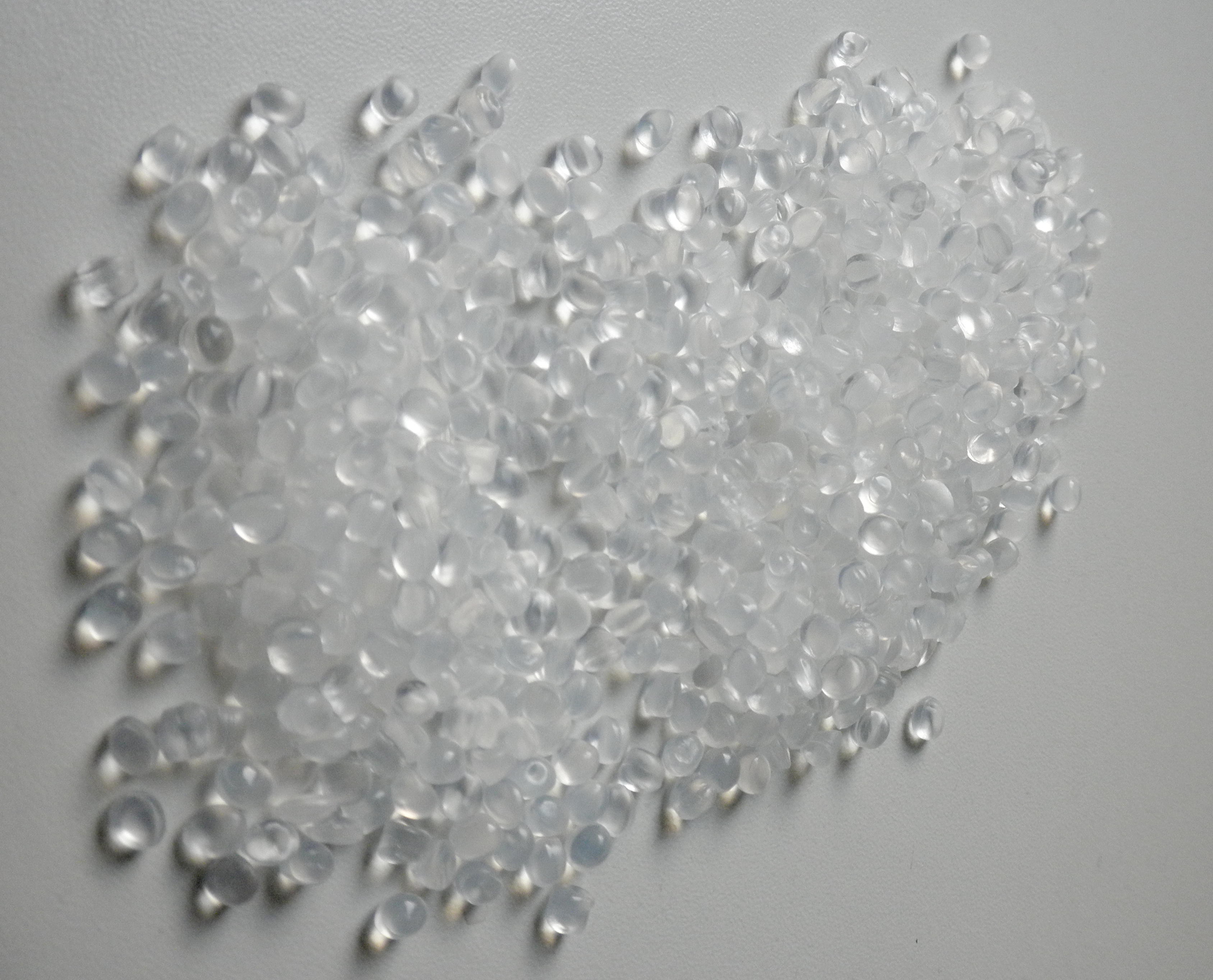
- Wikimedia Commons: Polyethylene balls1.jpg, photo by Lluis tgn (CC BY-SA 3.0), https://commons.wikimedia.org/wiki/File:Polyethylene_balls1.jpg
- IndexBox: polyethylene in primary forms, world market overview 2024, https://www.indexbox.io/blog/polyethylene-in-primary-forms-world-market-overview-2024-13/
- McKinsey Global Institute: polyethylene, widely produced but not one size fits all, https://www.mckinsey.com/mgi/our-research/polyethylene-widely-produced-but-not-one-size-fits-all
- Plastics Europe: plastics, the fast facts 2025, https://plasticseurope.org/de/wp-content/uploads/sites/3/2025/10/PE_TheFacts_25_digital-A4.pdf