Oriented Strand Board
Summary
Oriented strand board is an engineered panel made by bonding layers of rectangular wood strands, about 2.5 × 15 cm, in cross-oriented layers with wax and synthetic resin under heat and pressure. It is the dominant structural sheathing panel in North America and cheaper and more uniform than plywood, but it needs moisture protection.
Cols
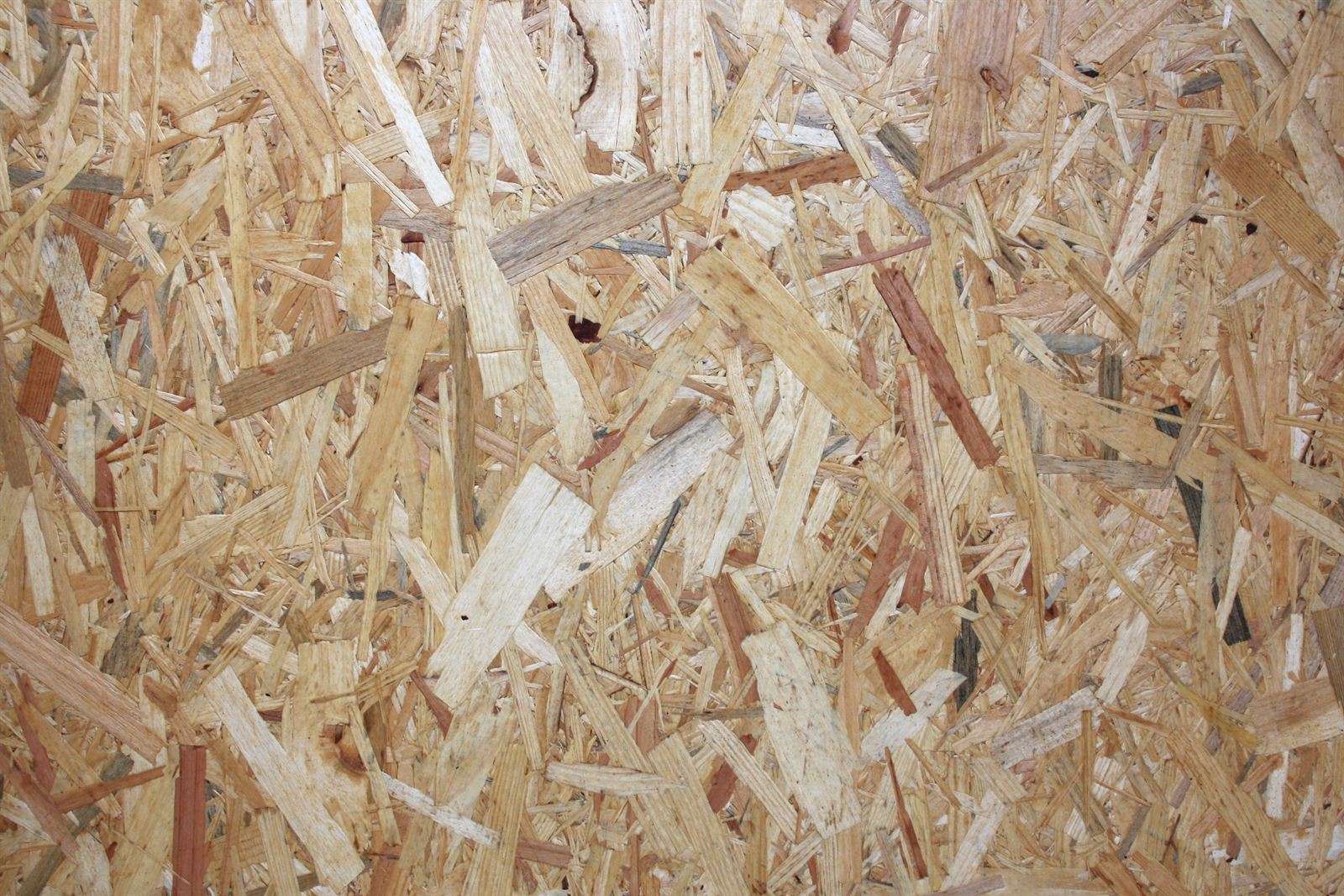
Terminology
- Strands: rectangular wood pieces about 2.5 × 15 cm
- Waferboard: panel of non-oriented flakes with phenolic resin
- PMDI: isocyanate adhesive used in some OSB cores
- EN 300 grades OSB/0 to OSB/4: European grades by mechanical performance and moisture resistance
- Type 1 to Type 4: resin classes, from nonstructural to damp or outdoor use
History and demand
Invention
- 1963: invented by Armin Elmendorf in California
Sourcing
- 2023: China produced about 11 million m3, falling to 9.1 million m3 in 2024; Canada about 7.42 million m3; EU27, UK, and EFTA 6.6 million m3; Germany 1.213 million m3 in 2024
- Romania became Europe's largest OSB exporter in 2014
Demand trend
- 66 percent of the North American structural panel market in 2016; Canada produced 10.5 million m² in 2005, mostly exported to the United States
Composition and production
Raw materials
- Strands bonded with wax and synthetic resin; urea-formaldehyde (Type 1, nonstructural, not waterproof); isocyanate (PMDI) in the core with melamine-urea-formaldehyde or phenol-formaldehyde on the surface (Type 2); phenol-formaldehyde throughout (Types 3 and 4, damp or outdoor)
Manufacturing process
- External layers align with the panel's strength axis and internal layers run perpendicular; pressed in a heated press
Properties
Mechanical
- Greater load-bearing capacity than milled wood panels when tested to failure
Thermal and moisture
- No internal voids; can be water-resistant but needs membranes for full water protection and is not recommended for exterior use
Standards
Material specifications
- DOC PS 2: wood structural panels (named in the building code)
- EN 300: European OSB grades
Uses in buildings
Building elements
- Wood-Framed Walls, Wood-Framed Floors, Shear Walls: wall, roof, and floor sheathing and structural panel diaphragms
- Wood I-Joists: web material
Pros and cons
Pros
- No internal voids
- Cheaper and more uniform than plywood
- Holds 66 percent of the North American structural panel market
Cons
- Not recommended for exterior use without protection
- Formaldehyde emissions are a concern with urea-formaldehyde types (industry calls North American emissions negligible)
Sustainability
Health
- Isocyanate-based panels contain no formaldehyde; urea-formaldehyde is the most toxic option
Manufacturing and cost
Main manufacturers and suppliers
Trade association: APA – The Engineered Wood Association.
Sources
- Wikipedia: Oriented strand board, https://en.wikipedia.org/wiki/Oriented_strand_board
- UpCodes: 2024 IBC Chapter 23 wood, https://up.codes/viewer/department-of-defense/ibc-2024/chapter/23/wood
- Wikimedia Commons: Oriented strand board at Courtabœuf 2011.jpg, photo by Lionel Allorge (CC BY-SA 3.0), https://commons.wikimedia.org/wiki/File:Oriented_strand_board_at_Courtabœuf_2011.jpg
- IndexBox: China oriented strandboard market overview 2024, https://www.indexbox.io/blog/oriented-strandboard-osb-china-market-overview-2024-4/
- Reportlinker: oriented strand board production in Canada, https://www.reportlinker.com/dataset/896d7b6c90bb1e79b120d9ff564426d8d0039564
- EUWID: German OSB production on par with prior year level in 2023, https://www.euwid-wood-products.com/news/wood-based-panels/german-osb-production-on-par-with-prior-year-level-in-2023-100424/