Healthy Materials
Summary
Healthy materials programs disclose the chemical ingredients of building products and screen them against lists of chemicals of concern. Declare labels give the quick answer on Red List status, and Health Product Declarations give the ingredient data to verify it.
Cols
Terminology
- Red List: Living Building Challenge list of worst-in-class chemicals; AIA describes about 800 chemicals in 22 classes, while some vendors cite more than 12,000 registry numbers
- Declare: self-disclosure program reporting a product's Red List status
- HPD (Health Product Declaration): ingredient disclosure to the HPD Open Standard; its CAS numbers let teams check for Red List ingredients
Standards
- Red List Free: no Red List ingredients
- Red List Approved: meets the Red List requirements using one or more exceptions
- Declared: disclosed but needs further vetting before use on a Living Building Challenge project
- Emissions testing: Living Building Challenge interior products that can emit VOCs follow the CDPH Standard Method; sources cite versions 1.1 and 1.2, so confirm the version for the LBC edition in use
Selection
- Use Declare labels for a first screen, then HPDs to verify ingredients
- Check the version of each program the project requires
Sources
- AIA: Declare, increasing transparency in the building market, https://www.aia.org/resource-center/declare-increasing-transparency-building-market
- Carlisle SynTec: Health Product Declarations and Declare labels, https://carlislesyntec.com/en/Resources/Media/Blog-Landing-Page/SpecTopics/2024/07/09/HPDs-and-Declare-Labels
- Living Future: Living Building Challenge 4.1 accepted documentation, https://www.manula.com/manuals/living-future/living-building-challenge-4-1/1/en/topic/i13-accepted-documentation
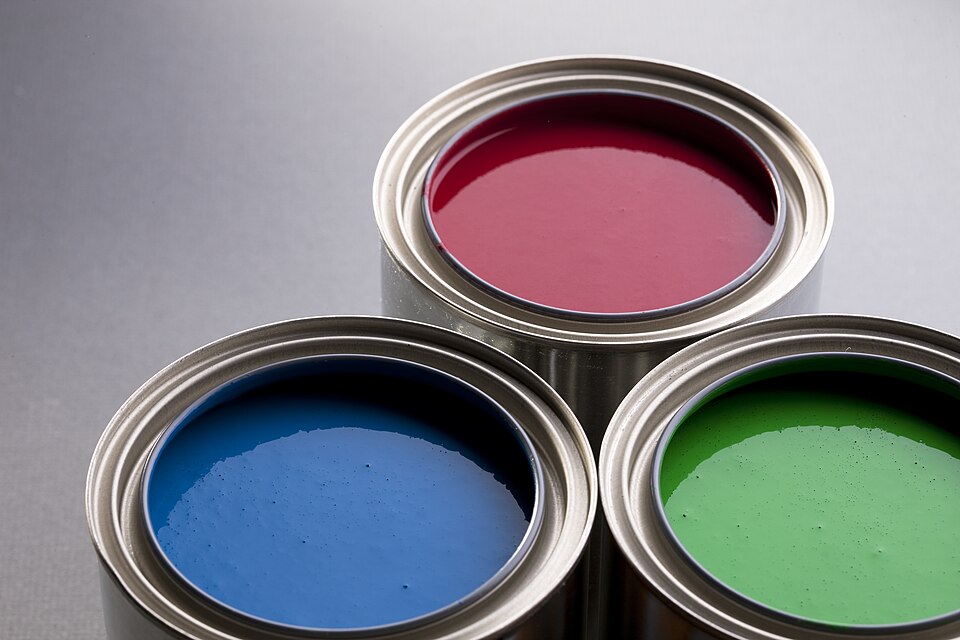
- Wikimedia Commons: Open Soy Paint Cans (10481725136).jpg, by United Soybean Board (CC BY 2.0), https://commons.wikimedia.org/wiki/File:Open_Soy_Paint_Cans_(10481725136).jpg