Grout
Summary
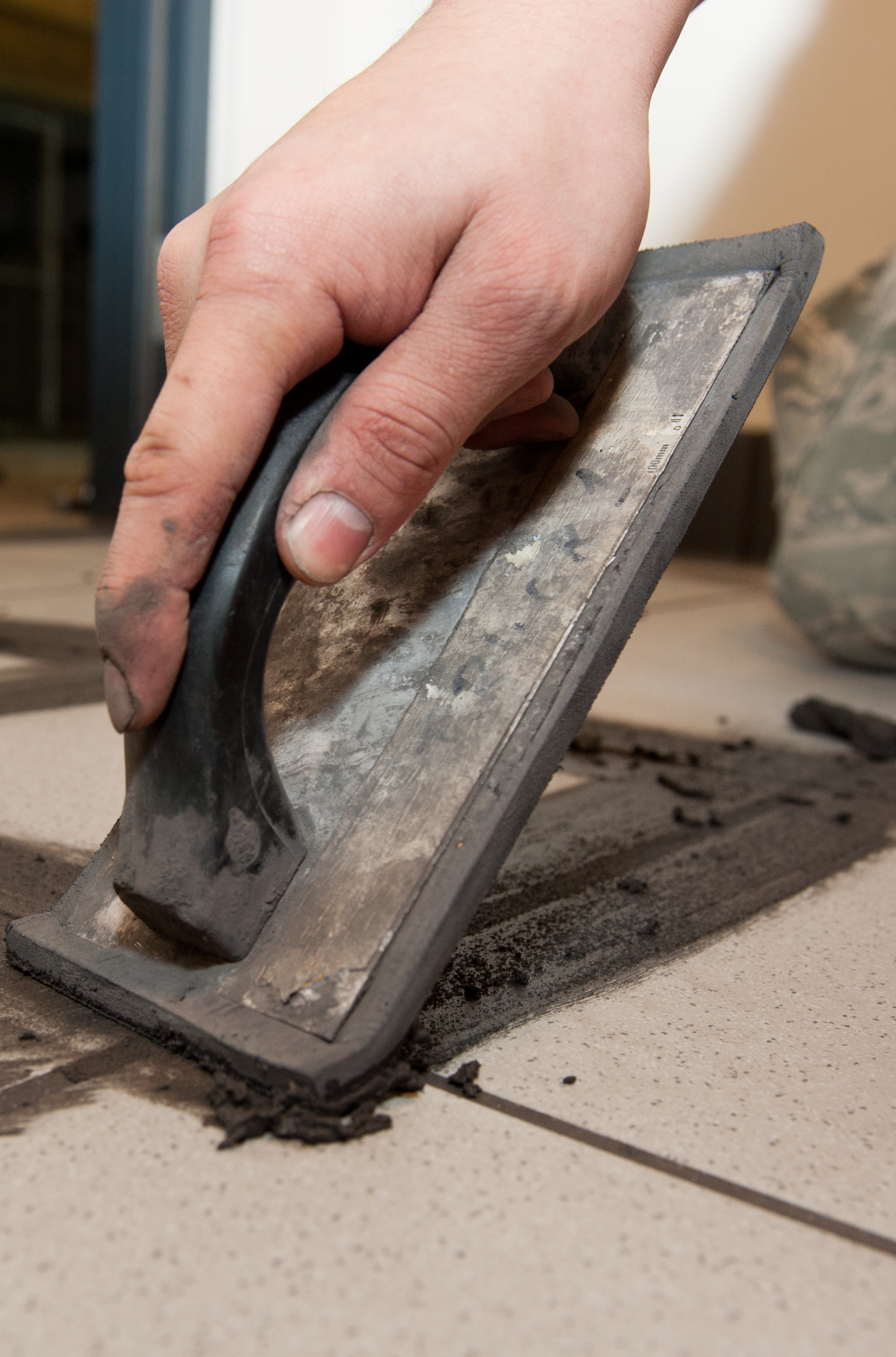
Grout is a fluid mix of water, cement, and fine sand, or of urethane or epoxy resin, used to fill joints, voids, and cells. It fills tile joints, grouted masonry cells, and bearing plate voids, so the grout type must match the load, joint width, and exposure.
Terminology
- Sanded grout: contains finely ground silica sand
- Unsanded grout: finer particles, smoother surface
- Non-shrinking grout: fills gaps under bearing plates
- Thixotropic grout: resists flow until agitated
- Microfine cement: particles 6 to 10 microns; ultrafine below 5 microns
Composition and production
Raw materials
- Water, cement, and fine sand; Portland cement is the most common binder
- Thermoset polymers such as urethanes and epoxies as alternative binders
- Higher water ratio than concrete to reach low viscosity
Grades and types
- Tiling: cementitious, classed ordinary or improved, with add-on traits F (fast setting), W (reduced water absorption), A (high abrasion resistance)
- Flooring: pavement joint mortar rated up to 7.5 tons for garage access
- Resin: epoxy or urethane
- Nonshrinking: supports metal bearing plates
- Structural: reinforced masonry
- Thixotropic
Properties
Physical
- Cement particle size: standard about 15 microns; finer particles penetrate deeper into fissures
Uses in buildings
Building elements
- Ceramic and Porcelain Tile: tile and shower joints
- CMU Walls: grouted cells with reinforcing steel
- Precast Concrete: joining precast units
Pros and cons
Pros
- Flows into narrow joints and cells
- Epoxy and urethane grout resist stains
Cons
- Higher water ratio than concrete
- Type must match joint width and load
Manufacturing and cost
Main manufacturers and suppliers
Trade association: Tile Council of North America.
Sources
- Wikipedia: Grout, https://en.wikipedia.org/wiki/Grout
- Wikimedia Commons: Applying grout.jpg, photo by unknown (Public domain), https://commons.wikimedia.org/wiki/File:Applying_grout.jpg