Cork
Summary
Cork is the bark tissue of the cork oak, Quercus suber, harvested without felling the tree about every nine years and made of gas-filled cells with suberin walls. Its compressibility, near-zero Poisson ratio, and natural fire retardancy suit flooring, acoustic and thermal insulation, and resilient underlayers.
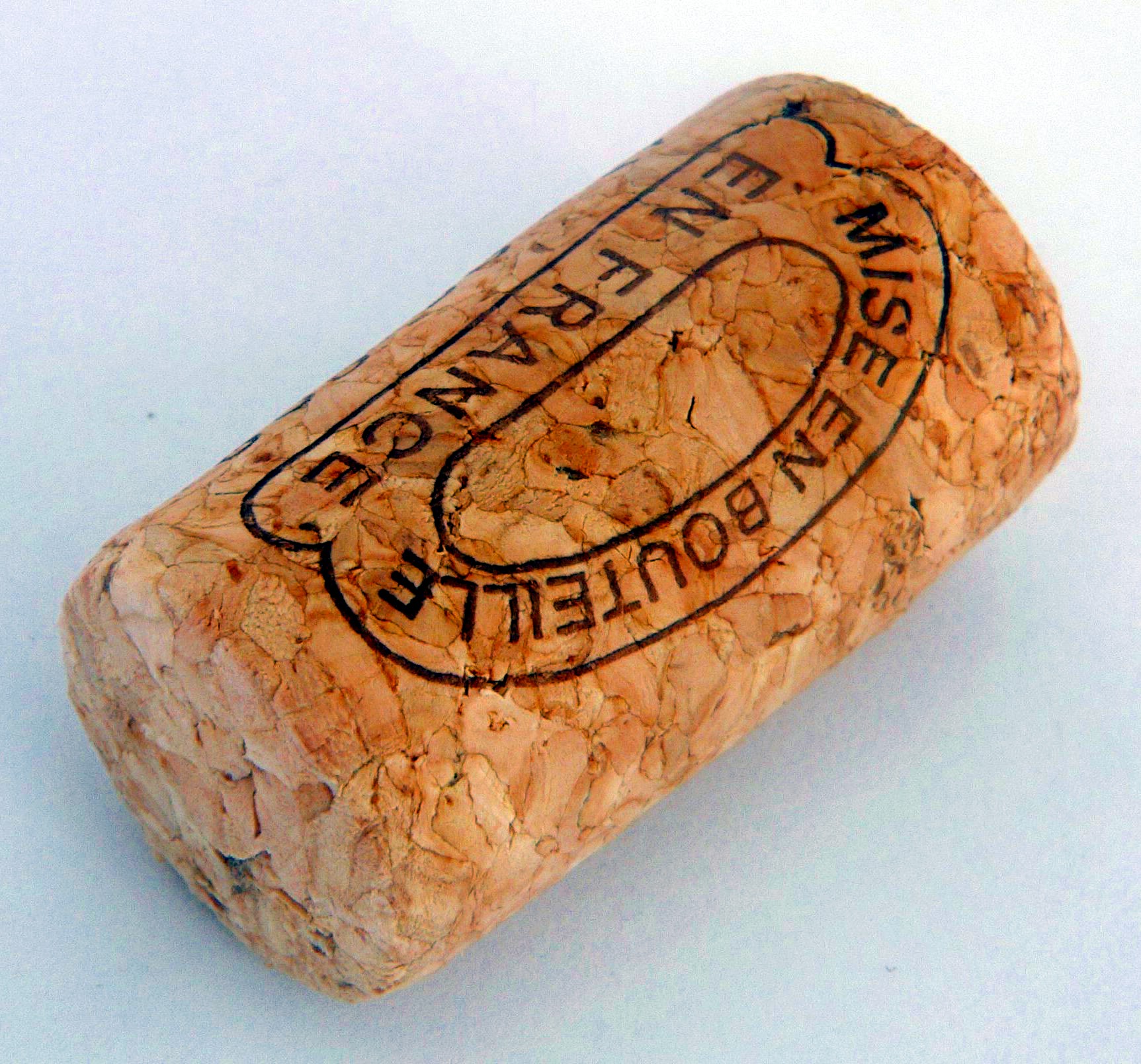
Terminology
- Suberin: waxy compound in cork cell walls, about 40 percent
- Virgin cork: lower-quality cork from the first harvest at 25 to 30 years
- Corkboard: insulation board of agglomerated cork
- Cork-cement composite: cork granules in cement, 400 to 1,500 kg/m³
- Phellem: the bark layer
History and demand
Sourcing
- Portugal produces about half to 55 percent of the world's cork, of about 300,000 to 340,000 tonnes a year; Spain about 29 to 30 percent, Morocco about 6 percent, and Algeria about 5 percent (APCOR and Amorim)
- Cork oak forest covers about 2.12 million hectares: Portugal 34 percent, Spain 27, Morocco 18, Algeria 11 (APCOR)
Demand trend
- Natural cork closures are used for about 80 percent of the roughly 20 billion wine bottles produced each year; cork use declined after synthetic alternatives appeared in the mid-1990s and recovered to about 60 percent of wine stoppers by 2016; stoppers are about 60 percent of cork-based production
Composition and production
Raw materials
- Suberin about 40 percent, lignin 22 percent, polysaccharides 18 percent, extractables 15 percent
- Cork oak forests cover about 2.2 million hectares; annual production about 300,000 tons; Portugal 49.6 percent, Spain 30.5 percent, Morocco 5.8 percent, Algeria 4.9 percent, Tunisia 3.5 percent, Italy 3.1 percent, France 2.6 percent
Manufacturing process
- Harvested only from early May to late August; first harvest at about 25 to 30 years, then roughly every nine years (up to thirteen)
Properties
Mechanical
- Gas-filled cells act like pads and recover after compression; almost zero Poisson ratio, so the radius barely changes when squeezed or pulled
Fire behavior
- Natural fire retardancy
Uses in buildings
Building elements
- Resilient Flooring: varnished cork flooring, an alternative to linoleum, stone, or ceramic tile
- Floor Underlayment: cork underlayment beneath floor finishes
- Wall Cladding: cork wall and facade cladding
- Wall and Roof Insulation: corkboard and cork granule insulation
- Acoustic Wall and Ceiling Panels: acoustic insulation
Pros and cons
Pros
- Impermeable and buoyant
- Recovers after compression
- Non-allergenic, petrochemical-free insulation alternative
Cons
- Supply concentrated in southwest Europe and northwest Africa (Portugal about half)
- Harvest only every nine years or more
Manufacturing and cost
Main manufacturers and suppliers
Sources
- Wikipedia: Cork (material), https://en.wikipedia.org/wiki/Cork_(material)
- Wikimedia Commons: Cork p1160013.jpg, photo by David Monniaux (CC BY-SA 3.0), https://commons.wikimedia.org/wiki/File:Cork_p1160013.jpg
- BKWine: Portugal dominates cork production, https://www.bkwine.com/news/portugal-dominates-cork-production/
- Amorim: cork oak forest, https://amorim.com/en/cork/cork-oak-forest