Wrought Iron
Summary
Wrought iron is a ferrous metal with under 0.05 percent carbon and up to 2 percent fibrous slag, worked by forging rather than cast. It matters for restoring historic ironwork, since most modern "wrought iron" fences and gates are actually mild steel.
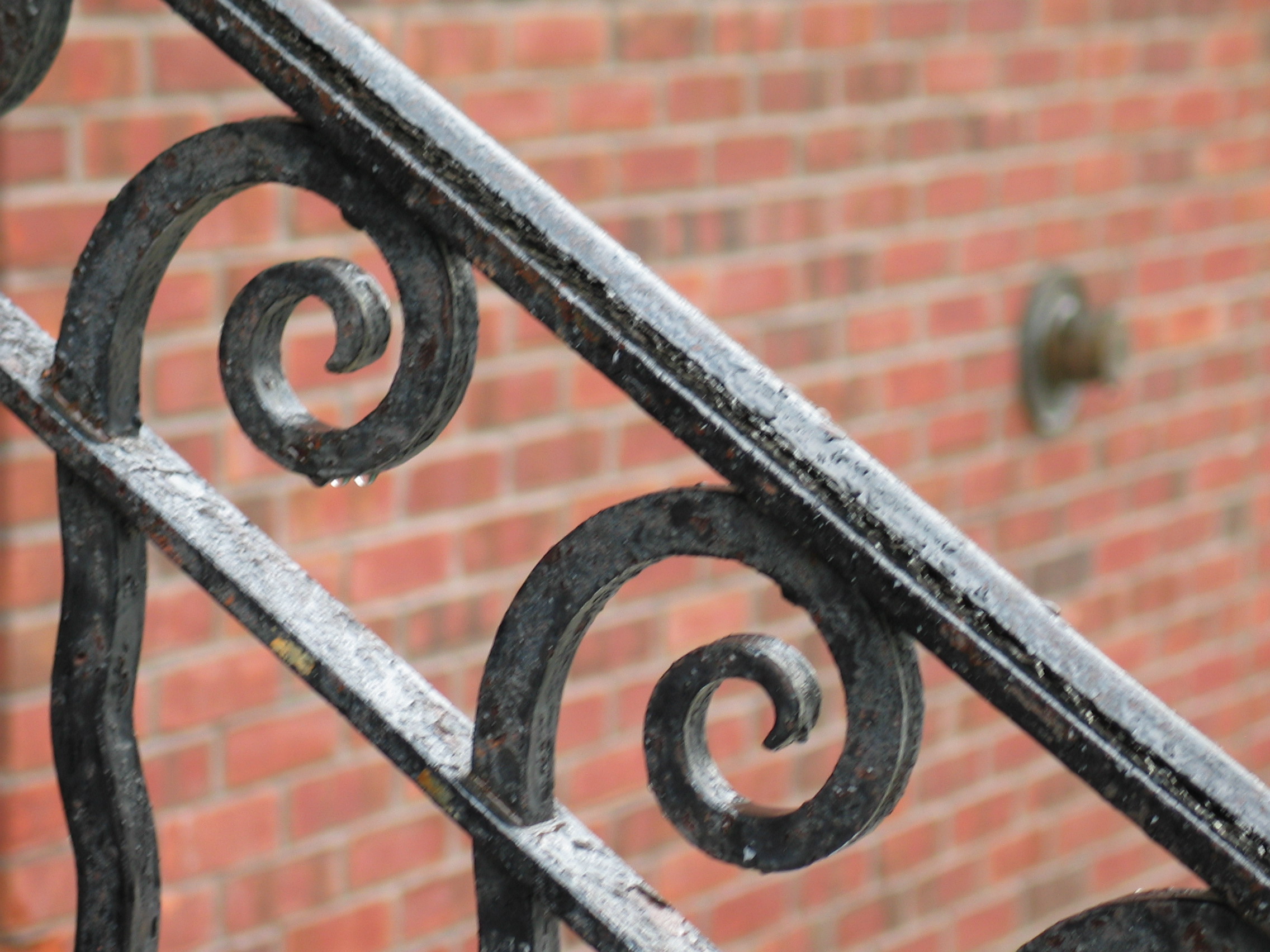
Terminology
- Puddling: process that decarburizes pig iron into wrought iron
- Bloom: spongy mass of iron and slag worked by hammering
- Forge welding: joining by hammering at red heat
- Slag inclusions: fibrous silicate stringers, roughly 250,000 per square inch
History and demand
Invention
- 1784: Henry Cort patented puddling, widely used after 1800
First uses in construction
- 13th century: wrought iron gates at Westminster Abbey
- 1860s: peak demand; 1865 Bessemer process began replacing iron for rails
- 1876: UK output over 4 million tons of puddled iron
- By 1890: steel had largely replaced wrought iron for structural use
Demand trend
- Last US plant closed in 1969; last plant worldwide, Atlas Forge in Bolton, UK, closed in 1973
- Supply today is mostly reclaimed material such as old bridges and anchor chains; limited production for heritage restoration from recycled scrap
Composition and production
Raw materials
- About 99.4 percent iron by mass; carbon under 0.05 percent (cast iron 2.1 to 4.5 percent, mild steel about 0.25 percent)
- Slag up to 2 percent by weight; impurities (sulfur, phosphorus, silicon, manganese) under 0.25 percent total
Manufacturing process
- Puddling furnace removes carbon; the pasty iron is balled and rolled or hammered to squeeze out slag
Properties
Physical
- Specific gravity: 7.6 to 7.9
- Melting point: 2,800°F (1,540°C); softens at red heat
Mechanical
- Tensile strength: 34 to 54 ksi (234 to 372 MPa)
- Yield point: 23 to 32 ksi (159 to 221 MPa)
- Modulus (tension): 28,000 ksi (193,100 MPa)
Fire behavior
- Softens at red heat and can be forge welded
Durability
- Fibrous slag gives corrosion resistance; zinc galvanizing on wrought iron is 25 to 40 percent thicker than on steel
Uses in buildings
Building elements
- Guards and Railings: historic and restoration ironwork
- Site Fences and Gates: forged gates and fences
Pros and cons
Pros
- Workable by forging and forge welding
- Slag fibers resist corrosion
Cons
- Out of production; supply is reclaimed or limited
- About twice the cost of low-carbon steel (1960s)
- Modern look-alike products are mild steel
Design considerations
Compatibility
- Hot-dip galvanizing is possible on mild steel imitations, not on wrought iron
Manufacturing and cost
Main manufacturers and suppliers
Trade association: Artist-Blacksmith's Association of North America.
Sources
- Wikipedia: Wrought iron, https://en.wikipedia.org/wiki/Wrought_iron
- Wikimedia Commons: Wrought iron railing.jpg, photo by BenFrant (CC BY-SA 3.0), https://commons.wikimedia.org/wiki/File:Wrought_iron_railing.jpg