Calcium Silicate
Summary
Calcium silicate board is a rigid panel of hydrated calcium silicate, with natural or man-made fibers or fillers. It is noncombustible and keeps its integrity when wet, so it is specified for fire protection, linings, and semi-exposed cladding.
Cols
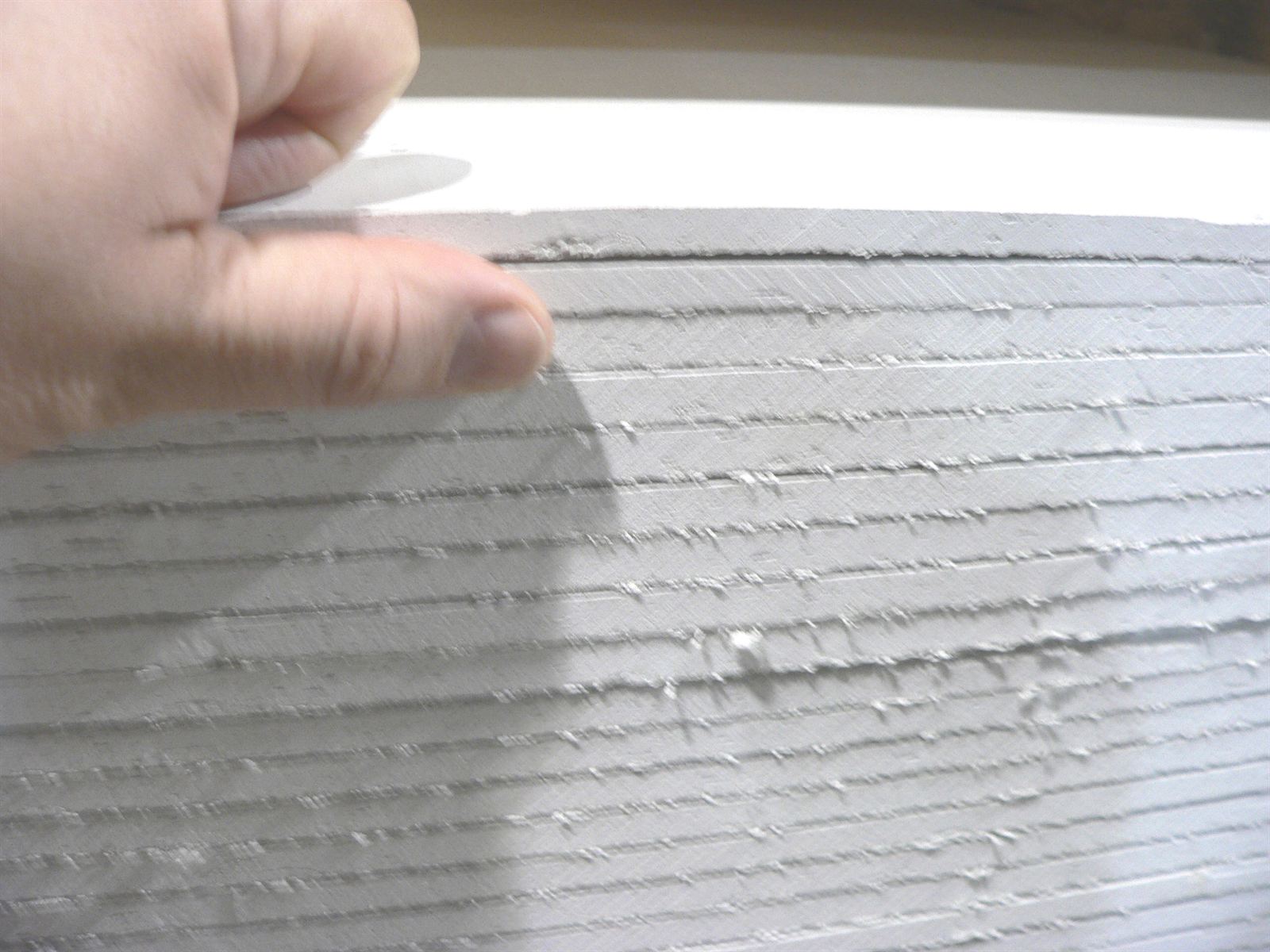
Terminology
- Calcium silicate board: panel of hydrated calcium silicate with fibers or fillers
- Semi-compressed board: denser board pressed during manufacture
Composition and production
Raw materials
- Hydrated calcium silicate with natural or man-made fibers or fillers (ASTM C656)
- Some manufacturers describe the board as Portland cement with selected fibers and fillers
Properties
Physical
- Density: semi-compressed board about 1,300 kg/m3 (about 81 lb/ft3); 6 to 12 mm board 975 kg/m3 (about 61 lb/ft3)
Thermal and moisture
- Thermal conductivity: 0.187 W/(m·K), about 1.3 Btu·in./(h·ft2·°F) for a semi-compressed board
- Keeps structural integrity after immersion in water
Fire behavior
- Classified A1 noncombustible per EN 13501-1
Standards
Material specifications
- ASTM C656: structural insulating board, calcium silicate
Uses in buildings
Building elements
- Fire-Rated Assemblies: fire-resistive boards
- Wall Cladding: external wall rain screen, eaves, fascia, and soffit linings
- Metal Stud Walls: internal drywalls
Pros and cons
Pros
- Noncombustible
- Resists moisture effects
- Can be painted, papered, or tiled
Cons
- Denser than gypsum board at about 975 to 1,300 kg/m3
Manufacturing and cost
Main manufacturers and suppliers
Sources
- ASTM: C656-17(2023), https://store.astm.org/c0656-17r23.html
- Promat: Masterclad product data sheet, https://media.promat.com/pi658886/original/272012565/promat-pds-masterclad-asia-en-2023-03.pdf
- Wikimedia Commons: Promat calcium silicate boards.jpg, photo by Achim Hering (CC BY 3.0), https://commons.wikimedia.org/wiki/File:Promat_calcium_silicate_boards.jpg