Polypropylene
Summary
Polypropylene is a semi-crystalline thermoplastic polymerized from propylene, in homopolymer and random or block copolymer grades. Its low density and chemical resistance suit piping and fibers, but it turns brittle below 0°C and cracks under UV.
Cols
Terminology
- Isotactic PP: commercial form, isotactic index 85 to 95 percent, crystallinity 30 to 60 percent
- PP-R: random copolymer with polyethylene for pipework
- Homopolymer / random copolymer / block copolymer: the three general types
History and demand
Invention
- 1951: Hogan and Banks at Phillips first polymerized propylene
- 1954: Natta and Rehn discovered isotactic stereoselective polymerization
- 1957: Montecatini began large-scale commercial production
Sourcing
- 2024 production: China about 18 million tons, the United States about 11 million, India about 7.2 million (IndexBox)
- China's capacity was about 45 million tons in 2022, 44 percent of 103.7 million tons of world capacity (Polymer Update)
Demand trend
- Second most widely produced commodity plastic after polyethylene
Properties
Physical
- Density: 0.895 to 0.93 g/cm3 (56 to 58 lb/ft3)
- Melting point: commercial isotactic 160 to 166°C (320 to 331°F); perfectly isotactic 171°C
Mechanical
- Young's modulus: 1,300 to 1,800 N/mm2 (190 to 260 ksi)
- Good fatigue resistance, used for living hinges
Thermal and moisture
- Thermal expansion significant, less than polyethylene
- Brittle below 0°C (32°F)
Fire behavior
- Flash point: 260°C (500°F); autoignition: 388°C (730°F)
Durability
- UV exposure causes cracks and crazing in external applications
- Chain degradation begins above 100°C (212°F)
Uses in buildings
Building elements
- Domestic Water Piping: potable plumbing, hydronic heating and cooling, reclaimed water
- Fibers in concrete reduce cracking and spalling; fibers mixed with soil in earthquake-prone areas
- Top waterproofing layer of some single-ply roofing membranes
Pros and cons
Pros
- Good fatigue resistance
- Thermal expansion lower than polyethylene
Cons
- Brittle below 0°C
- UV causes cracks and crazing outdoors
Sustainability
Recycled content and end of life
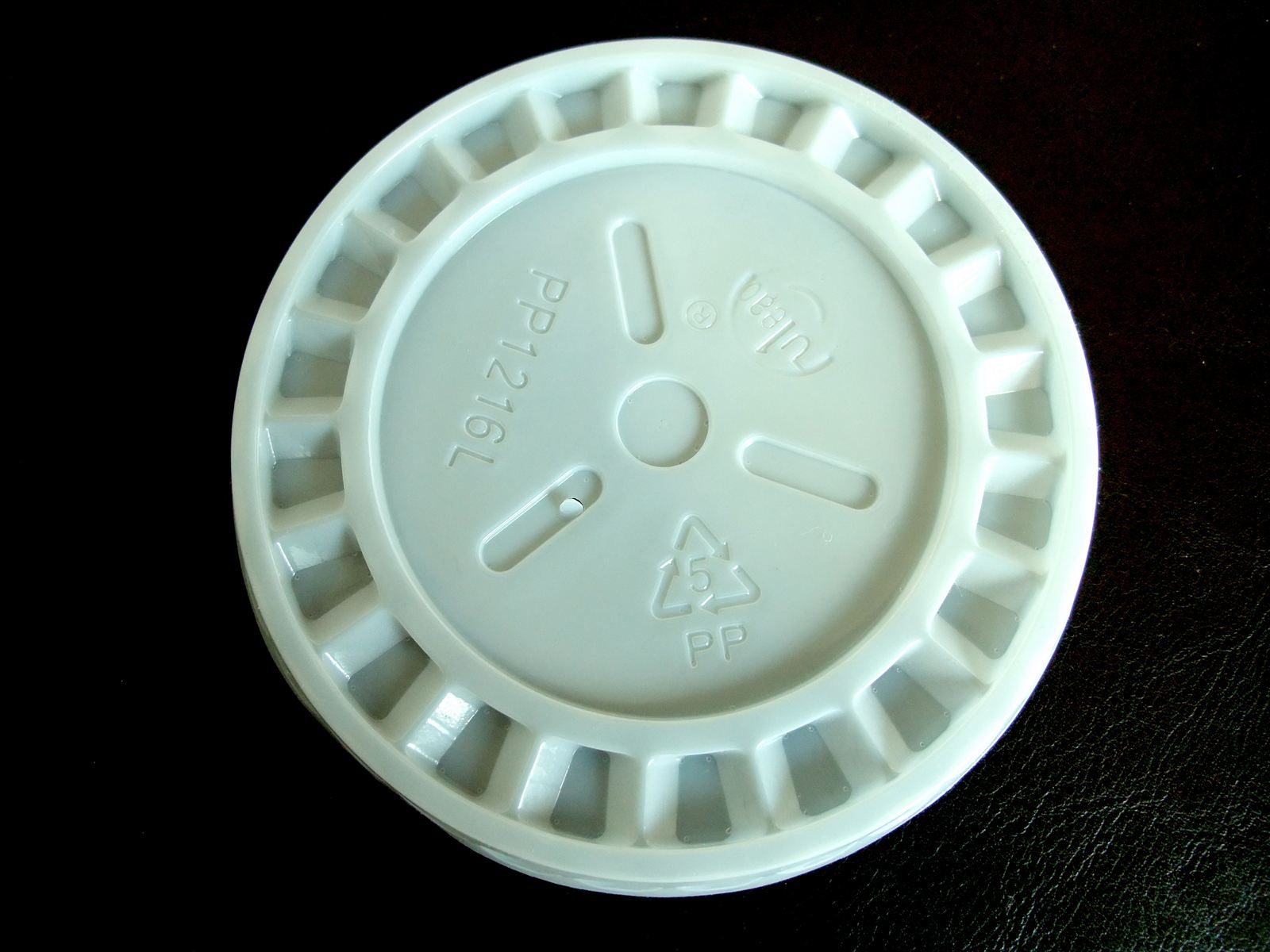
- Resin identification code 5; less than 1 percent of PP generated was recycled as of 2015
Manufacturing and cost
Main manufacturers and suppliers
Trade association: Plastics Pipe Institute.
Sources
- Wikipedia: Polypropylene, https://en.wikipedia.org/wiki/Polypropylene
- Wikimedia Commons: Polypropylene lid.JPG, photo by Mk2010 (CC BY-SA 3.0), https://commons.wikimedia.org/wiki/File:Polypropylene_lid.JPG
- IndexBox: polypropylene in primary forms, world market overview 2024, https://www.indexbox.io/blog/polypropylene-in-primary-forms-world-market-overview-2024-5/
- Polymer Update: polypropylene capacity, https://www.polymerupdate.com/Blogs/Details/1321276/All