Passive House
Summary
Passive House is a performance-based standard for very low energy buildings, certified by the Passive House Institute (PHI) and by Passive House Institute US (PHIUS). PHI uses one set of requirements worldwide and PHIUS sets climate-specific targets, so choose the certifier before modeling.
Cols
Standards
- PHI: one set of requirements for houses regardless of location; airtightness 0.6 ACH50; heating demand 15 kWh per square meter per year
- PHIUS: climate-specific rules developed from around 2012 with Building Science Corporation under a DOE grant, because designs for Germany did not translate to places like Chicago, Houston, or Las Vegas
- PHIUS prerequisites: PHIUS+ projects must meet ENERGY STAR Certified Homes, EPA Indoor airPLUS, and DOE Zero Energy Ready Home criteria in addition to the energy criteria
- Floor area basis: the European standard uses treated floor area; PHIUS 2015 uses interior calculated floor area
- Modeling tools: accounts differ on whether PHIUS accepts PHPP; PHIUS states PHIUS+ 2018 no longer supports PHPP and uses WUFI Passive; confirm current rules
Selection
- Milder climates adapted to both standards in one study; climates with large variability did better under PHIUS
- Sources disagree on whether PHIUS is more rigorous or more practical
Sources
- Passive House Institute US: PHIUS, https://www.phius.org/
- Passive House Institute: Passive House requirements, https://passivehouse.com/02_informations/02_passive-house-requirements/02_passive-house-requirements.htm
- Green Building Advisor: Passive House, PHIUS or PHI, https://www.greenbuildingadvisor.com/article/passive-house-phius-or-phi
- Energy Vanguard: why PHIUS is getting more Passive Houses certified, https://www.energyvanguard.com/blog/why-phius-getting-more-passive-houses-certified
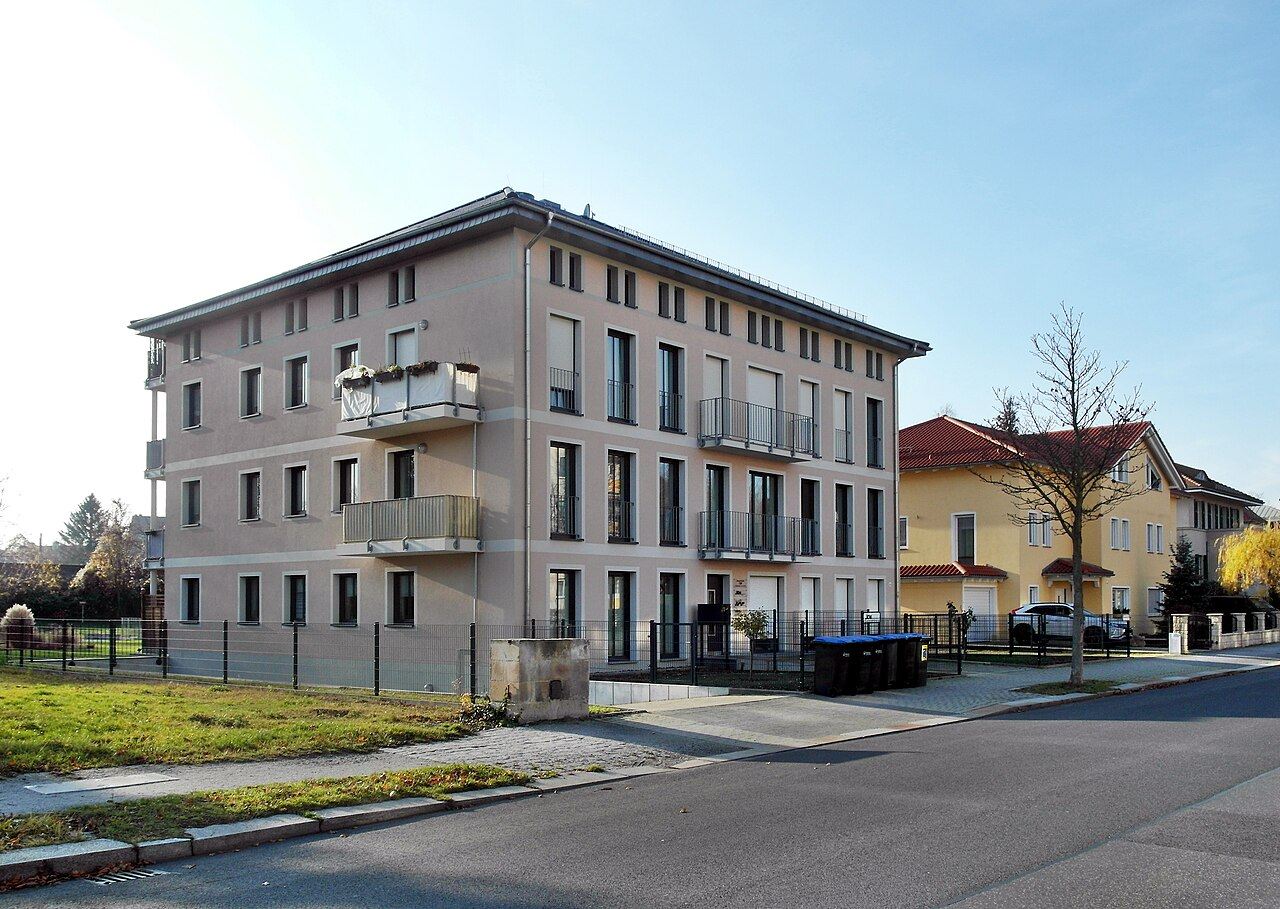
- Wikimedia Commons: 20191124100DR Dresden Passivhaus Wiener Straße 124.jpg, by Jörg Blobelt (CC BY-SA 4.0), https://commons.wikimedia.org/wiki/File:20191124100DR_Dresden_Passivhaus_Wiener_Straße_124.jpg