Copper
Summary
Copper is a ductile, corrosion-resistant metal with higher thermal conductivity than aluminum or zinc, supplied as drawn tube (ASTM B88, B306), rolled sheet (ASTM B370), and wire. It serves plumbing, roofing and flashing, and electrical conductors, with tube type and sheet weight set by the application.
Cols
Terminology
- Type K / L / M: water tube wall classes under ASTM B88; K heaviest wall, then L, then M
- DWV: drain, waste, and vent tube under ASTM B306
- Cold-rolled copper: sheet for roofing and flashing under ASTM B370
- Ounce weight: sheet specified in oz per sq ft (16 oz is about 0.022 in., 20 oz about 0.027 in.)
- Verdigris: green copper carbonate patina
- Lead-coated copper: copper sheet with a lead coating, ASTM B101
History and demand
First uses in construction
- Plumbing: galvanized iron pipe was standard in the United States from the late 1800s to about 1960, after which copper took over, first soft copper with flared fittings and then rigid tube with soldered fittings
- Plastics later displaced copper in some uses: PVC for drain, waste, and vent, and CPVC in residential water supply from about 1959
Sourcing
- 2025 mine output was about 23 million tonnes; Chile made about 5.3 million tonnes (about 23 percent), the Democratic Republic of Congo about 3.2 million, Peru about 2.7 million, and China about 1.8 million (USGS 2026 estimates)
- China is the largest refiner, about 48 percent of refined copper, about 14 million tonnes
Demand trend
- Rising overall: world production was about 22.8 to 22.9 million metric tons in 2024; demand is expected to grow about 50 percent by 2040 on clean energy, electric vehicles, and grid upgrades
- More than 95 percent of all copper ever mined has been extracted since 1900; recycled copper supplied about one-third of global demand in 2023
- Plumbing share has fallen against plastic piping
Composition and production
Product forms
- Tube: Type K, L, M water tube (ASTM B88) and DWV tube (ASTM B306), straight lengths to 20 ft
- Sheet and strip: rolled for roofing, flashing, and gutters (ASTM B370)
- Shingles: preformed copper shingles
Grades and types
| Product | Standard | Color code | Sizes and use |
|---|---|---|---|
| Type M tube | ASTM B88 | Red | 1/4 to 12 in.; domestic water, fire protection, solar, fuel oil, HVAC, snow melting |
| Type K and L tube | ASTM B88 | Not shown in source | Water service and distribution; K has the heavier wall |
| DWV tube | ASTM B306 | Yellow | 1-1/4 to 8 in.; drain, waste, vent, solar, HVAC |
| Roofing and flashing sheet | ASTM B370 | None | Cold-rolled (H00) and soft (O60) tempers |
Properties
Physical
- Density: 8.935 g/cm³ at 68°F, about 558 lb/ft³
- Patina: brown-black copper oxide first, then green copper carbonate (verdigris)
Mechanical
- Modulus of elasticity: 110 to 128 GPa (about 15,900 to 18,600 ksi)
Thermal and moisture
- Thermal conductivity: about 2,780 Btu·in./(h·ft²·°F) (401 W/(m·K))
- Coefficient of thermal expansion: 9.2 × 10⁻⁶ in./in./°F (16.64 × 10⁻⁶/K at 68°F)
Fire behavior
- Melting point: 1,984°F (1,085°C)
Standards
Material specifications
- ASTM B88: seamless copper water tube
- ASTM B306: copper drainage tube (DWV)
- ASTM B370: copper sheet and strip for building construction
- ASTM B101: lead-coated copper sheet and strip for building construction
Uses in buildings
Building elements
- Domestic Water Piping: Type K, L, and M tube
- Sanitary and Vent Piping: DWV tube
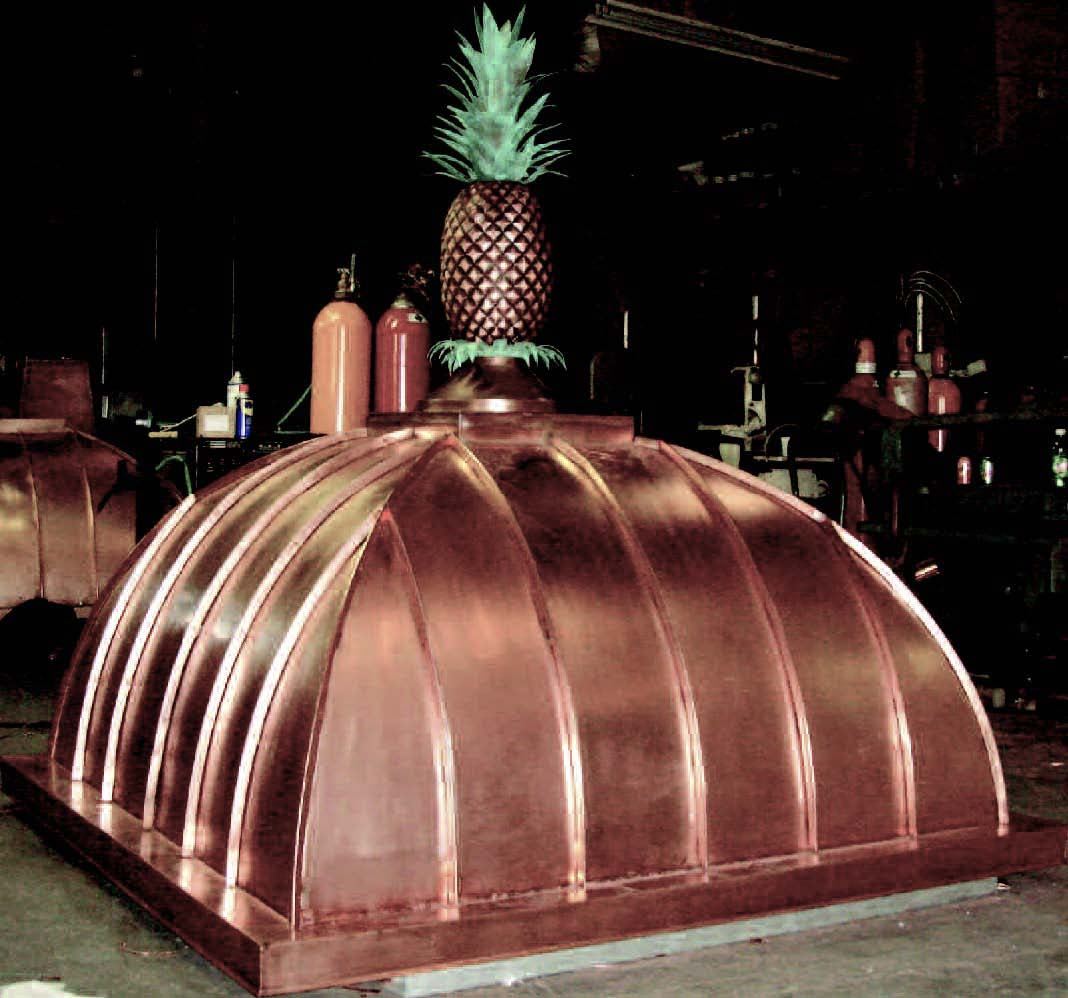
- Standing Seam Metal Roofing, Roof Drainage Systems, Sealants and Flashing: roofing panels, gutters, and flashing
- Metal Wall Panels: shingles and cladding
- Panelboards, Switchboards, Transformers: bus bars and windings
Pros and cons
Pros
- Thermal conductivity of 401 W/(m·K), against 237 for aluminum and 116 for zinc
- Forms a stable patina in service
- Tube in pressure (B88) and drain (B306) grades
- Sheet in several ounce weights for roofing, flashing, and gutters
Cons
- Highest density of the nonferrous metals here (8.935 g/cm³)
- Surface color changes from brown-black oxide to green verdigris over time
Finishes and treatments
- Natural patina: brown-black oxide, then green verdigris; rate varies with climate and exposure
- Lead coating: lead-coated copper sheet (ASTM B101)
Sustainability
Recycled content and end of life
- International Copper Association comparative LCA of water installations (global): the copper system's recycling credit lowers its footprint by more than 30 percent against PEX and PEX-Al systems
Manufacturing and cost
Main manufacturers and suppliers
Trade association: Copper Development Association.
Sources
- Wikipedia: Copper, https://en.wikipedia.org/wiki/Copper
- Wikipedia: Plumbing, https://en.wikipedia.org/wiki/Plumbing
- PHCP Pros: a history of CPVC in residential plumbing, https://www.phcppros.com/articles/16082-a-history-of-cpvc-in-residential-plumbing
- Copper Development Association: copper tube types, https://copper.org/applications/plumbing/overview/commy_tube_tbl.php
- ASTM International: B370 copper sheet and strip for building construction, https://store.astm.org/b0370-22.html
- ATAS: copper availability and attributes, https://atas.com/did-you-know-series/copper-availability-and-attributes
- IBHS: RICOWI roof guide, copper, https://ibhs.org/guidance/ricowi-roof-guide-copper/
- International Copper Association: comparative LCA of water installation, https://internationalcopper.org/wp-content/uploads/2022/09/FINAL_Comparative-LCA-of-Water-Installation-5-pages-summary-for-public-release_WITH-GRAPHIC-REF.pdf
- UpCodes: 2024 IBC Chapter 14 exterior walls, https://up.codes/viewer/department-of-defense/ibc-2024/chapter/14/exterior-walls
- Wikimedia Commons: Copper-dome.jpg, photo by RutlandGutterSupply (CC BY-SA 3.0), https://commons.wikimedia.org/wiki/File:Copper-dome.jpg
- USGS: Mineral Commodity Summaries 2026, copper, https://pubs.usgs.gov/periodicals/mcs2026/mcs2026-copper.pdf
- Mining Visuals: copper's big shift, who is producing the world's copper now, https://www.miningvisuals.com/post/coppers-big-shift-whos-producing-the-worlds-copper-now