Drinking Fountains and Bottle Fillers
Summary
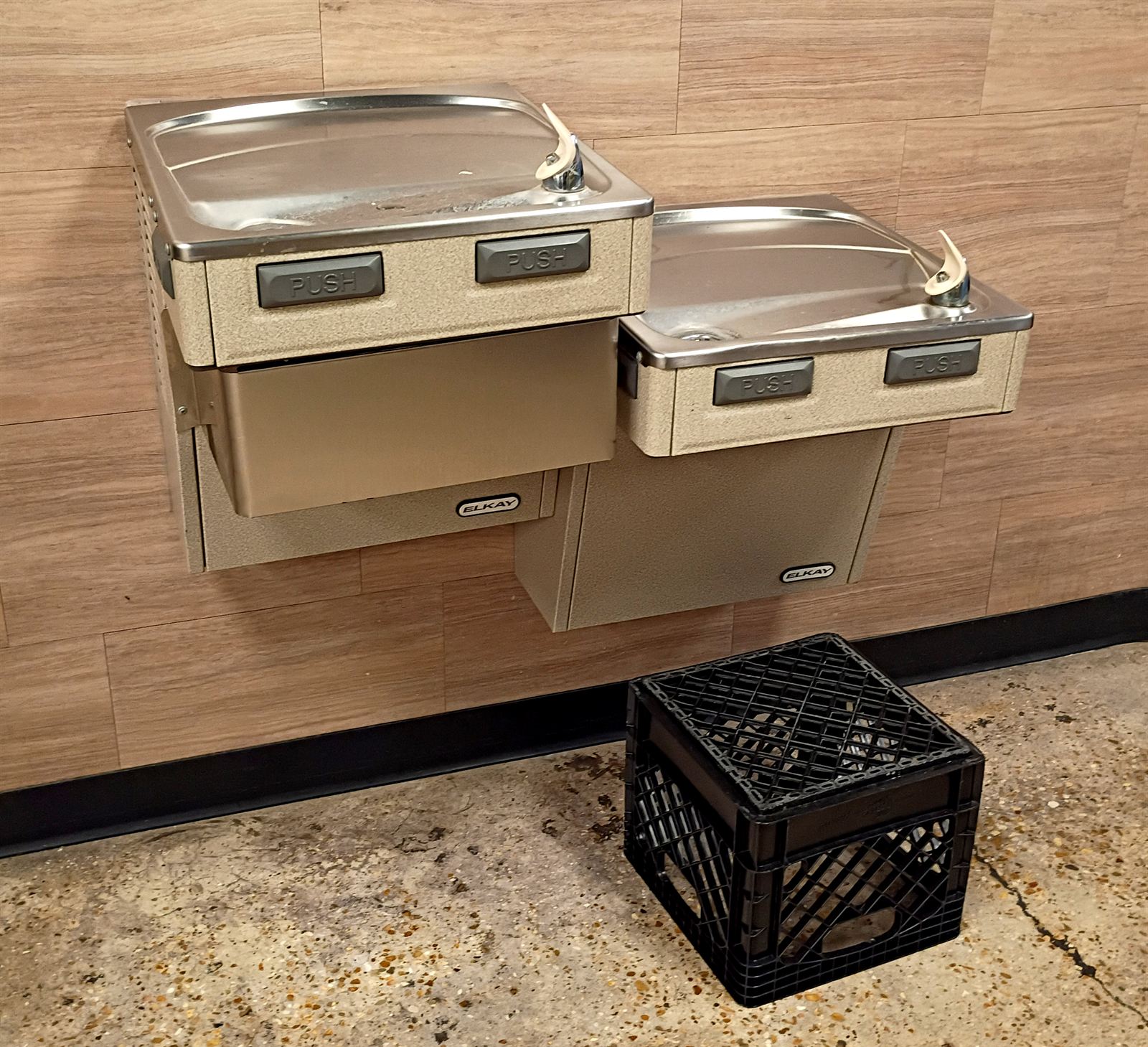
Drinking fountains and electric water coolers provide potable drinking water through a bubbler, often combined with a bottle filling station, and are usually installed as high-low pairs for wheelchair users and standing persons. They project from walls and need alcoves, recesses, or cane-detectable placement, so locations must be planned with corridors and restroom cores.
Cols
Terminology
- Drinking fountain: fixture with a bubbler spout; may be unrefrigerated
- Electric water cooler (EWC): refrigerated drinking fountain
- Bottle filling station: water dispenser for filling bottles, often with filter and counter
- Hi-lo (bi-level) unit: paired fountains at wheelchair and standing heights
- Water dispenser: code term covering bottle fillers and similar units
- Protruding object: wall-mounted element that must not be a hazard on circulation routes
Standards
Ratings
- Not required where occupant load is 15 or fewer
- At least two required where fountains are required, one for wheelchair users and one for standing persons; a dual-height unit may count as both
- Water dispensers may replace up to 50 percent of required fountains where three or more are required
- Not allowed in public restrooms
- Accessible spouts 36 in. maximum above the floor, at least 15 in. from the vertical support, and 5 in. maximum from the front edge; water flow at least 4 in. high
- Standing-height spouts 38 in. to 43 in. above the floor
- Wall-mounted units between 27 in. and 80 in. above the floor project 4 in. maximum into circulation paths
Test standards
- ASME A112.19.1/CSA B45.2, ASME A112.19.2/CSA B45.1, ASME A112.19.3/CSA B45.4: fixtures
- NSF 61 / NSF 372: drinking water components and lead content
- 2010 ADA Standards: drinking fountains
Components
- Basin and bubbler: stainless steel
- Chiller: refrigeration unit for EWCs
- Bottle filler: sensor-activated, often with filter and counter
- Trap, supply, and carrier
Detailing
- Place fountains in alcoves or recesses to avoid protruding objects in corridors
- Provide forward-approach clear floor space with knee clearance at accessible units
- Coordinate carriers and electrical power for coolers and bottle fillers
- Locate near restrooms but outside them
Uses
Specific uses
- Schools and universities
- Offices and public buildings
- Airports, transit, and gyms
- Parks and outdoor public spaces (freestanding)
Pros and cons
Pros
- Bottle fillers reduce single-use plastic
- Hi-lo units serve all users
- Filtered units improve taste and lower lead risk
Cons
- Projections need alcoves in corridors
- Filters and chillers need maintenance
- Power required for coolers and sensors
Manufacturing and cost
Construction
- Factory-built units mounted on carriers or wall brackets; connected to supply, waste, and power
Main manufacturers and suppliers
Trade association: Plumbing Manufacturers International.
Sources
- UpCodes: 2024 IPC Chapter 4 fixtures, faucets, and fixture fittings (GSA adoption without amendments), https://up.codes/viewer/general-services-administration/ipc-2024/chapter/4/fixtures-faucets-and-fixture-fittings
- Corada: 2010 ADA Standards Section 602 drinking fountains, https://www.corada.com/documents/2010ADAStandards/602
- Maryland General Assembly: HB 277 fiscal note (bottle filling substitution), https://mgaleg.maryland.gov/2025RS/fnotes/bil_0007/hb0277.pdf
- Wikimedia Commons: Water Cooler - Drinking fountains in Louisiana.jpg, by Paul Lowry (CC BY 4.0), https://commons.wikimedia.org/wiki/File:Water_Cooler_-_Drinking_fountains_in_Louisiana.jpg