Wildland-Urban Interface Planting
Summary
Wildland-urban interface planting limits the fuel in a landscape through plant choice, spacing, and removal of dead material and ladder fuels. No plant is fireproof, so maintenance and distance from the building matter as much as species.
Cols
Selection
- Fire-resistant traits: moist, thick leaves with high water content
- Highly flammable traits: fine, dry, dead material within the plant, aromatic leaves, and resinous sap; avoid near homes
- Hardiness: choose plants for your zone or the next colder zone
- Not fireproof: all plants burn under the right conditions
Detailing
- Zone 0 (0 to 5 ft): minimal planting; irrigated, maintained vegetation is allowed in some programs; wood mulch is discouraged and gravel preferred
- Trees: allow at least 10 ft clearance to the structure at full maturity; avoid trees that overhang roofs or drop needles that collect in gutters and valleys
- Zone 1 (5 to 30 ft): plant in small, irregular clusters and not large masses; remove ladder fuels under trees
Coordination
- Local ordinances: can be stricter than state rules
- Irrigation: maintained moisture keeps fire-resistant plants resistant
Sources
- Defensible Space (Idaho Firewise): landscape guidance, https://defensiblespace.org/?p=538
- Fire Safe Marin: defensible space zones, https://firesafemarin.org/create-a-fire-smart-yard/defensible-space/defensible-space-zones/
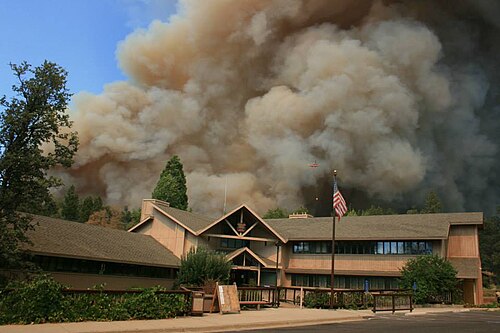
- Wikimedia Commons: Creating fire resilient landscapes is important in the Wildland Urban Interface (17995795224).jpg, by Pacific Southwest Region 5 (Public domain), https://commons.wikimedia.org/wiki/File:Creating_fire_resilient_landscapes_is_important_in_the_Wildland_Urban_Interface_(17995795224).jpg