Landscaping and Planting
Summary
Landscaping and planting covers installing trees, shrubs, groundcovers, and lawns, including the soil they grow in, the nursery stock standards they are bought to, and the planting details that decide survival. Soil depth, planting depth at the root flare, and mulch placement cause most early failures, so they are specified and inspected.
Cols
Terminology
- Root flare: the widening at the base of the trunk where roots begin
- B&B (balled and burlapped): field-grown tree dug with a root ball wrapped in burlap
- Container stock: plants grown and sold in containers
- Caliper: trunk diameter used to size shade trees
- Topsoil / loam: growing medium, often silt, sand, clay, and organic matter
- Organic matter: compost or peat that improves soil structure and water holding
- Mulch: organic or inorganic cover over the root zone
- Volcano mulching: mulch piled against the trunk, which is discouraged
- Finish grade: final soil surface after planting
Standards
- ANSI Z60.1, American Standard for Nursery Stock: caliper, height, root ball diameter, and container size charts for nursery plants; the 2014 edition is free from AmericanHort
- Plant specifications: project specifications commonly require ball size not less than the Z60.1 recommendation, and B&B stock where trees exceed container size limits in Z60.1
- Hardiness: match plants to the plant hardiness zone; see the climate notes
Selection
- Native and adapted species: match climate, soil, and water supply; see the planting strategies note
- Soil organic matter: at least 2.5 to 3 percent is preferable for lawns, and one Missouri source cites 4 to 6 percent for topsoil or topsoil-compost blends
- Topsoil depth: at least 4 to 6 in. of nutrient-rich topsoil for lawn
- Soil test: pH, phosphorus, potassium, and organic matter before establishing a new lawn
- Spacing and mature size: keep trees away from buildings, utilities, and solar panels
Detailing
Planting trees and shrubs
- Root flare: set at ground level, no deeper; find it in the root ball before digging
- Hole size: same depth as the root ball and 2 to 3 times wider
- Ball position: one municipal specification sets the top of B&B stock 1 to 2 in. above finished grade
- Mulch: 2 to 3 in. of organic mulch (2 to 4 in. in some sources) spread toward the drip line, kept 2 to 4 in. off the trunk
- Avoid: volcano mulch piled against the bark
Lawns and beds
- Compaction: till compacted soil at least 3 to 4 in. before planting; scarify subgrade to 6 in. in one specification when importing topsoil
- Amendments: spread organic matter evenly and incorporate to about 3 in. with a tiller
- Local requirements: one municipal specification calls for 1.75 in. of compost into 6.25 in. of soil in lawn areas
Coordination
- Provide irrigation and drainage with the planting plan
- Keep shrubs and trees away from drain lines
- Protect existing trees and critical root zones during construction
Uses
Specific uses
- Street trees and shade trees
- Foundation and screening plantings
- Lawns, play fields, and meadows
- Rain gardens, swales, and buffers
- Fire-wise and habitat plantings
Pros and cons
Pros
- Shade, shelter, screening, and stormwater benefits
- Raises site value and comfort
- Soil and plant choices can reduce irrigation
Cons
- Requires establishment watering and maintenance
- Roots can conflict with paving, foundations, and utilities
- Plant failure from poor soil, depth, or mulch practice is common
Manufacturing and cost
Construction
- Plants are grown and dug at nurseries and installed on site into prepared soil, then mulched and watered through establishment
Main manufacturers and suppliers
Trade associations: AmericanHort and American Society of Landscape Architects.
Sources
- AmericanHort: American Standard for Nursery Stock, ANSI Z60.1, https://www.americanhort.org/
- Clemson Cooperative Extension: plant a tree, https://hgic.clemson.edu/plant-a-tree/
- University of Illinois Extension: tree planting info sheet, https://extension.illinois.edu/sites/default/files/info_sheet_tree_planting.pdf
- Purdue Extension: tree planting FAQ, https://www.extension.purdue.edu/extmedia/fnr/fnr-faq-18-w.pdf
- University of Missouri Extension: lawns and soil, https://extension.missouri.edu/publications/g6955
- University of Georgia Extension: lawn establishment, https://secure.caes.uga.edu/extension/publications/files/pdf/C 1058-1_3.PDF
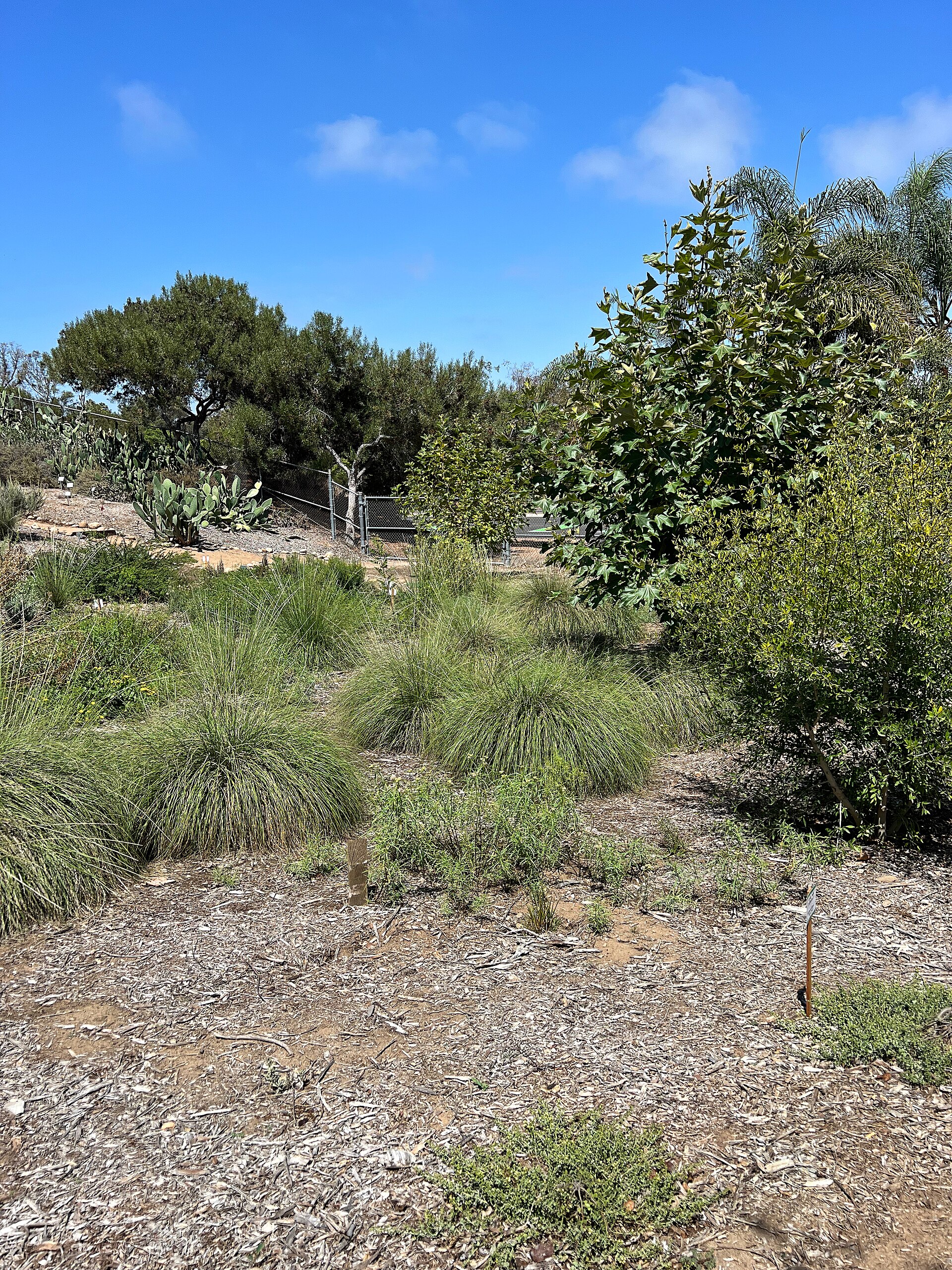
- Image: Landscaped native-plant garden bed with bunchgrass and prickly pear, Point Loma, San Diego, California.jpg, Z3lvs, CC0, https://commons.wikimedia.org/wiki/File:Landscaped_native-plant_garden_bed_with_bunchgrass_and_prickly_pear,_Point_Loma,_San_Diego,_California.jpg