Travertine
Summary
Travertine is a freshwater limestone that precipitates from spring and groundwater, with a banded, porous texture, cut as dimension stone for floors, paving, cladding, and spa surfaces. Its porosity and voids differ between deposits, so specify the finish and any filling together with the ASTM C1527 requirements.
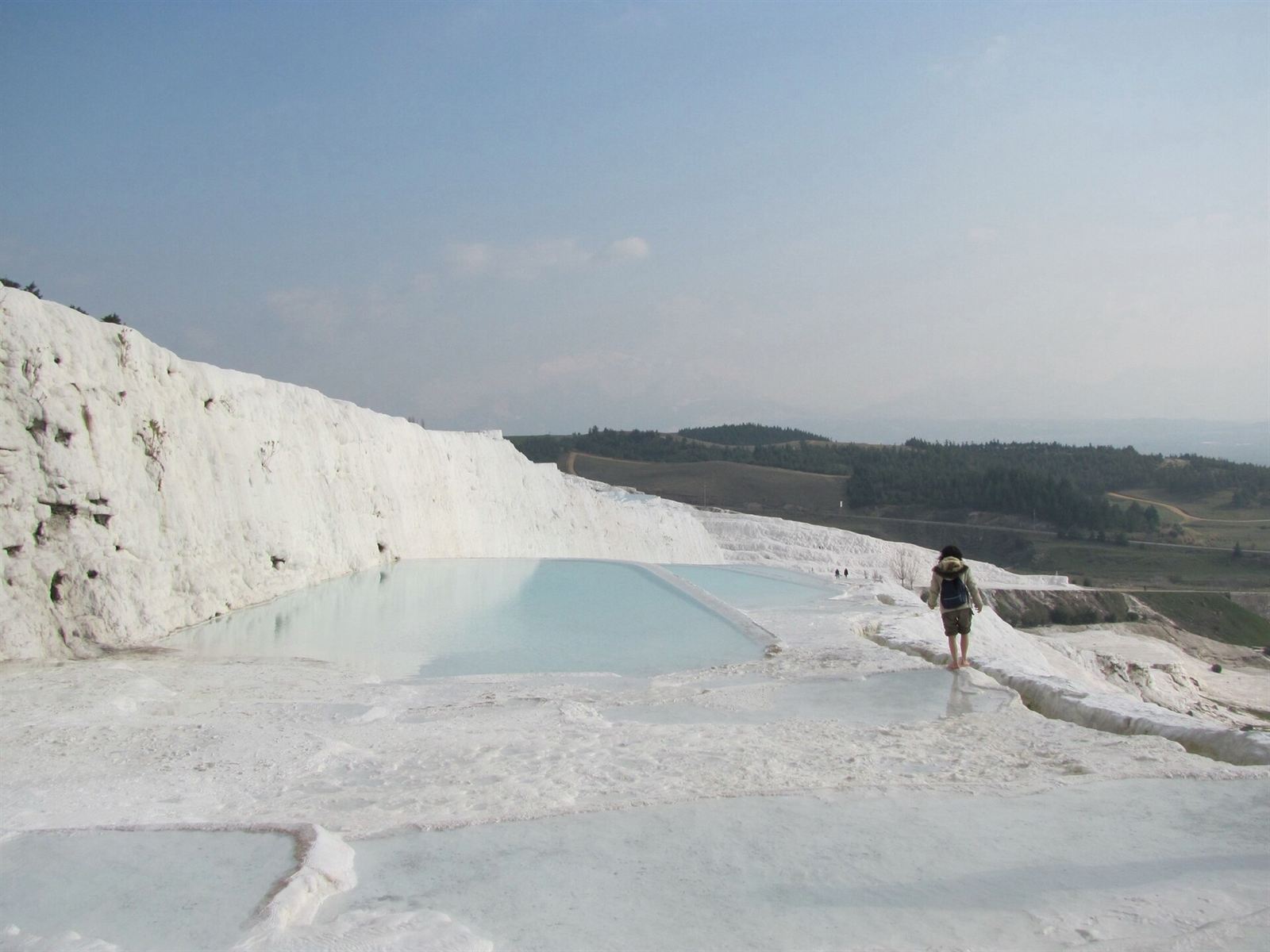
Terminology
- Thermogene travertine: deposits from hot springs
- Meteogene travertine: cave deposits formed through soil-derived carbon dioxide
- Tufa: the porous, softer freshwater limestone related to travertine
- Dense travertine: compact material that polishes well for decorative use
History and demand
First uses in construction
- Romans mined travertine for temples, monuments, aqueducts, bath complexes, and amphitheaters
- The Colosseum, begun about AD 70 to 72 and completed in AD 80, is described as the largest building in the world constructed mostly of travertine; its outer wall is estimated to have needed over 100,000 m3 of travertine, set without mortar and held with about 300 tons of iron clamps
- Travertine from Tivoli has been quarried for at least 2,000 years
Sourcing
- Italy: Tivoli, about 25 km east of Rome, and Guidonia; Italy held a near-monopoly until the 1980s
- Turkey is now a major source, and Mexico, China, Peru, and Spain are significant producers
- United States: a quarry west of Belen, New Mexico, supplied the State Capitol rotunda and University of New Mexico buildings
- US imports in 2019 were 17,808 metric tons, of which 12,804 came from Turkey (Wikipedia)
Demand trend
- Imports are dominated by Turkey; the 2019 US import figure above is the only dated demand figure found in the sources checked
Grades and types
- By origin: thermogene (hot-spring) and meteogene (cave) deposits
- By texture: dense, banded or fibrous travertine versus porous tufa
- By color: white, tan, cream, and rusty, with brown to yellow tones from impurities
Properties
Physical
- Porosity: fresh travertine about 10 to 70 percent; hot-spring travertine averages about 26 percent
- Workability: relatively easy to work and typically lacks planes of weakness; dense stone polishes well
Thermal and moisture
- Porosity gives thermal and acoustic insulation and makes the stone light for its strength
Standards
Material specifications
- ASTM C1527: travertine dimension stone
- ASTM C503: marble dimension stone, which has a class for travertine
Test methods
- ASTM C97: absorption and density
- ASTM C170: compressive strength
Uses in buildings
Building elements
- Wall Cladding: facade and panel cladding, including spa walls and ceilings
- Site Paving: patios and paving
Pros and cons
Pros
- Light for its strength
- Easy to work and polish when dense
- Warm colors and banded pattern
Cons
- Porous, with voids that may be filled
- Properties vary between deposits
- Imports depend on a few countries
Manufacturing and cost
Main manufacturers and suppliers
Trade association: Natural Stone Institute.
Sources
- Wikipedia: Travertine, https://en.wikipedia.org/wiki/Travertine
- Wikipedia: Colosseum, https://en.wikipedia.org/wiki/Colosseum
- USGS: Mineral Commodity Summaries 2026, stone (dimension), https://pubs.usgs.gov/periodicals/mcs2026/mcs2026-stone-dimension.pdf
- iTeh Standards: ASTM C503 marble dimension stone, https://standards.iteh.ai/catalog/standards/astm/cc7a32d4-6083-433e-a9e6-aa265845ad15/astm-c503-03
- Image: The Travertine terraces of Pamukkale.jpg, Slyronit, CC BY-SA 4.0, https://commons.wikimedia.org/wiki/File:The_Travertine_terraces_of_Pamukkale.jpg