Vegetated Roofs
Summary
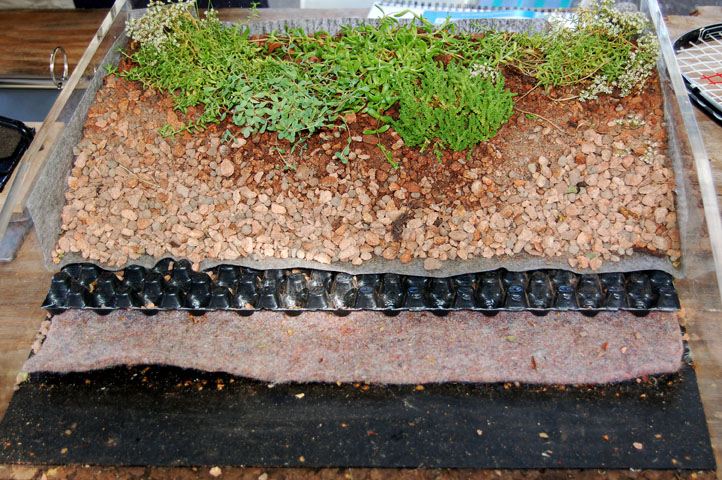
Vegetated roofs layer root-resistant waterproofing, protection, drainage and retention, filter fabric, engineered growing medium, and plants over a structural deck, ranging from thin extensive sedum systems to deep intensive gardens. They manage stormwater and heat and can add usable space, but saturated weight, waterproofing quality, leak detection, wind and fire design, irrigation, and maintenance must be resolved first.
Cols
Terminology
- Extensive: shallow growing medium (6 in. or less), low-growing sedums and grasses, little maintenance
- Intensive: deeper medium (over 6 in.), shrubs and trees, irrigation and regular maintenance
- Semi-intensive: in between; mixed plantings
- Growing medium: engineered lightweight mineral-based soil
- Drainage / retention layer: dimpled panels, mats, or aggregate that drain and store water
- Root barrier: sheet or membrane property that stops root penetration
- Protected membrane roof (PMR): insulation above the membrane, under the vegetation
- Vegetation-free zone: gravel or paver border at perimeters, drains, and penetrations for fire and maintenance
- Electronic leak detection (ELD): testing that locates membrane breaches before and after overburden
- Tray system / modular: pre-grown plant trays set on the membrane
- Sedum mat: pre-vegetated mat installed like sod
Standards
Ratings
| Type | Medium depth | Saturated weight |
|---|---|---|
| Extensive | 6 in. or less | 10 to 35 psf |
| Semi-intensive | Around 6 in. | 35 to 50 psf |
| Intensive | Over 6 in. | 35 to 300 psf |
- Rule of thumb: about 7 psf per inch of saturated medium; pavers, furnishings, and people are extra
- Fire and wind performance per SPRI vegetative roof standards and tested assemblies
Test standards
- ANSI/SPRI VF-1: fire design for vegetative roofs
- FLL guidelines: German green roof guidelines for media and root resistance
- Electronic leak detection per the membrane manufacturer
Materials
- Waterproofing: hot-applied rubberized asphalt, PVC, EPDM, or modified bitumen with root barrier
- Insulation: extruded polystyrene in PMR assemblies
- Drainage and retention panels: plastic dimple boards or mats
- Growing media: expanded shale, clay, or slate with organic content
- Plants: sedums and drought-tolerant species for extensive; varied plantings for intensive
- Irrigation: drip or spray where plants need it
Detailing
- Design structure for saturated weight plus live loads and snow
- Test the membrane with flood or electronic leak detection before placing overburden
- Keep vegetation-free borders at perimeters, drains, and penetrations
- Provide inspection chambers over drains; keep drains accessible
- Secure media and plants against wind scour at corners and edges
- Plan maintenance access, hose bibs, and safety tie-offs
Uses
Specific uses
- Stormwater retention to meet site runoff limits
- Urban heat island reduction
- Amenity roofs and roof gardens on residential and office buildings
- Membrane protection from UV and temperature swings
- Plaza decks over parking structures
Pros and cons
Pros
- Reduces and delays stormwater runoff
- Lowers roof surface temperatures and protects the membrane
- Adds habitat and usable outdoor space
- Can earn stormwater credits
Cons
- Heavy; adds structural cost
- Leak repair requires removing overburden
- Ongoing maintenance and possible irrigation
- Wind, fire, and drainage design add complexity
Manufacturing and cost
Construction
- Waterproofing installed and tested; protection, insulation, and drainage layers placed
- Filter fabric and growing media installed; plants added as plugs, seed, mats, or trays
Main manufacturers and suppliers
Trade association: Green Roofs for Healthy Cities.
Typical costs
- Extensive green roof, installed: $10 to $25 per sq ft above the waterproofing
- Intensive green roof, installed: $20 to $60 per sq ft
- Maintenance: about $0.75 to $1.50 per sq ft per year
Sources
- Minnesota Stormwater Manual: characteristics of extensive and intensive green roofs, https://stormwater.pca.state.mn.us/general_characteristics_of_extensive_and_intensive_green_roofs
- Iowa DNR: stormwater manual, green roofs, https://www.iowadnr.gov/media/7403
- Construction Specifier: ecological roofing options, https://www.constructionspecifier.com/greener-by-design-exploring-options-with-ecological-roofing/2/
- HomeAdvisor: green roof installation cost, https://www.homeadvisor.com/cost/roofing/green-roof
- UpCodes: 2024 IBC Chapter 15 (vegetative roofs, ANSI/SPRI VF-1), Chapter 15 Roof Assemblies and Rooftop Structures: Department of Defense Building Code 2024 | UpCodes
- Wikimedia Commons: Construction sample of a green roof system.jpg, by thingermejig (CC BY-SA 2.0), https://commons.wikimedia.org/wiki/File:Construction_sample_of_a_green_roof_system.jpg