VAV Terminal Units
Summary
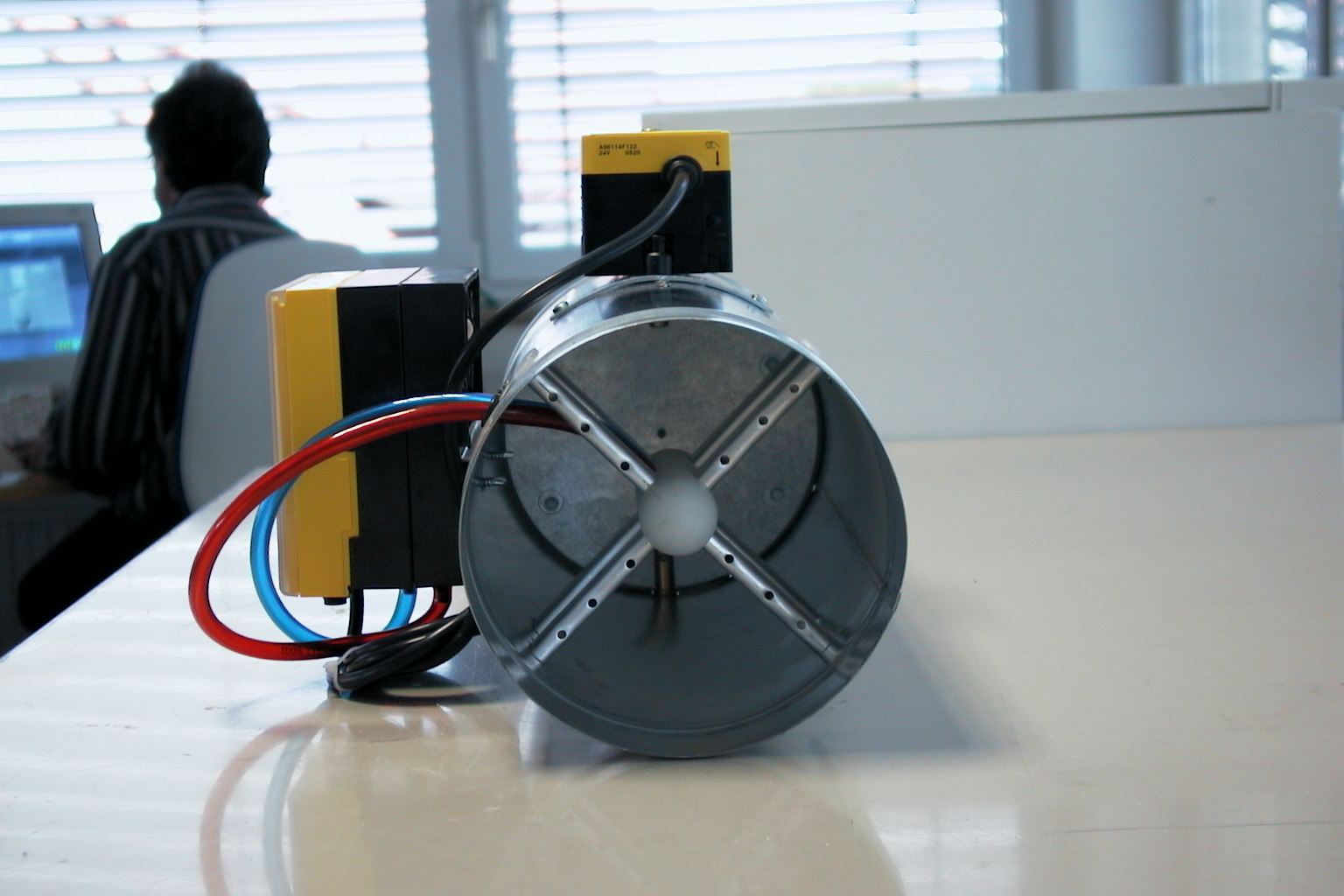
VAV terminal units are sheet metal boxes in the ductwork with a damper, airflow sensor, and controller that vary supply air to a zone, often with hot water or electric reheat coils and, in fan-powered types, a small fan that mixes plenum air. They create the zones of a central VAV system, so box locations, ceiling access, reheat source, and noise near quiet rooms must be coordinated with ceilings and layouts.
Cols
Terminology
- Single-duct VAV: damper and controller only; cooling-only or with reheat
- Pressure-independent: controls airflow regardless of duct static pressure using a flow sensor
- Reheat coil: hot water or electric coil in the discharge
- Series fan-powered box: fan runs continuously, mixing primary and plenum air
- Parallel fan-powered box: fan runs only at low primary airflow or in heating
- Dual-duct box: mixes hot and cold supply ducts
- Minimum airflow setpoint: lowest primary airflow for ventilation and reheat
- Discharge air temperature control: reheat control limiting supply air temperature
Standards
Ratings
- Damper leakage rated per AHRI 880
- Radiated and discharge sound ratings per AHRI 880 and AHRI 885 for noise design
- Minimum airflow and reheat limits set by the energy code
Test standards
- AHRI 880: air terminal performance and sound
- AHRI 885: estimating sound levels in occupied spaces
- ASHRAE 62.1: zone ventilation
Components
- Casing and damper: insulated sheet metal with round or rectangular inlet
- Flow sensor: multipoint velocity sensor
- Controller and actuator: DDC controller
- Reheat coil: hot water or electric
- Fan and motor: fan-powered boxes, often ECM motors
- Attenuator: discharge sound attenuator
Detailing
- Locate boxes above corridors or service areas, not above conference rooms or private offices
- Provide access panels in hard ceilings and clearance for controls and coils
- Provide straight inlet duct for accurate airflow sensing
- Coordinate hot water piping or electric power to reheat coils
- Limit box size per zone to keep noise and turndown reasonable
Uses
Specific uses
- Office buildings
- Schools and universities
- Hospitals (with pressure-independent boxes)
- Laboratories (specialized air valves)
- Retail and mixed-use buildings with central AHUs
Pros and cons
Pros
- Individual zone temperature control
- Fan energy savings at part load
- Works with economizers and energy recovery at the AHU
- Fan-powered boxes improve perimeter heating air movement
Cons
- Reheat energy at low loads
- Fan-powered boxes add noise and maintenance above ceilings
- Many boxes need access and controls commissioning
- Requires ceiling plenum space
Manufacturing and cost
Construction
- Boxes built at the factory with controls mounted; hung from structure
- Connected to duct, piping, power, and control network; balanced at commissioning
Main manufacturers and suppliers
Trade association: AHRI.
Typical costs
- VAV box, installed: about $750 to $5,500, averaging about $2,000
- VAV box with reheat, installed: about $2,800 to $3,800 average
- Fan-powered box, installed: about $400 to $1,800
Sources
- PickComfort: VAV box cost ranges, https://www.pickcomfort.com/vav-box-cost-price-ranges-hvac-projects/
- PickComfort: VAV box reheat coil price, https://www.pickcomfort.com/vav-box-reheat-coil-price-typical-costs/
- Central Carolina Technical College: 23 36 00 air terminal units specification, https://www.cctech.edu/wp-content/uploads/233600-Air-Terminal-Units.pdf
- ASHRAE: standards, https://www.ashrae.org/
- Wikimedia Commons: Volumenstromregler mit Messkreuz.jpg, by SCHAKO wiki (CC BY-SA 4.0), https://commons.wikimedia.org/wiki/File:Volumenstromregler_mit_Messkreuz.jpg