Track and Rail Lighting
Summary
Track and rail lighting is a powered channel, line-voltage track or low-voltage rail, carrying movable, aimable heads that can be relocated and re-aimed without rewiring. It suits spaces where displays change, but track type and circuit count, head compatibility, dimming, and glare control must be chosen together.
Cols
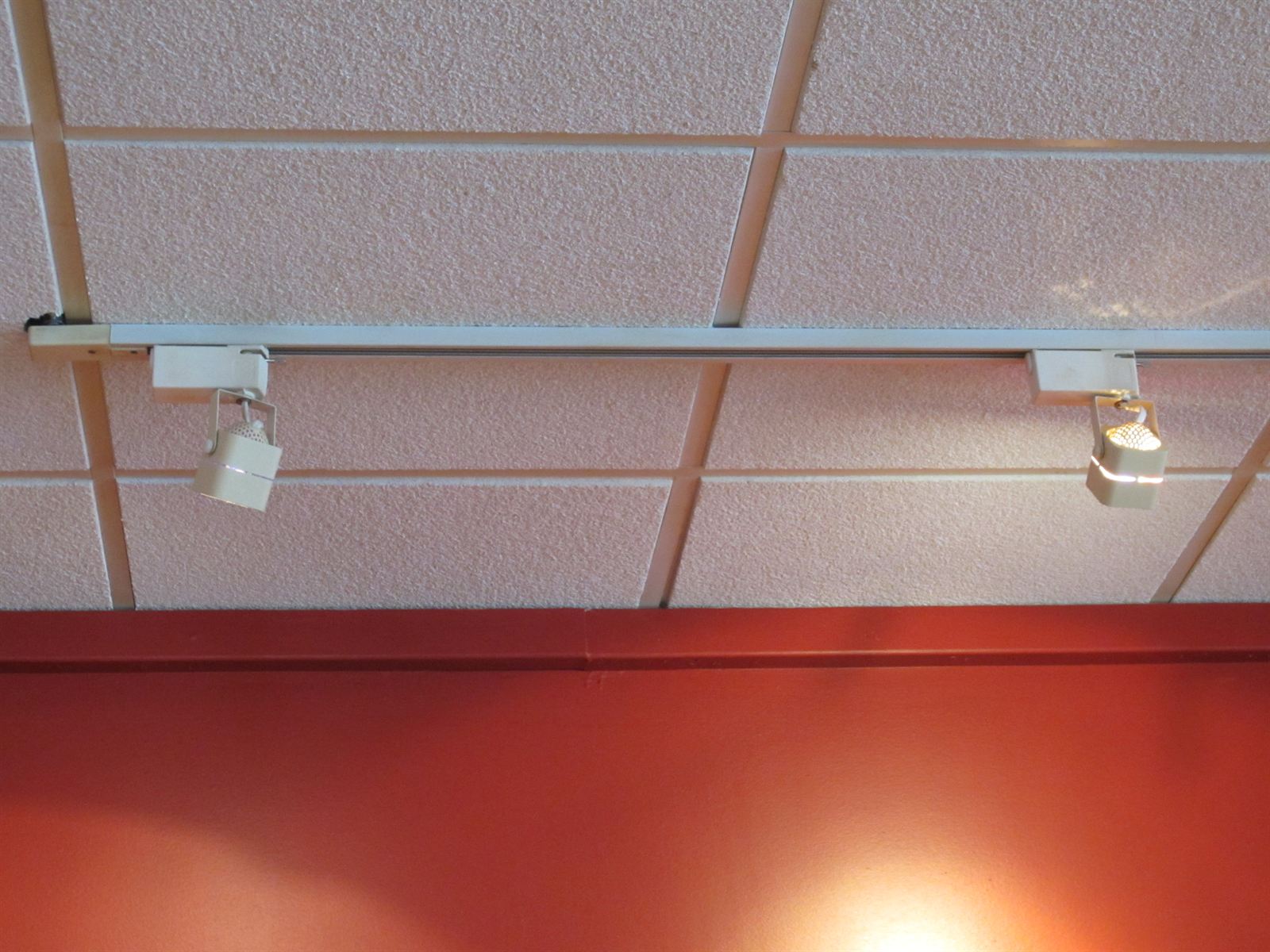
Terminology
- Line-voltage track: 120 V or 277 V track, single, two, or three circuit
- Track adaptor compatibility: track profiles and adaptors vary by manufacturer; heads must match the track
- Low-voltage rail / monorail: flexible or bendable rail with a remote or integral transformer
- Track head: aimable luminaire with LED module, optics, and driver
- Recessed track: track set flush into drywall or ceiling channel
- Track adaptor: fitting that mounts pendants or heads to track
- Beam angle and accessories: spot to flood optics; snoots, louvers, spread lenses
- Digital track: track carrying DALI or similar control signals to each head
Standards
Ratings
- Track and heads listed as a system; observe ampacity and maximum load per circuit
- Head efficacy and color quality vary widely; specify CRI and beam data
- Dimming method must match track and head drivers
Test standards
- UL 1598 and UL 8750: luminaires and LED equipment
- IES LM-79: photometry of heads
Components
- Track or rail: surface, recessed, or pendant-mounted
- Power feeds: live end, floating canopy, or mid-feed
- Heads: spot, flood, wall wash, framing projectors
- Accessories: couplers, corners, dead ends, glare louvers
Detailing
- Place tracks so heads aim at displays at moderate angles, avoiding glare into eyes and reflections in glazing
- Provide enough circuits and capacity for future heads
- Use recessed track for clean ceilings
- Specify heads with glare control near circulation
- Coordinate with sprinklers and HVAC diffusers
Uses
Specific uses
- Retail displays and visual merchandising
- Galleries and museums
- Restaurants and hospitality accent lighting
- Residential kitchens and art walls
- Showrooms and exhibition spaces
Pros and cons
Pros
- Flexible; heads move and re-aim without rewiring
- Precise accent lighting
- Easy to add heads later
- Many sizes and finishes
Cons
- Visible equipment on the ceiling
- Glare if heads are misaimed
- Head and track compatibility limits choices
- Higher cost per lumen than general lighting
Manufacturing and cost
Construction
- Track extruded aluminum with copper conductors; heads assembled with LED modules and drivers
- Mounted to ceiling, recessed in channels, or suspended; heads installed and aimed after occupancy
Main manufacturers and suppliers
Trade association: Illuminating Engineering Society.
Typical costs
- Track lighting, installed (residential scale): about $150 to $300 per installation including materials and labor
Sources
- Contractor+: track lighting installation cost, https://contractorplus.app/resources/construction-costs/install-track-lighting/pomona-ca
- CSE Magazine: specifying LED luminaires, https://www.csemag.com/specifying-led-luminaires/
- WAC Lighting: track systems, https://waclighting.com/
- Tech Lighting: track and rail systems, https://www.techlighting.com/
- Wikimedia Commons: Track lighting.jpg, by Wtshymanski (CC BY-SA 3.0), https://commons.wikimedia.org/wiki/File:Track_lighting.jpg