Irrigation
Summary
Irrigation delivers supplemental water to plantings through drip, spray, or sprinkler systems run by timers or weather-based controllers. Outdoor use is a large share of residential water, so choice of emitter, controller, and maintenance plan drives total water demand.
Cols
Scope
- Outdoor use is about 30 percent of residential water use, nearly 8 billion gallons a day in the United States, mainly landscape irrigation
- In dry Southwest climates a household's outdoor share can reach 60 percent
- As much as half of landscape water is wasted through evaporation, wind, and poorly scheduled systems
Types
- Pop-up spray systems: the baseline for comparison
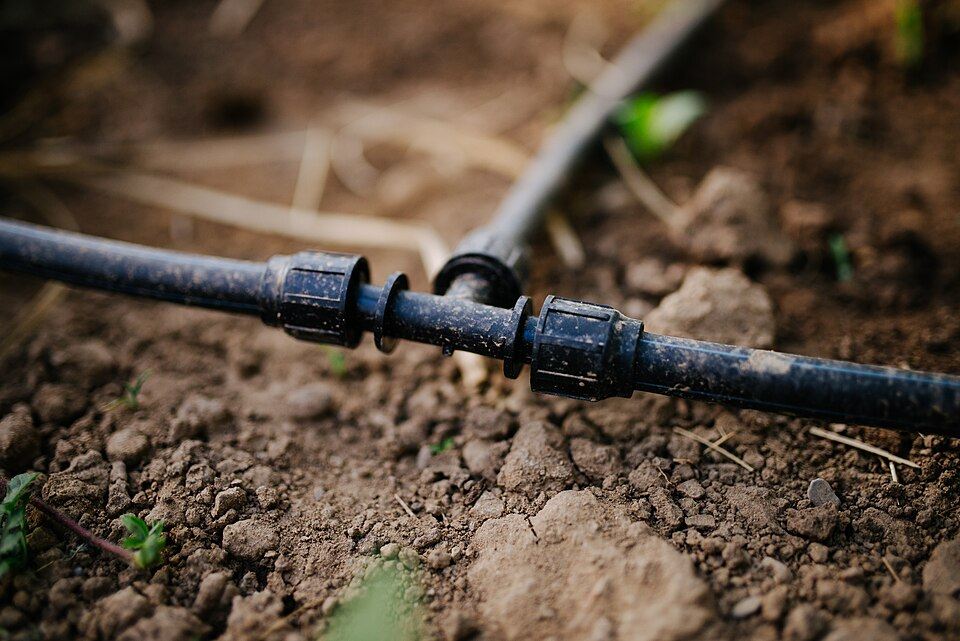
- Drip irrigation: uses 20 to 50 percent less water than pop-up sprinklers and can save up to 30,000 gal per year
- Weather-based controllers: WaterSense-labeled controllers use local weather data to set when and how much to water; a 2021 EPA fact sheet cites savings of 7,600 to 15,000 gal per year
Common issues
- Poor scheduling: fixed timers overwater after rain
- Lack of maintenance: regular maintenance of irrigation systems has been estimated to cut water use by 15 percent
Sources
- U.S. EPA: WaterSense labeled irrigation controllers, https://epa.gov/watersense/irrigation-controllers
- U.S. EPA: WaterSense irrigation controller fact sheet, https://www.epa.gov/sites/default/files/2021-03/documents/ws-outdoor-combined-irrigation-controller-fact-sheet.pdf
- Wikimedia Commons: Drip irrigation system installed in a garden for efficient water management during summer.jpg, by Shixart1985 (CC BY 2.0), https://commons.wikimedia.org/wiki/File:Drip_irrigation_system_installed_in_a_garden_for_efficient_water_management_during_summer.jpg