Cellulose
Summary
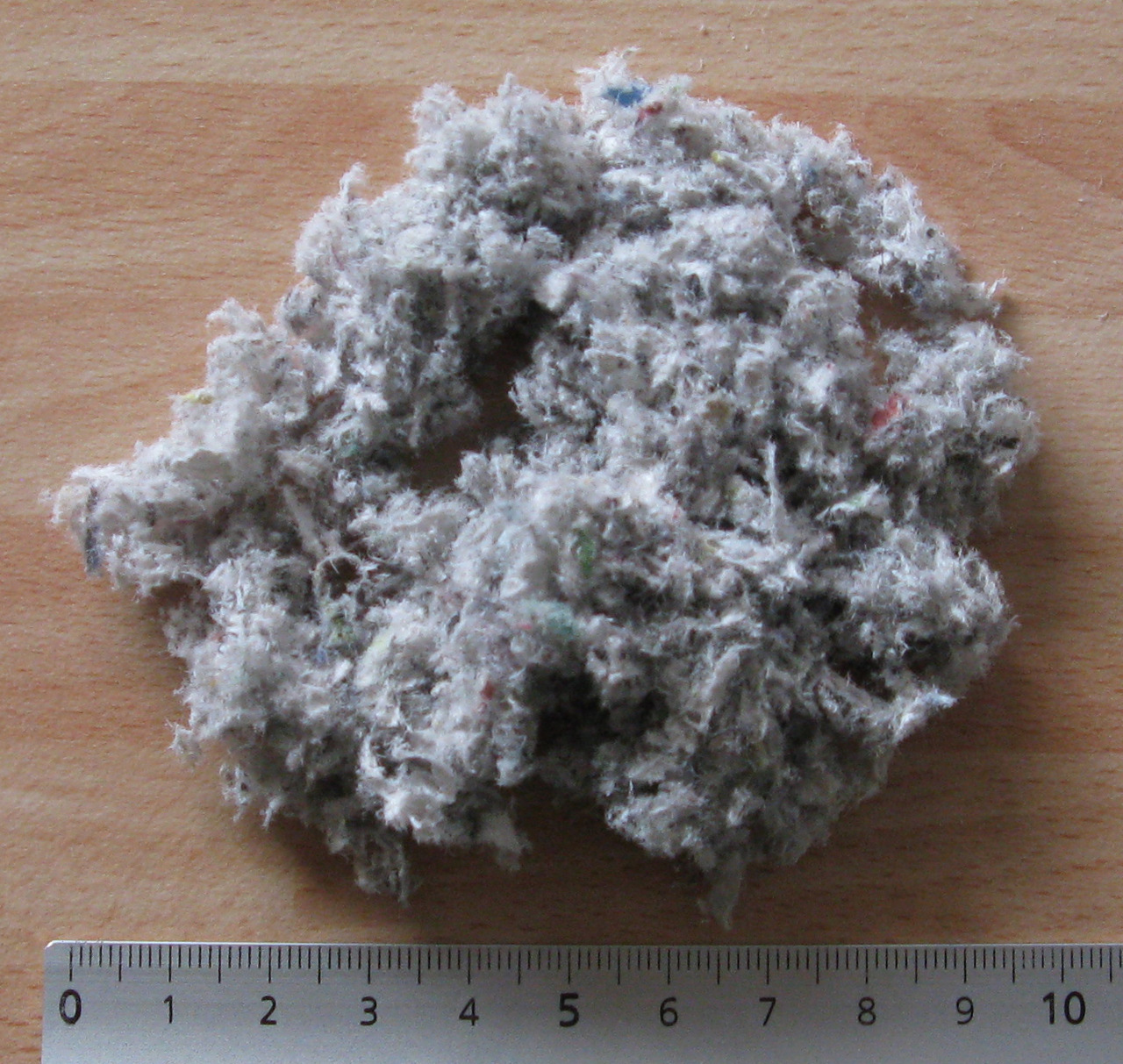
Cellulose insulation is loose-fill made mostly from recycled paper, hammer-milled and treated with boric acid or ammonium sulfate, about 75 to 85 percent paper fiber. It has the highest recycled content of any insulation and about R-3.8 per inch, but settles 13 to 20 percent unless dense-packed.
Cols
Terminology
- Dry (loose-fill): blown into attics or existing walls
- Dense-pack: loose-fill installed at higher density to reduce settling
- Wet-spray: water added during spraying; wall dries at least 24 hours before covering
- Stabilized: lightly wetted to activate an adhesive; used mainly in attics and sloped roofs (approved up to 5:12)
- Low-dust: contains a small amount of oil
- Borates: boric acid fire retardant, a mined resource
History and demand
Invention
- 1950s: modern versions begin
First uses in construction
- 1772: Monticello insulated with a form of cellulose
- 1970s: wide United States use after the 1973 to 1974 oil embargo; 1978 federal safety standards followed; by 1991 only 61 United States producers remained
- 1985: CPSC requested repeal of the flammability standard (16 CFR Part 1209)
Sourcing
- United States: GreenFiber is the largest named producer, with eight plants and about 350,000 tons of recovered fiber used a year; fiberglass still holds about 94 percent of the US insulation market
- Feedstock is mostly recycled old newspaper, with recycled cardboard replacing it as newsprint supply shrinks
Composition and production
Raw materials
- 75 to 85 percent recycled paper fiber (waste newspaper) and the rest fire retardant (boric acid or ammonium sulfate), which also makes it less attractive to pests
Properties
Thermal and moisture
- Thermal conductivity: about 40 mW/(m·K), roughly R-3.8 per inch; comparable to glass or rock wool, lower than closed-cell polyurethane foam (about R-5.5 to 6.5 per inch)
- Settling: dry loose-fill can settle 13 to 20 percent
Uses in buildings
Building elements
- Wall and Roof Insulation: loose-fill attic insulation, and dense-pack or wet-spray insulation in wall and roof cavities
- Wood-Framed Walls: cavity insulation between studs
Pros and cons
Pros
- Highest recycled content of any insulation
- Less expensive per unit of R-value than foam
- Density gives a slight sound-reduction advantage over fiberglass
Cons
- Dust during installation; possible ammonia odor with ammonium sulfate
- Roughly three times as heavy per square foot as fiberglass for the same R-value
- Some evidence of mold in buildings with wet-spray dense-pack insulation, especially with a vapor barrier
Sustainability
Embodied carbon
- Reported to have the lowest embodied energy of common insulation types (a claim of 20 to 40 times less than furnace-made products lacks a citation)
Health
- No VOC emissions; earned M1 and NaturePlus indoor air quality certifications
Manufacturing and cost
Main manufacturers and suppliers
Sources
- Wikipedia: Cellulose insulation, https://en.wikipedia.org/wiki/Cellulose_insulation
- Wikimedia Commons: Bulk recycled cellulose.jpg, photo by Okram (CC BY-SA 3.0), https://commons.wikimedia.org/wiki/File:Bulk_recycled_cellulose.jpg
- Recycling International: recycled paper gains foothold in insulation market, https://recyclinginternational.com/commodities/paper-and-cardboard-recycling/recycled-paper-gains-foothold-in-insulation-market/6554/
- GreenBuildingAdvisor: shrinking supplies of old newspapers challenge cellulose manufacturers, https://greenbuildingadvisor.com/article/shrinking-supplies-of-old-newspapers-challenge-cellulose-manufacturers