Solar Photovoltaics
Summary
Solar photovoltaic systems convert sunlight to electricity from roof or ground arrays tied to the building or the grid. Output is very sensitive to shade, orientation, and tilt, so roof layout, penetrations, and nearby trees must be settled before the array is sized.
Cols
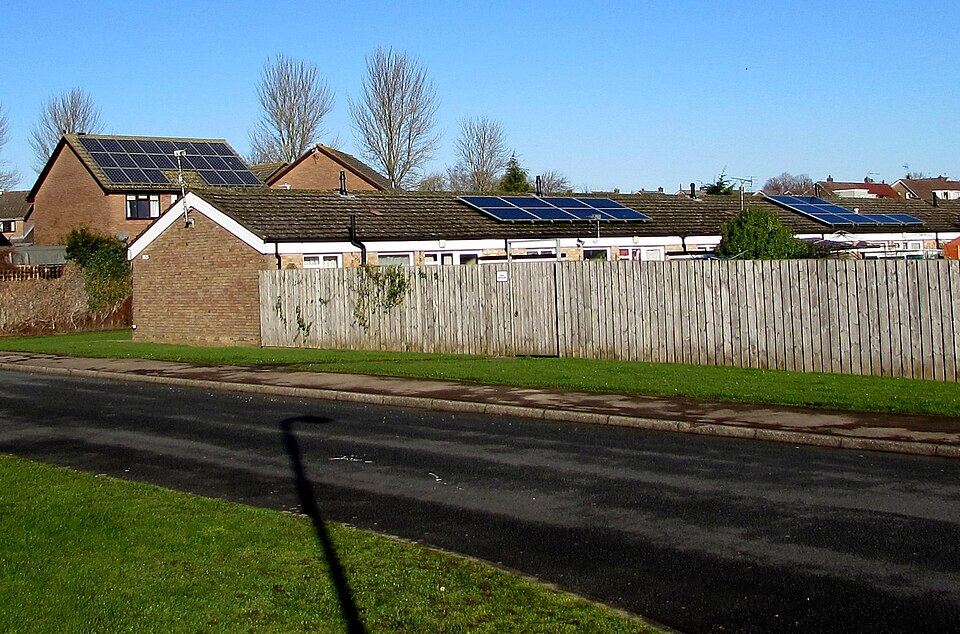
Selection
- Orientation and tilt: ideal is due south with tilt equal to latitude, but economics can outweigh energy production
- Typical roof slope: about 14 to 40 degrees, with about 30 degrees ideal in one reference
- Roof suitability screen: NREL's rooftop potential study required a shaded system to produce at least 70 percent of an identical unshaded one, a tilt of 60 degrees or less, and no north-facing azimuth
- Low-slope roofs: may need a tilt system
Common issues
- Shading: PV is very shade sensitive; even small shading at peak sun matters; chimneys, dormers, vents, and trees cast shadows
- Trees: check mature canopy height against array location
- Later installation: features such as roof reinforcements can make a later installation costly, so plan roof structure and pathways early
Coordination
- Fire access and electrical: setbacks, rapid shutdown, and conductor rules are in the adopted fire and electrical codes
- Structure: roof load capacity is confirmed by the structural engineer
Sources
- Kainga Ora: solar photovoltaic building design guidelines, https://www.kaingaora.govt.nz/assets/Publications/Design-Guidelines/Solar-Photovoltaic-Building-Design-Guidelines.pdf
- Wikimedia Commons: Rooftop solar panels in Caldicot - geograph.org.uk - 6388281.jpg, by Jaggery (CC BY-SA 2.0), https://commons.wikimedia.org/wiki/File:Rooftop_solar_panels_in_Caldicot_-_geograph.org.uk_-_6388281.jpg