Structural Fill
Summary
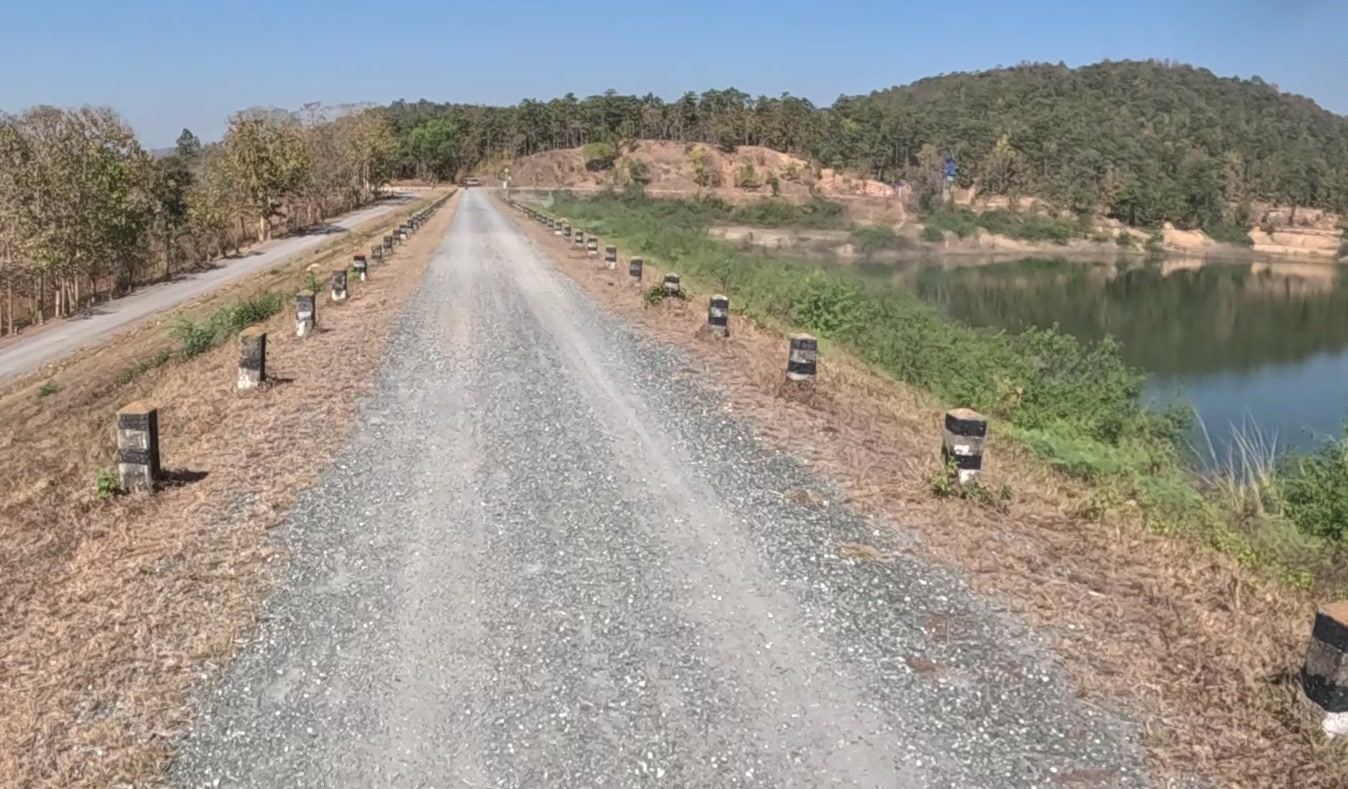
Structural fill is soil or aggregate placed in controlled lifts and compacted to a density set by a geotechnical report, usually measured against the Proctor maximum dry density. Compaction target, lift thickness, and moisture are set by the geotechnical engineer, and undocumented fill gives no presumptive bearing value.
Cols
Terminology
- Maximum dry density (MDD): peak dry density from a Proctor test
- Optimum moisture content (OMC): water content at which the soil compacts densest
- Standard Proctor: ASTM D698 / AASHTO T99
- Modified Proctor: ASTM D1557 / AASHTO T180
- Lift: layer of fill placed and compacted at one time
- CLSM: controlled low-strength material, an alternative bearing fill
- Undocumented fill: fill without records; no presumptive bearing value
Composition and production
Raw materials
- Soil, sand, gravel, or crushed stone such as aggregate base (crushed rock passing a 20 mm screen)
Manufacturing process
- Placed in lifts at near optimum moisture and compacted to a target percentage of maximum dry density
Properties
Mechanical
- Standard Proctor energy: 5.5 lb hammer dropped 12 in., 25 blows on each of 3 lifts, about 12,375 ft-lbf/ft³
- Modified Proctor energy: 10 lb hammer dropped 18 in., 25 blows on each of 5 lifts, about 56,250 ft-lbf/ft³
- A 6 in. mold may be used for coarse soils with 56 blows per lift
Standards
Test methods
- ASTM D698: standard Proctor compaction
- ASTM D1557: modified Proctor compaction
- ASTM D420: guide to site characterization for geotechnical investigations
- ASTM D2487: soil classification
Uses in buildings
Building elements
- Slab on Grade, Site Paving: compacted fill under slabs and pavements
- Spread and Continuous Footings: engineered fill replacing over-excavated poor soil
- Retaining Walls: reinforced backfill in mechanically stabilized earth walls
Pros and cons
Pros
- Engineered to a measured density
Cons
- Needs testing and special inspection of compaction
- Wet or organic soils (peat, mud, organic silts and clays) cannot be used as structural support
Sources
- Wikipedia: Proctor compaction test, https://en.wikipedia.org/wiki/Proctor_compaction_test
- Wikipedia: Construction aggregate, https://en.wikipedia.org/wiki/Construction_aggregate
- UpCodes: 2024 IBC Chapter 18 soils and foundations, https://up.codes/viewer/department-of-defense/ibc-2024/chapter/18/soils-and-foundations
- Wikimedia Commons: Gravel dressed compacted road embankment.jpg, photo by Cmoffroad (CC0), https://commons.wikimedia.org/wiki/File:Gravel_dressed_compacted_road_embankment.jpg