Wood-Plastic Composite
Summary
Wood-plastic composite is wood fiber or flour mixed with a thermoplastic such as polyethylene, polypropylene, or PVC, then extruded or molded into profiles. It resists rot and decay better than wood, but it absorbs water, expands thermally, and burns more readily than wood alone.
Cols
Terminology
History and demand
Invention
- 1960: Covema of Milan, founded by the Terragni brothers, invented the process and sold it as Plastic-Wood
- A few years later, Icma San Giorgio patented adding wood fiber or flour to thermoplastics
First uses in construction
- Early 1990s: WPCs entered the decking market
- Most widespread in North America as outdoor decking
Sourcing
- Composite decking is made mainly in North America and China, about 69 percent of output; North America is about 44 to 47 percent of demand (market research)
- Named producers are Trex, AZEK, and Fiberon in North America and Tianzhen Bamboo Flooring and Taizhou Huali in China; the top five hold about 56 percent
Composition and production
Raw materials
- Wood fiber or flour with PE, PP, PVC, or PLA; other lignocellulosic or inorganic fillers possible
- Wood content up to about 70 percent; 50/50 is more common
- Coupling agents and other additives improve bonding between polymer and wood
Manufacturing process
- Ground wood mixed with heated thermoplastic, then extruded; injection molding also used
- Some plants pelletize and remelt; others mix and extrude in one step
- Processing temperature about 50°F (28°C) lower than for unfilled plastic
Product forms
- Extruded solid and hollow profiles: deck boards, railing, fencing, cladding, trim, window and door frames
- Sandwich boards with WPC skins over a low-density core
Properties
Mechanical
- Lower strength and stiffness than wood; behavior depends on time and temperature
Thermal and moisture
- Thermal expansion: 1.9 × 10⁻⁵ in./in./°F (ASTM D1037, Trex cut sheets, Transcend and Enhance lines); gap boards side to side and end to end
- Water absorption: wood fibers absorb water, reducing stiffness and strength
Fire behavior
- Most formulations begin to burn near 400°F (204°C)
- Plastic content raises heat content and melts; fire performance is worse than wood alone
Durability
- Resists rot, decay, corrosion, and marine borers
- Polymer degrades under UV; some formulations stain easily
- Freeze-thaw effect on strength is not settled
Standards
Material specifications
- ASTM D7032: performance ratings for WPC and plastic lumber deck boards, stair treads, guards, and handrails; current edition D7032-21
Uses in buildings
Building elements
- Exterior Decking: deck boards, stair treads, fascia
- Guards and Railings: railing systems
- Wall Cladding: siding and cladding profiles
Pros and cons
Pros
- Resists rot, decay, and borers
- Large recycled-content share in some lines
- Extruded profiles in many colors and textures
Cons
- Lower strength and stiffness than wood
- Thermal expansion requires gapping
- Burns more readily than wood alone; hard to recycle after use
Sustainability
Recycled content and end of life
- ICC-ES SAVE listings for Trex: Transcend at least 95.4 percent recycled content by weight, Signature at least 92.6 percent
- Polymers and adhesives make post-use recycling difficult; scrap can be reused in new WPC
Manufacturing and cost
Main manufacturers and suppliers
Sources
- Wikipedia: Wood-plastic composite, https://en.wikipedia.org/wiki/Wood-plastic_composite
- Trex: Transcend decking and fascia cut sheet, https://documents.trex.com/is/content/Trex/trex-transcend-decking-and-fascia-cut-sheetpdfpdf
- ASTM: D7032-21, https://store.astm.org/d7032-21.html
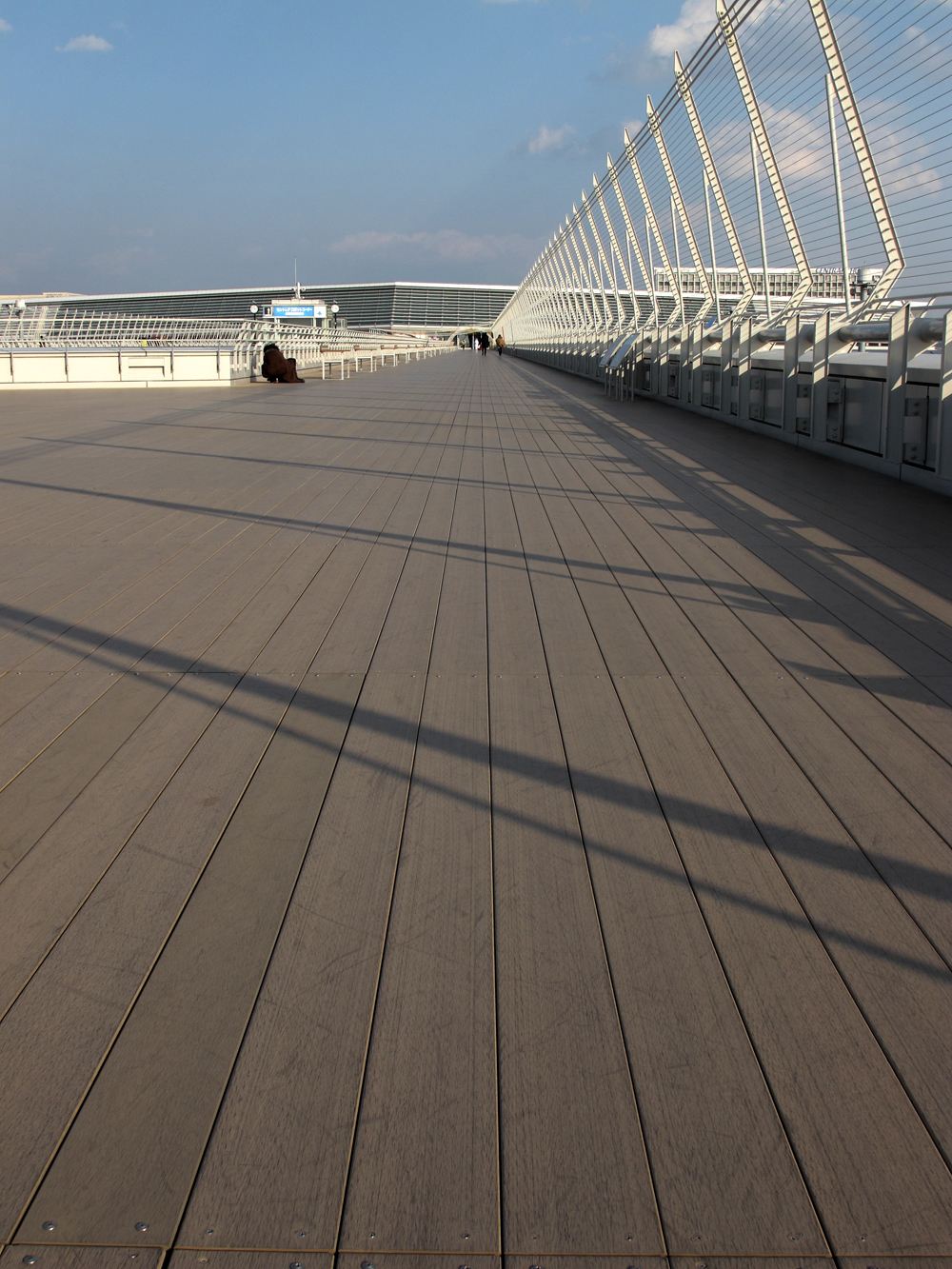
- Wikimedia Commons: Deck in wood plastic composite at Nagano airport.jpg, photo by Geolam (CC BY-SA 3.0), https://commons.wikimedia.org/wiki/File:Deck_in_wood_plastic_composite_at_Nagano_airport.jpg
- MarketPublishers: global composite decking market, https://marketpublishers.com/report/chemicals_petrochemicals/global-composite-decking-market-2019-by-manufacturers-regions-type-n-application-forecast-to-2024.html
- Technavio: decking market industry analysis, https://technavio.com/report/decking-market-industry-analysis