Wood I-Joists
Summary
Wood I-joists have top and bottom flanges of LVL or sawn lumber bonded to an OSB or plywood web, made in standard depths and long lengths with design values from each manufacturer's evaluation report. They give long, straight, light floors with consistent depth, but web holes, bearing stiffeners, fire protection of thin webs, and stiffness for floor feel must follow the manufacturer's tables.
Cols
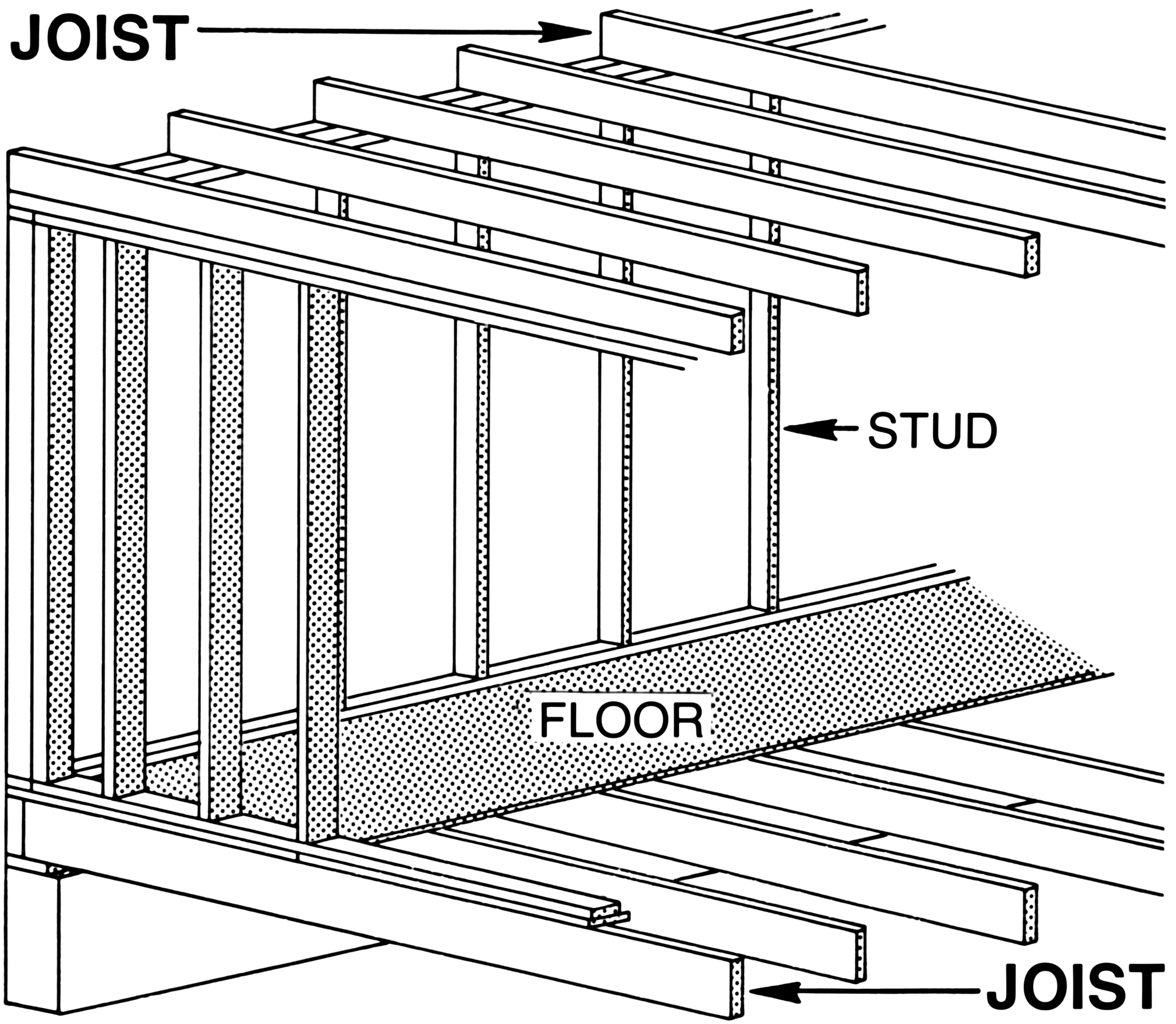
Terminology
- Flange: top and bottom chord of the joist
- Web: OSB or plywood panel between flanges
- Series: product line defined by flange size and grade (for example TJI 110, 230, 360, 560)
- Web stiffener / squash block: blocking at bearings and point loads
- Rim board: perimeter closure at joist ends
- Blocking panel: I-joist or rim blocking for lateral support and shear transfer
- Knockouts / holes: allowed openings in the web per manufacturer charts
- Fire-protected I-joists: joists with factory coatings or membranes for unsprinklered floor protection
Standards
Sizes
- Depths: 9-1/2 in., 11-7/8 in., 14 in., and 16 in. common; up to 24 in. in heavier series
- Flange widths: about 1-3/4 in. to 3-1/2 in. depending on series
- Compression flanges narrower than 2.3 in. need lateral support every 18 in.; wider flanges every 24 in. (per one evaluation report)
Test standards
- ASTM D5055: establishing and monitoring I-joist capacities
- ICC-ES evaluation reports per manufacturer (for example ESR-1153)
- APA PRI-400: performance standard for APA EWS I-joists
Materials
- LVL flanges: most common in commercial-grade I-joists
- Sawn lumber flanges: some residential products
- OSB webs: standard
- Rim boards: LSL, LVL, or OSB rim matched to joist depth
Detailing
- Follow hole charts for size and location; no holes near bearings or flange cuts
- Install web stiffeners and squash blocks where specified
- Use manufacturer span tables at L/480 for better floor feel
- Protect from weather; flanges and webs swell when wet
- Provide fire protection for floors where codes require protection of light-frame floors
Uses
Specific uses
- Residential and multifamily floors
- Roof rafters in cathedral ceilings
- Light commercial floors
- Floors over long basement spans
- Renovation floors where straightness matters
Pros and cons
Pros
- Light, straight, and consistent
- Long spans with deep sections
- Fewer squeaks than sawn lumber when installed properly
- Web holes allow service routing
Cons
- Thin webs burn through faster than solid lumber in fires
- Must follow manufacturer hole and bearing rules
- Not interchangeable between brands without redesign
- Floor vibration on long spans if designed only to minimums
Manufacturing and cost
Construction
- Flanges routed and glued to webs; cured and cut to length
- Installed on sills, hangers, or beams with blocking, rim, and subfloor glued and fastened
Main manufacturers and suppliers
- Weyerhaeuser (TJI)
- Boise Cascade (BCI, AJS)
- LP Building Solutions
- RedBuilt
- Roseburg
Trade association: APA, The Engineered Wood Association.
Sources
- Weyerhaeuser: TJI joists, https://www.weyerhaeuser.com/woodproducts/engineered-lumber/tji-joists
- ICC-ES: ESR-1153 TJI joists, https://www.icc-es.org/wp-content/uploads/report-directory/ESR-1153.pdf
- Florida Building Commission: TJ-9001 TJI hole charts, https://www.floridabuilding.org/upload/PR_Instl_Docs/FL1630_R8_II_TJ-9001.pdf
- Weyerhaeuser: floor performance bulletin, https://www.weyerhaeuser.com/application/files/9815/6417/8007/SVC-4006.pdf
- UpCodes: 2024 IBC Chapter 23 wood (2303.1.2 I-joists), https://up.codes/viewer/department-of-defense/ibc-2024/chapter/23/wood
- Wikimedia Commons: Joist (PSF).png, by Pearson Scott Foresman (Public domain), https://commons.wikimedia.org/wiki/File:Joist_(PSF).png