Grease Interceptors
Summary
Grease interceptors slow and cool kitchen wastewater so fats, oils, and grease float and are retained, using small hydromechanical units near fixtures, large in-ground gravity tanks outside, or automatic grease removal devices that skim grease. Interceptor type, size, and location drive kitchen floor depressions, site space, pumping truck access, and odor control, so they must be coordinated with the kitchen layout and local sewer authority early.
Cols
Terminology
- FOG: fats, oils, and grease
- Hydromechanical grease interceptor (HGI): compact unit sized by flow rate, often under sinks or in floors
- Gravity grease interceptor (GGI): large tank, usually precast concrete or plastic, sized by retention time
- Automatic grease removal device (AGRD): powered unit that skims grease automatically
- Flow control device: limits flow into hydromechanical units
- Grease retention capacity: pounds of grease a unit holds
- Pump-out: periodic removal by a hauler
Standards
Ratings
- Required for food service fixtures that discharge grease, such as pot sinks, prerinse sinks, wok stations, and dishwashers without prerinse sinks
- Food waste disposers may not discharge to grease interceptors
- Hydromechanical grease retention: about 2 lb per gpm of flow rating (for example, 50 gpm holds 100 lb)
- Gravity interceptors sized by peak drain flow times 30 minutes of retention
- Flow control devices vented at least 6 in. above the flood rim
- Piping upstream of interceptors sloped at least 1/4 in. per ft
- Emulsifier, chemical, and enzyme dispensing into interceptors prohibited
- Not required in individual dwelling units
Test standards
- ASME A112.14.3 / PDI G101: hydromechanical grease interceptors
- ASME A112.14.4: grease removal devices
- CSA B481: grease interceptors
- IAPMO/ANSI Z1001: gravity grease interceptors
- ASME A112.14.6: FOG disposal systems
Components
- Tank or body: steel, stainless steel, plastic, fiberglass, or precast concrete
- Baffles and inlet and outlet tees
- Flow control fitting: for hydromechanical units
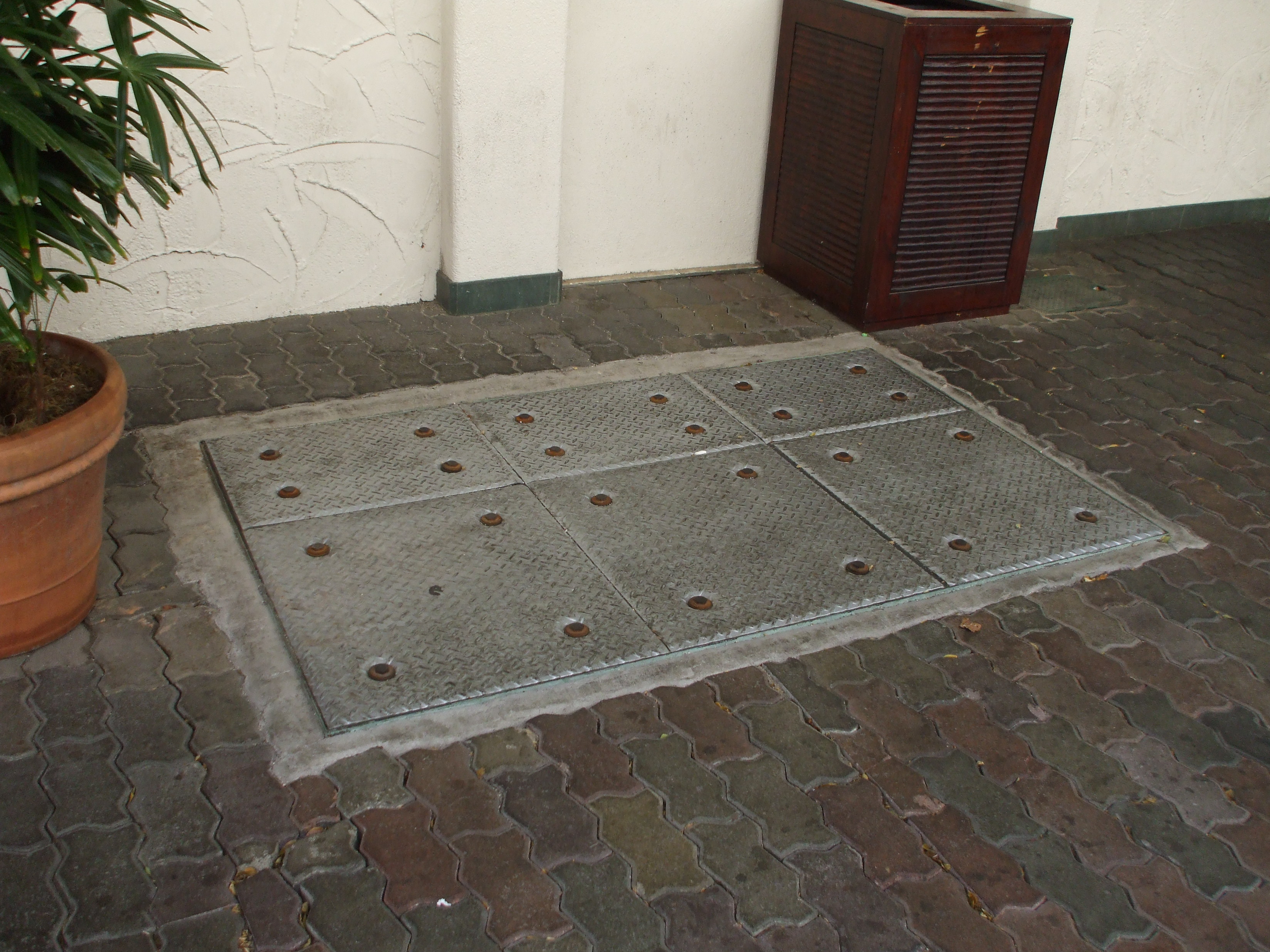
- Access covers: traffic-rated where in drives or parking
- Sampling port and vents
Detailing
- Confirm local FOG program and sewer authority sizing rules, which may add to the plumbing code
- Locate gravity interceptors outside with truck access for pumping
- Recess floor interceptors in slab depressions with access covers flush with the floor
- Keep sanitary (toilet) waste out of grease waste piping
- Provide venting and odor-tight covers
Uses
Specific uses
- Restaurants and commercial kitchens
- School and hospital cafeterias
- Food courts and grocery stores with prepared foods
- Hotels and banquet halls
Pros and cons
Pros
- Prevents sewer blockages and overflows
- Required by most sewer authorities for food service
- Automatic units reduce pumping and odors
Cons
- Regular pumping and maintenance
- Large gravity units need site space and truck access
- Odors and corrosion if poorly maintained
Manufacturing and cost
Construction
- Hydromechanical and automatic units built in factories; gravity tanks precast or molded; set in excavations or slab depressions and connected to grease waste piping
Main manufacturers and suppliers
Trade associations: IAPMO and ASPE.
Sources
- UpCodes: 2024 IPC Chapter 10 traps, interceptors, and separators (GSA adoption without amendments), https://up.codes/viewer/general-services-administration/ipc-2024/chapter/10/traps-interceptors-and-separators
- UpCodes: 2024 IPC Chapter 7 sanitary drainage (slope upstream of interceptors), https://up.codes/viewer/general-services-administration/ipc-2024/chapter/7/sanitary-drainage
- VA: 22 13 23 sanitary waste interceptors specification, https://www.wbdg.org/FFC/VA/VAASC/VA 22 13 23.docx
- ARCAT: MIFAB 22 13 23 sanitary waste interceptors specification, https://www.arcat.com/specification/mifab-inc-38108/22_13_23mfb
- Wikimedia Commons: InGroundGreaseTrap.JPG, by unknown author (CC BY-SA 3.0), https://commons.wikimedia.org/wiki/File:InGroundGreaseTrap.JPG