Cast Iron
Summary
Cast iron is an iron-carbon-silicon alloy with 1.8 to 4 percent carbon, poured into molds as gray, ductile, white, or malleable iron. It is strong in compression and brittle in tension, which makes it the standard for no-hub and hub-and-spigot drainage piping, drains, and cast fixtures.
Cols
Terminology
- No-hub (hubless): plain-end soil pipe joined with shielded couplings (ASTM A888, CISPI 301)
- Hub-and-spigot: soil pipe with a socket end (ASTM A74)
- Gray iron: graphite in flakes; the most widely used cast iron
- Ductile (nodular) iron: graphite in nodules, developed in 1948
- White iron: carbon combined as cementite; very hard, brittle
- Malleable iron: white iron heat-treated so graphite forms spheroids
- ASTM A48 class: gray iron class number equals minimum tensile strength in ksi (Class 30 is 30 ksi)
- DWV: drain, waste, and vent
History and demand
Invention
- About 8th century BC: earliest known cast-iron remains, in Luhe County, China; production reached much of China by about the 5th century BC
- 12th and 13th centuries: blast furnaces in Sweden, Germany, and Italy; whether independent or from Chinese technology is uncertain
First uses in construction
- 17th century: earliest cast iron water pipes, at Versailles (about 35 km); sources date the first pipe from 1664 to 1683
- 1779: The Iron Bridge, by Abraham Darby III, began structural use; cast-iron columns enabled multi-storey buildings and fire-resistant mill frames
- 1847 to 1891: the Dee Bridge, Tay Bridge, and Norwood Junction failures undermined confidence; by 1900 thousands of British cast-iron rail underbridges had been replaced with steel
- 1949: Cast Iron Soil Pipe Institute formed; CI NO-HUB trademark filed July 5, 1963; Tyler Pipe states it began no-hub production in 1964
Demand trend
- Flat to slowly rising for pipe: the global cast iron pipe market was about $10.5 billion in 2024 with a projected 2.6 percent annual growth for 2025 to 2034; PVC held about 50 percent of the global soil pipe market in 2024
- Structural use ended in the early 20th century; no United States soil pipe volume data found
Composition and production
Raw materials
- Carbon 1.8 to 4 percent and silicon 1 to 3 percent by weight
- Gray iron about 2.5 to 4.0 percent carbon; ductile iron about 3 to 4 percent carbon
Manufacturing process
- Poured into molds; relatively low melting temperature suits casting
Product forms
- Soil pipe and fittings (no-hub and hub-and-spigot), drains, fixtures, boilers, and decorative castings
Grades and types
- Gray: flake graphite; lower tensile strength and shock resistance than steel; compressive strength comparable to low- and medium-carbon steel
- Ductile: nodular graphite; castable in larger sections than malleable iron; used for water and sewer pipe
- White: hard, brittle, carbon as cementite
- Malleable: behaves more like mild steel
Properties
Physical
- Density (gray, ASTM A48 Class 30): 7.5 g/cm³, about 470 lb/ft³
Mechanical
- Tensile strength (Class 30): 30 ksi minimum; typical 35 ksi (240 MPa)
- Compressive strength (Class 30): about 110 ksi (750 MPa)
- Modulus of elasticity (Class 30): about 26 × 10⁶ psi (180 GPa)
Thermal and moisture
- Coefficient of thermal expansion (Class 30): about 6.1 × 10⁻⁶ in./in./°F (11 µm/m·K)
Fire behavior
- Melting point: pure iron about 2,800°F; cast iron melts at a relatively low temperature
Standards
Material specifications
- ASTM A74: hub-and-spigot cast iron soil pipe and fittings
- ASTM A888: hubless cast iron soil pipe and fittings for gravity-flow DWV and storm drain systems
- CISPI 301: Cast Iron Soil Pipe Institute hubless pipe standard
- ASTM C1277: shielded couplings joining hubless pipe
- ASTM A48: gray iron castings
Uses in buildings
Building elements
- Sanitary and Vent Piping: hub-and-spigot and no-hub drain, waste, and vent pipe
- Floor Drains and Cleanouts, Roof Drainage Systems: drain bodies, grates, and dome strainers
- Lavatories and Sinks, Showers and Tubs: enameled cast iron basins and tubs
- Hydronic Boilers: heat exchanger sections
Pros and cons
Pros
- Strong in compression
- Used in non-pressure DWV and storm drain systems (hubless pipe)
- Standardized soil pipe and fittings in hub-and-spigot (ASTM A74) and hubless (ASTM A888, CISPI 301) forms
Cons
- Weak in tension and brittle
- Hubless pipe is for gravity-flow, non-pressure systems
- Heavy: about 470 lb/ft³ for Class 30
Design considerations
Joining and fastening
- Hubless pipe is joined with shielded couplings (ASTM C1277)
Sustainability
Embodied carbon
- Saint-Gobain PAM cast iron drainage pipe (European IBU EPD, 2020): 11.4 kg CO2e per meter for a 7.46 kg/m system, about 1.5 kg CO2e per kg (A1–A3); not a North American product
Manufacturing and cost
Main manufacturers and suppliers
Trade association: Cast Iron Soil Pipe Institute.
Sources
- Wikipedia: Cast iron, https://en.wikipedia.org/wiki/Cast_iron
- Wikipedia: Cast iron pipe, https://en.wikipedia.org/wiki/Cast_iron_pipe
- Château de Versailles: water at Versailles, https://en.chateauversailles.fr/discover/history/key-dates/water-versailles
- CISPI: about, https://www.cispi.org/about-cispi/
- Market Research Future: cast iron pipe market, https://www.marketresearchfuture.com/reports/cast-iron-pipe-market-39781
- Wikipedia: Ductile iron, https://en.wikipedia.org/wiki/Ductile_iron
- MakeItFrom: ASTM Grade 30 gray cast iron, https://www.makeitfrom.com/material-properties/ASTM-Grade-30-or-200-ISO-200-EN-JL-1030-F12101-Grey-Cast-Iron
- Standards Ireland: ASTM A888 (2026), https://shop.standards.ie/en-ie/standards/astm-a-888-2026-143618_saig_astm_astm_4041028/
- OneClickLCA: Saint-Gobain PAM cast iron pipe system EPD, https://materials.oneclicklca.com/en/material/cast-iron-pipe-system/66d1a4b0acc3ee48ff9064d6
- Shimadzu: ASTM A48 gray iron castings, https://www.ssi.shimadzu.com/industries/automotive-materials-testing/metals/astm-a48/index.html
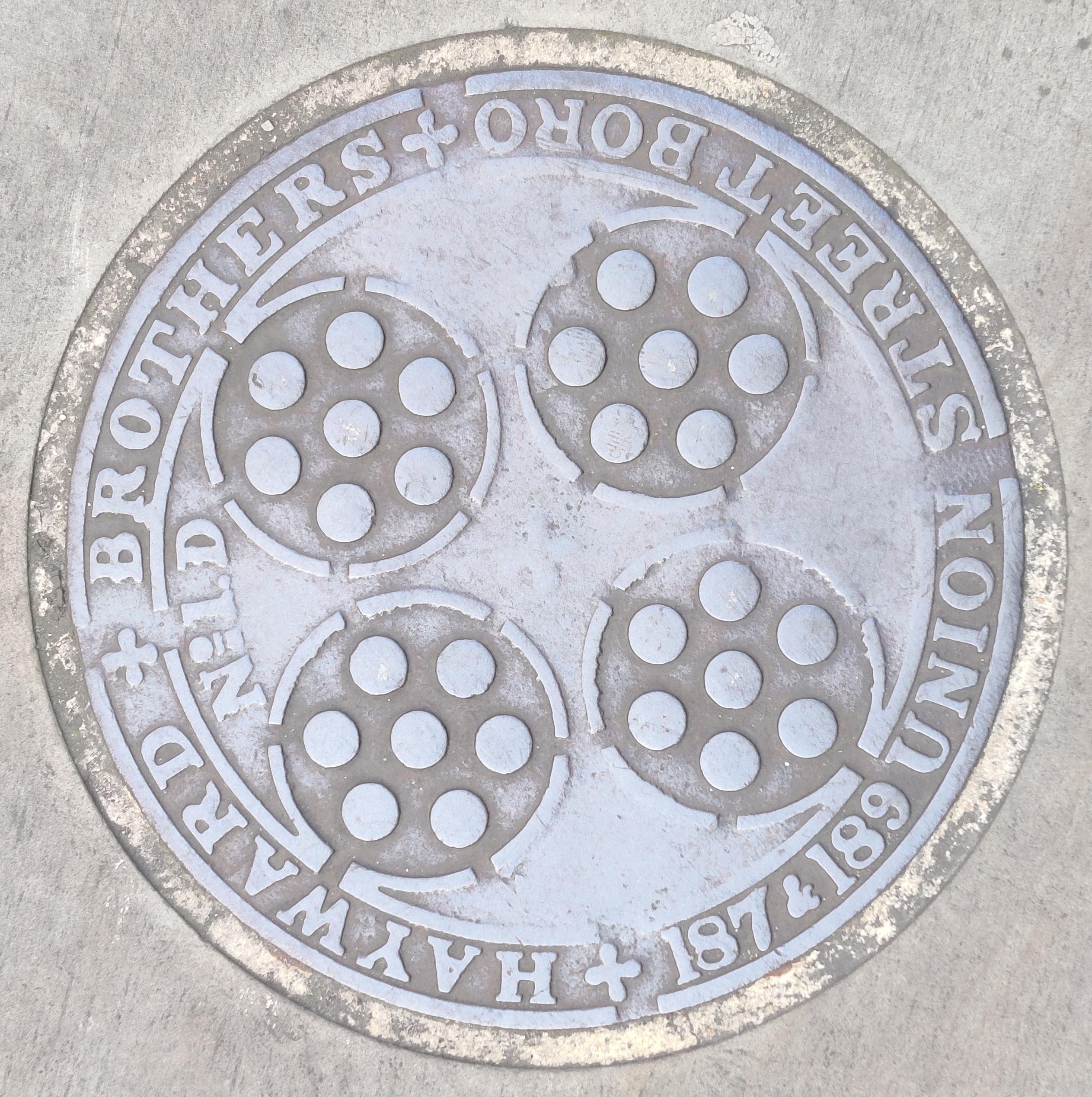
- Wikimedia Commons: Access cover, Gower Street, London - 2026-06-30 - Andy Mabbett - 01.jpg, photo by Andy Mabbett (CC BY-SA 4.0), https://commons.wikimedia.org/wiki/File:Access_cover,_Gower_Street,_London_-_2026-06-30_-_Andy_Mabbett_-_01.jpg