Rubber
Summary
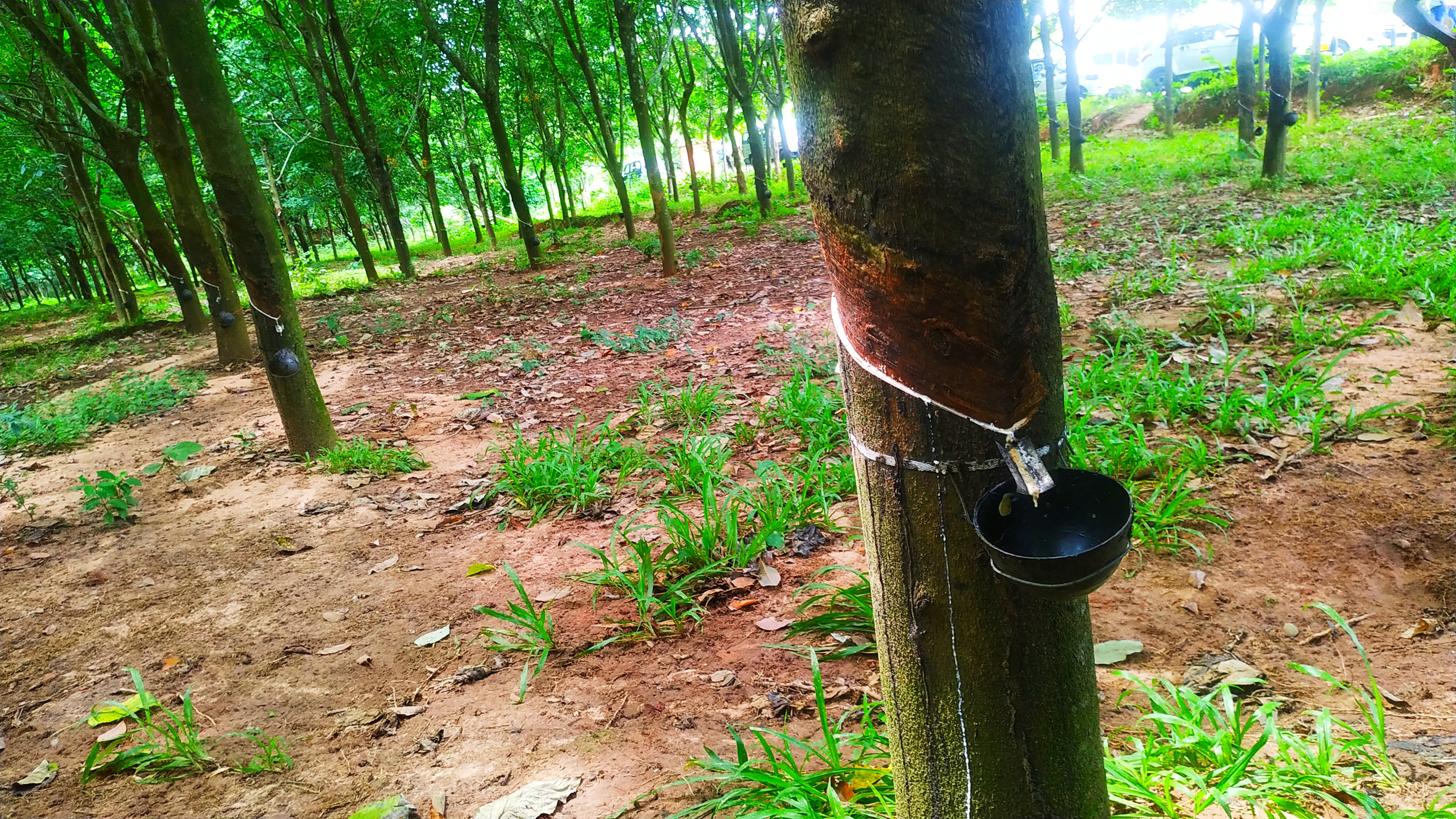
Rubber covers natural rubber (cis-1,4-polyisoprene) and synthetic elastomers, of which EPDM, a crosslinked ethylene-propylene-diene polymer, dominates building use. EPDM's saturated backbone resists heat, light, and ozone, which is why it is the standard rubber for roof membranes and seals.
Cols
Terminology
- EPDM: ethylene propylene diene monomer rubber (ASTM D1418 M class)
- Vulcanization: sulfur crosslinking that turns natural rubber into a thermoset
- Diene (ENB, DCPD, VNB): comonomer, typically 2 to 12 percent, enabling sulfur crosslinking
- Elastomer: polymer with rubber-like elasticity
- Shore A: durometer hardness scale
History and demand
Invention
- 1839: Charles Goodyear redeveloped vulcanization
- 1909: synthetic rubber first made, as demand began to outstrip natural supply
Sourcing
- Natural rubber: about 14.5 million tonnes in 2024, led by Thailand and Indonesia; Asia produced about 90 percent in 2021 (OPIS, other sources)
Demand trend
- Rubber production exceeded 29 million metric tonnes in 2022, over 50 percent natural (about 15.1 million tonnes); synthetic rubber exceeded 15 million tonnes in 2017 to 2019 and was slightly lower in 2020
- Supply concerns include plant disease, climate change, and price volatility
Composition and production
Raw materials
- Natural rubber: cis-1,4-polyisoprene, molecular weight 100,000 to 1,000,000 daltons, up to 5 percent other material by dry mass
- EPDM: ethylene, propylene, and a diene, compounded with fillers such as carbon black and calcium carbonate and plasticizers; functional only when crosslinked
Properties
Physical
- EPDM density: 0.90 to over 2.0 g/cm³ by compound
Mechanical
- EPDM tensile strength: about 17 MPa (about 2,500 psi) at failure
- EPDM elongation: at least 300 percent at fracture
- EPDM hardness: Shore A 30 to 90
Thermal and moisture
- EPDM service temperature: minus 50°C to 150°C (minus 58 to 302°F); glass transition minus 54°C (minus 65°F)
Durability
- EPDM UV and ozone: superior to unsaturated rubbers such as natural rubber, SBR, and neoprene; properly formulated, lasts outdoors for years or decades
Standards
Material specifications
- ASTM D1418: rubber nomenclature (EPDM is M class)
- ASTM D4637: EPDM sheet roofing
Uses in buildings
Building elements
- EPDM Roofing: single-ply roofing membrane
- Sealants and Flashing: gaskets, weatherstripping, and seals
Pros and cons
Pros
- Resists heat, light, and ozone
- Service range minus 50 to 150°C
- Roof membrane does not pollute rainwater runoff
Cons
- Functional only when crosslinked
- Natural rubber supply is concentrated in Asia (about 90 percent)
- Natural rubber is unsaturated and less resistant to ozone and UV than EPDM
Manufacturing and cost
Main manufacturers and suppliers
Trade association: SPRI.
Sources
- Wikipedia: Ethylene propylene diene monomer rubber, https://en.wikipedia.org/wiki/Ethylene_propylene_diene_monomer_rubber
- Wikipedia: Natural rubber, https://en.wikipedia.org/wiki/Natural_rubber
- UpCodes: 2024 IBC Chapter 15 roof assemblies, Chapter 15 Roof Assemblies and Rooftop Structures: Department of Defense Building Code 2024 | UpCodes
- Wikimedia Commons: Natural rubber tree.jpg, photo by DelwarHossain (CC BY-SA 4.0), https://commons.wikimedia.org/wiki/File:Natural_rubber_tree.jpg
- Chemical Market Analytics: natural rubber market insights, https://chemicalmarketanalytics.com/?p=31814