Automatic Transfer Switches
Summary
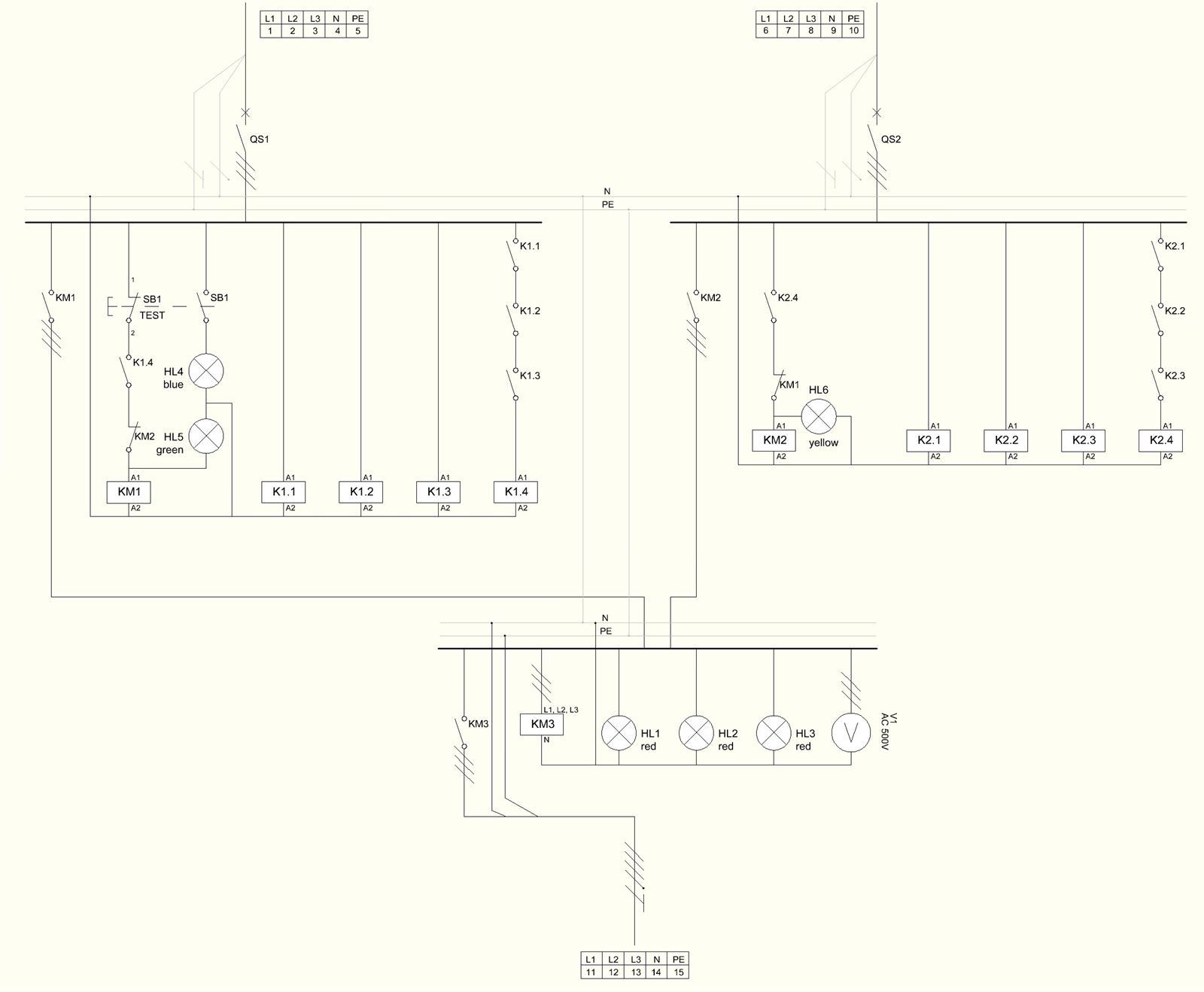
Automatic transfer switches monitor the normal source, signal the generator to start on an outage, transfer loads once the alternate source is ready, and retransfer when utility power is restored. Larger buildings often need separate switches for emergency, legally required, and optional standby loads, which drives the number of switches, room space, and feeder routing.
Cols
Terminology
- Open transition: break-before-make transfer with a brief interruption
- Closed transition: make-before-break transfer paralleling sources briefly
- Delayed transition: pause in the neutral position for motor loads
- Bypass-isolation ATS: allows maintenance without interrupting loads
- Service-entrance rated ATS: includes the service disconnect
- Manual transfer switch / interlock kit: manual options for small systems
- Withstand and closing rating (WCR): fault current rating
- Load shed / load management: limits generator loading
Standards
Ratings
- Emergency loads transferred within 10 seconds; standby loads within 60 seconds unless otherwise stated
- Rated amperes, poles, voltage, and withstand rating matched to the system
Test standards
- UL 1008: transfer switch equipment
- NFPA 110: transfer and testing for emergency power supply systems
- NFPA 70 (NEC): transfer equipment for emergency, legally required, and optional standby systems; the 2026 edition adds power control system provisions for optional standby in dwellings
Components
- Switching mechanism: contactor or breaker-based
- Controller: voltage and frequency sensing, timers, and exercise scheduling
- Bypass-isolation section: for critical loads
- Enclosure: indoor or outdoor rated
Detailing
- Locate ATSs near the loads or distribution they serve, in electrical rooms
- Provide working space for front and rear access as required
- Separate emergency system wiring from other wiring
- Coordinate generator start signals and load-shed controls
Uses
Specific uses
- Hospitals with life safety, critical, and equipment branches
- High-rise emergency and standby systems
- Data centers and telecommunications
- Homes with whole-house standby generators
Pros and cons
Pros
- Automatic restoration of power without staff
- Bypass-isolation maintains service during maintenance
- Load management reduces generator size
Cons
- Multiple switches for code-separated branches
- Testing and maintenance required
- Open transition causes brief outages
Manufacturing and cost
Construction
- Factory-built; mounted on walls or pads, connected to normal, alternate, and load feeders, and tested with the generator
Main manufacturers and suppliers
Trade associations: NFPA and NECA.
Sources
- UpCodes: 2024 IBC Chapter 27 electrical (Department of Defense adoption), https://up.codes/viewer/department-of-defense/ibc-2024/chapter/27/electrical
- GlobalSpec: UL 67 panelboards (scope excludes UL 1008 transfer equipment), https://standards.globalspec.com/std/14545556/ul-67
- HeatSpring: the 2026 National Electrical Code is now available online for free, https://blog.heatspring.com/the-2026-national-electrical-code-is-now-available-online-for-free/
- Newfoundland and Labrador: Division 26 master specification index (26 36 23 automatic transfer switches), https://www.gov.nl.ca/ti/works/masterspec/div26
- Wikimedia Commons: Wiring diagram of 3-phase transfer switch.JPG, by Dmitry G (CC BY-SA 3.0), https://commons.wikimedia.org/wiki/File:Wiring_diagram_of_3-phase_transfer_switch.JPG