Sand
Summary
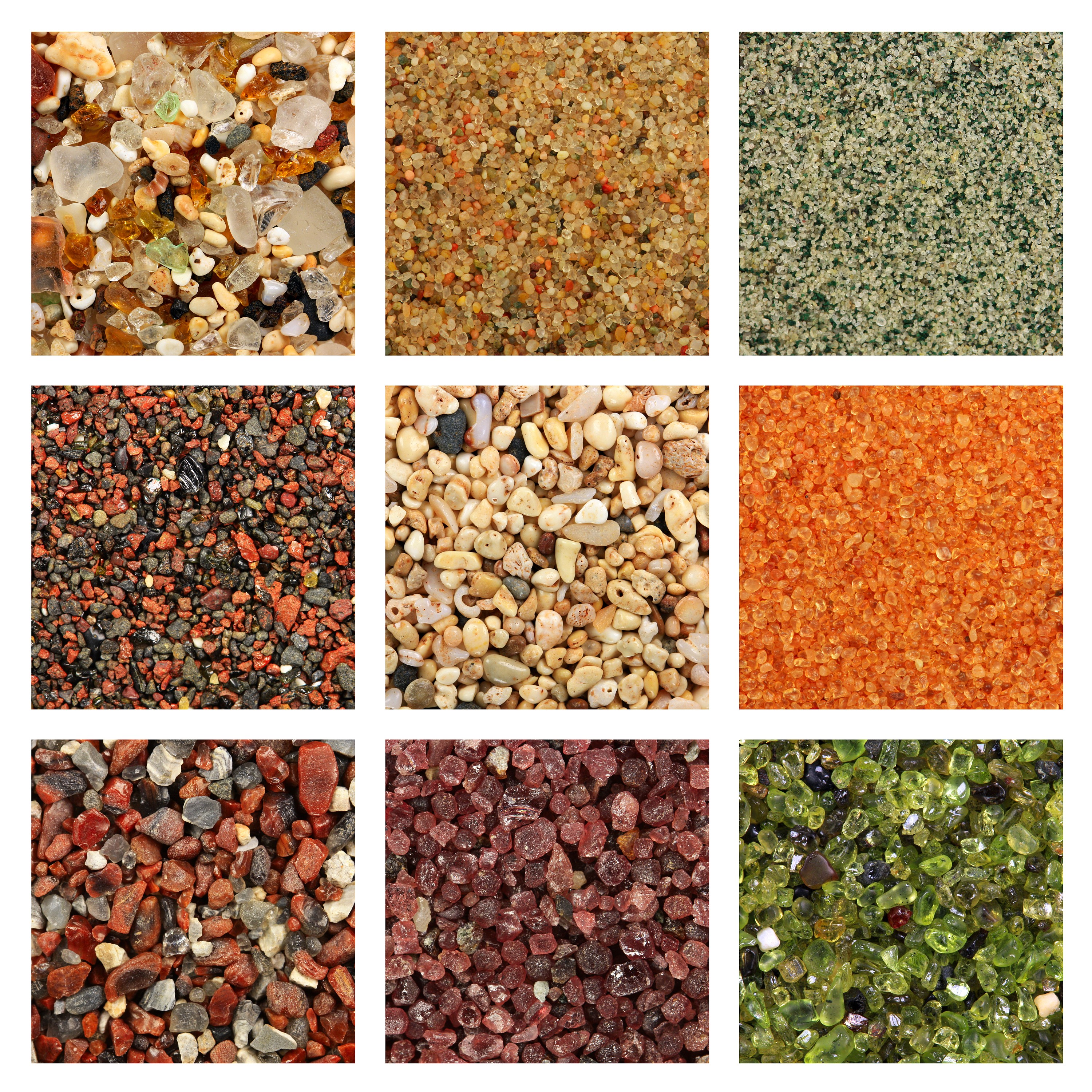
Terminology
- Fine aggregate: sand used in concrete and mortar
- Sharp sand: angular sand preferred for concrete
- USCS sand: 50 percent or more of the coarse fraction passes the No. 4 sieve; groups SW, SP, SM, SC
- Geological sand: 0.0625 to 2 mm
- Silica: SiO₂, usually as quartz
History and demand
Sourcing
- China, Indonesia, Malaysia, and Cambodia ban sand exports; UNEP recommended banning beach extraction
- River sand, the main construction source, has depleted many small rivers; dredging harms marine life and fisheries
Demand trend
- Estimates of annual use of sand and gravel vary: about 40 billion tons ($70 billion), 9.55 billion tons in 2017 ($99.5 billion), and 50 billion tons per year in 2022
- Non-renewable on human timescales
Composition and production
Raw materials
- Silica (quartz) in most inland and non-tropical coastal sand; calcium carbonate from coral and shells in the tropics; calcium sulfate (gypsum) at White Sands
- Magnetite, feldspar, garnet, and olivine affect color
Grades and types
| Class (US) | Size |
|---|---|
| Very fine | 1/16 to 1/8 mm |
| Fine | 1/8 to 1/4 mm |
| Medium | 1/4 to 1/2 mm |
| Coarse | 1/2 to 1 mm |
| Very coarse | 1 to 2 mm |
Standards
Test methods
- ASTM D2487: soil classification (Unified Soil Classification System)
Uses in buildings
Building elements
- Terrazzo: sand cushion systems
- CMU Walls, Brick Veneer Walls: mortar and grout
- Pipe Bedding: trench bedding
- Sand is also the fine aggregate in every concrete element; see Concrete
Pros and cons
Pros
- Widely available
- Silica sand is the principal component of common glass
- Angular sand bonds well in concrete
Cons
- Rounded desert sand is unsuitable for concrete
- Sand mining depletes rivers and harms marine life
- Silica dust from sandblasting is a serious inhalation hazard
Sustainability
Health
- Generally non-toxic, but crystalline silica dust from sandblasting is a serious inhalation hazard; sandblasting sand carries respirator warnings
Manufacturing and cost
Main manufacturers and suppliers
Trade association: National Stone, Sand and Gravel Association.
Sources
- Wikipedia: Sand, https://en.wikipedia.org/wiki/Sand
- Wikipedia: Unified Soil Classification System, https://en.wikipedia.org/wiki/Unified_Soil_Classification_System
- Wikimedia Commons: 00065 sand collage.jpg, photo by Siim Sepp (Sandatlas) (CC BY-SA 3.0), https://commons.wikimedia.org/wiki/File:00065_sand_collage.jpg