EPDM Roofing
Summary
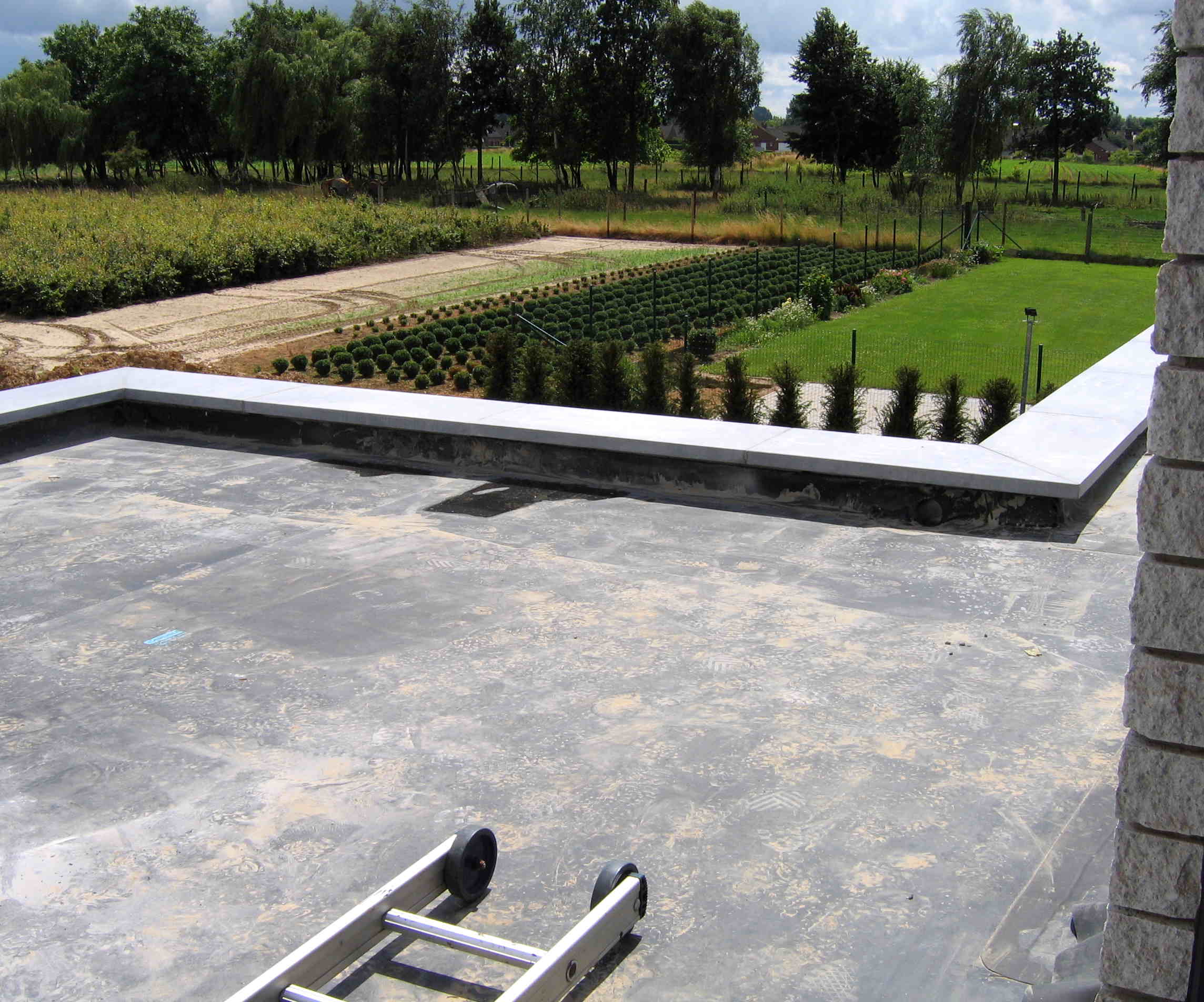
EPDM roofing is a thermoset synthetic rubber sheet, usually black, installed fully adhered, mechanically attached, or ballasted, with seams made by primer and seam tape. It is a durable, flexible, low-cost membrane with a long track record, but seams cannot be heat-welded and the black surface absorbs heat unless a white sheet is used.
Cols
Terminology
- Thermoset: cured rubber; cannot be re-melted or heat-welded
- Type I / II / III (ASTM D4637): nonreinforced, scrim- or fabric-reinforced, and fabric-backed sheets
- Seam tape: butyl-based tape with primer; replaced liquid splice adhesives as standard
- Fully adhered: bonded with bonding adhesive or low-rise foam
- Ballasted: loose-laid, held by stone or pavers
- Mechanically attached: fastened in seams or with batten strips
- Uncured flashing: moldable EPDM for corners and penetrations
- White-on-black EPDM: laminated white top for reflectivity
- Large sheets: wide, long rolls that reduce seam count
Standards
Ratings
- Wind uplift by tested assembly (FM, UL)
- Fire classification as an assembly over the specified deck and insulation
- Black EPDM is not a cool roof; white EPDM carries CRRC ratings
Test standards
- ASTM D4637: EPDM sheet roofing
- FM 4474, UL 580, UL 1897: wind uplift
- ANSI/SPRI RP-4: ballasted systems
- ANSI/SPRI ES-1: edge securement
- ASTM E108 / UL 790: fire classification
Materials
- Black EPDM: standard; best UV durability
- White EPDM: reflective top surface where cooling loads matter
- Reinforced EPDM: mechanically attached systems
- Fleece-backed EPDM: adhered over rough substrates and in recover
- Insulation and cover boards: polyiso with cover boards
- Accessories: seam tape, cover strip, pipe seals, uncured flashing, termination bar
Detailing
- Prime and tape all seams; cover-strip field seams at fastener rows
- Flash walls and curbs with EPDM and termination bars
- Protect ballasted systems from wind scour at corners and perimeters
- Separate EPDM from petroleum-based products and grease
- Slope to drains with tapered insulation
Uses
Specific uses
- Low-slope roofs in cold climates (flexible at low temperatures)
- Ballasted roofs on large commercial buildings
- Protected membrane and vegetated roof assemblies
- Small residential flat roofs and porches
- Reroofing where low cost matters
Pros and cons
Pros
- Low cost and long service history
- Flexible across wide temperature ranges; good hail resistance
- Large sheets mean fewer seams
- Easy to repair
Cons
- Seams depend on tape and adhesive, not welding
- Black surface absorbs heat
- Not resistant to oils and grease
- Shrinkage at perimeters in older installations
Manufacturing and cost
Construction
- Rubber compound calendered into sheets, vulcanized, and rolled
- Installed loose, adhered, or fastened; seams taped and flashings completed
Main manufacturers and suppliers
Trade associations: National Roofing Contractors Association and SPRI.
Typical costs
- EPDM roof, installed, with insulation: $4 to $11 per sq ft
- Ballasted EPDM recover without insulation: from about $5 per sq ft
Sources
- Carlisle SynTec: understanding ASTM standards for roofing membranes, https://www.carlislesyntec.com/en/Resources/Media/Blog-Landing-Page/SpecTopics/2021/12/16/Understanding-ASTM-Standards-for-Roofing-Membranes
- Professional Roofing: TPOs face a changing landscape (D4637 types), https://professionalroofing.net/articles/article/4063
- Arcat: 07 53 23 EPDM roofing specification, https://www.arcat.com/specification/mule-hide-products-co-inc-34347/07_53_23mhp
- Roof Observations: single-ply roof cost guide, https://roofobservations.com/single-ply-roof-cost-guide/
- Roof-Crafters: commercial roof replacement cost, https://www.roof-crafters.com/learn/commercial-roof-replacement-cost
- Wikimedia Commons: FinishedEPDMcoveredRoof.jpg, by KVDP (Public domain), https://commons.wikimedia.org/wiki/File:FinishedEPDMcoveredRoof.jpg