Recessed Troffers
Summary
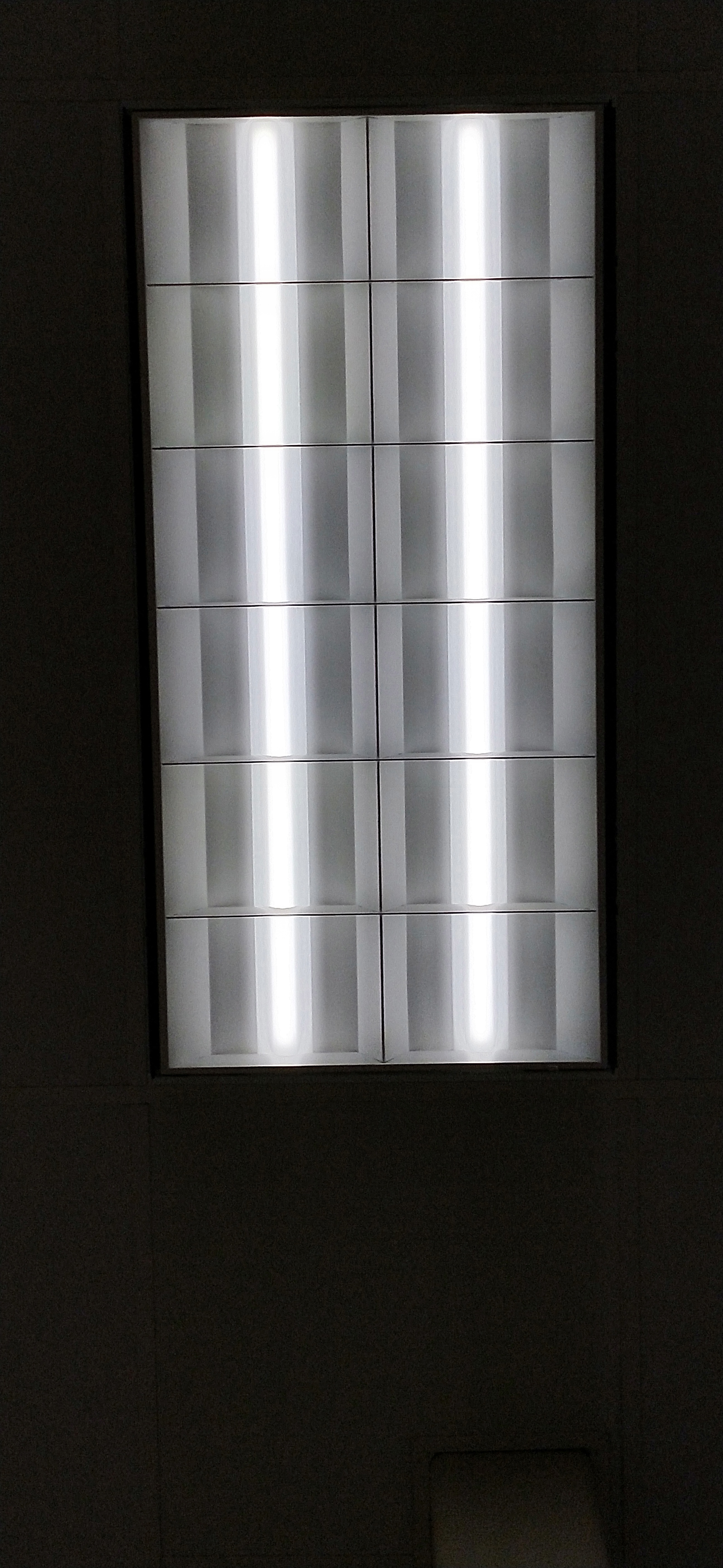
Recessed troffers are LED luminaires sized to suspended ceiling grid modules, in flat panel, center-basket, volumetric, and parabolic styles, with integral drivers and often integral sensors. They are the lowest-cost way to light grid ceilings, but optical style, glare, and lumen output should be matched to the task instead of defaulting to the brightest panel.
Cols
Terminology
- Lay-in: fixture resting in the ceiling grid
- Flat panel: edge-lit or back-lit thin luminaire
- Center basket / volumetric: curved or basket optics that light the ceiling cavity and soften glare
- Parabolic louver: older low-glare style, now less common with LED
- Retrofit kit: LED kit installed into an existing fluorescent troffer housing
- Integral sensor: occupancy or daylight sensor built into the fixture (luminaire-level lighting control)
- Plenum rating / air return: fixtures that return air through slots (older designs)
- Grid type: 15/16 in. standard tee, 9/16 in. narrow tee, or drywall frame kits
Standards
Sizes
- 2 ft by 2 ft and 2 ft by 4 ft common; 1 ft by 4 ft for narrower layouts
- Lumen packages selectable; specify by design illuminance rather than maximum output
Ratings
- Efficacy: DLC-listed products for utility rebates
- Glare: UGR and luminance values for offices and classrooms
- Color: 3500K and 4000K common in commercial interiors
Test standards
- UL 1598 and UL 8750
- IES LM-79, LM-80, TM-21
- DLC SSL and NLC requirements for listed products and integral controls
Components
- Housing: steel or aluminum sized to grid
- LED boards and driver: 0-10V or DALI dimming common
- Optics: diffusers, center baskets, prismatic lenses
- Integral controls: sensors and wireless nodes for networked lighting control
- Emergency driver: optional battery driver
Detailing
- Coordinate grid layout with sprinklers, diffusers, and speakers
- Use seismic clips and independent support wires where required
- Choose low-glare optics for screen-based work
- Specify integral sensors where luminaire-level control is planned
- Provide drywall frame kits for hard ceilings
Uses
Specific uses
- Offices and conference rooms
- Classrooms
- Healthcare exam rooms and support spaces
- Retail back-of-house
- Fluorescent replacement retrofits
Pros and cons
Pros
- Low cost and simple installation in grid ceilings
- High efficacy and easy rebates
- Easy to relocate with ceiling changes
- Integral controls available
Cons
- Generic appearance
- Glare from bright flat panels if overspecified
- Tied to the ceiling grid module
- Can overlight spaces without dimming
Manufacturing and cost
Construction
- Housings formed from sheet steel; optics and LED boards assembled; drivers integral
- Laid into grid, secured with clips, and wired with flexible whips
Main manufacturers and suppliers
Trade association: DesignLights Consortium.
Typical costs
- LED troffer, material: $80 to $250 each
- Office lighting retrofit: about $3 to $5 per sq ft of floor area
Sources
- PacLights: commercial building lighting fixtures guide (troffer pricing), https://www.paclights.com/learning-center/commercial-building-lighting-fixtures-guide/
- CSE Magazine: specifying LED luminaires, https://www.csemag.com/specifying-led-luminaires/
- DesignLights Consortium: technical requirements, https://designlights.org/
- DOE: LED standards overview, https://www1.eere.energy.gov/buildings/publications/pdfs/ssl/richman_standards_lightfair2014.pdf
- Wikimedia Commons: LEDTroffer.jpg, by AG20044018 (CC BY-SA 4.0), https://commons.wikimedia.org/wiki/File:LEDTroffer.jpg