Cast Stone
Summary
Cast stone is a refined architectural precast concrete of cement, fine and coarse aggregate, and pigment, cast to imitate natural stone. It gives cut-stone profiles at lower cost and more uniform color than quarried stone, using dry-tamp or wet-cast methods.
Cols
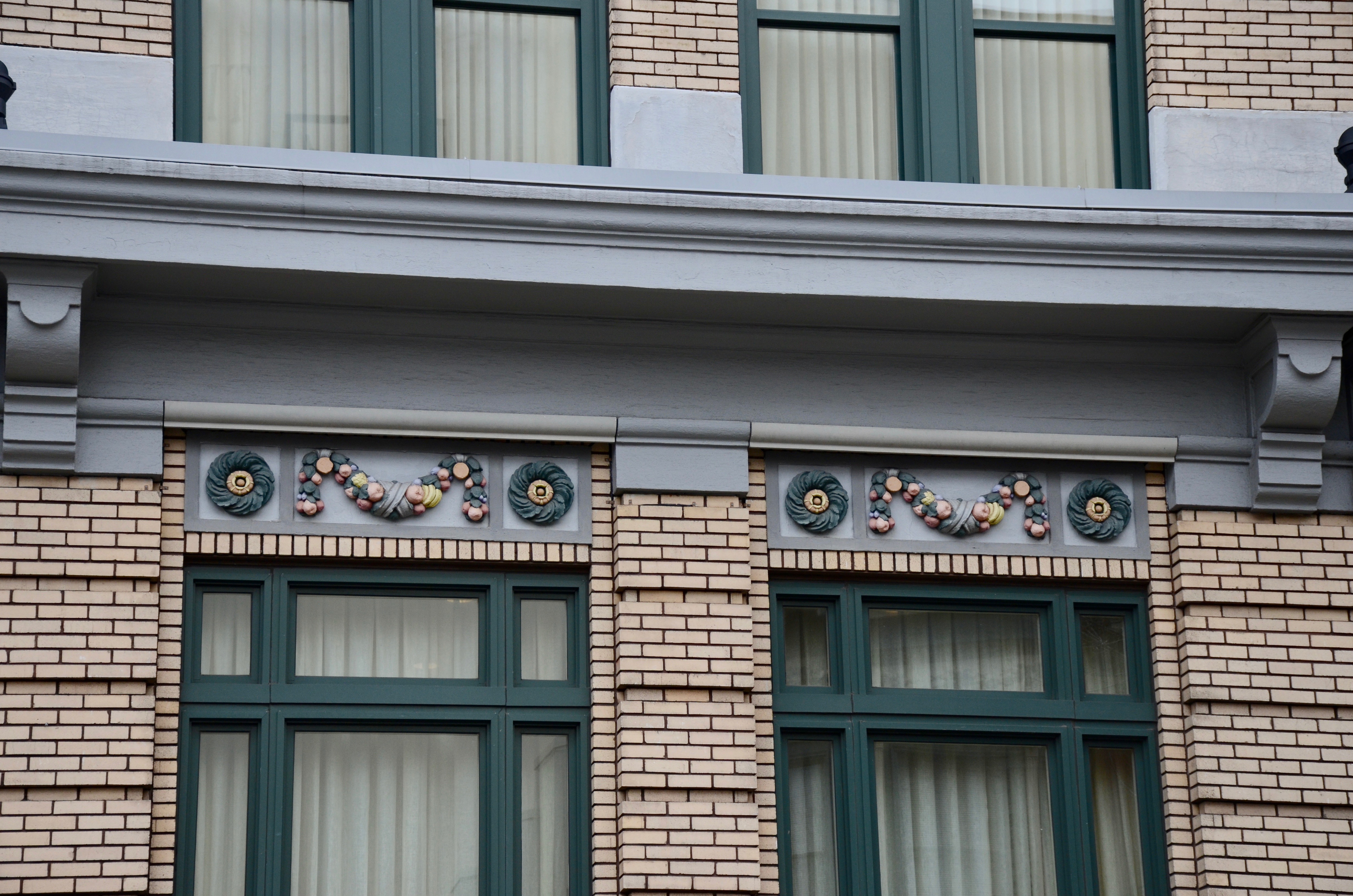
Terminology
- Dry tamp: zero-slump concrete compacted by vibration, for smaller pieces
- Wet cast: wetter concrete cast in the mold for 24 hours, for larger elements
- Victoria stone: three parts finely crushed Mount Sorrel granite to one part portland cement
History and demand
Invention
- 1800: Van Spangen artificial stone manufactory at Bow, London (broken up 1828)
First uses in construction
- About 1138: earliest known use, Cite de Carcassonne, France
- Late 19th century: extensive use in London; 1920s: widespread acceptance in America
Composition and production
Raw materials
- White or grey cement, manufactured or natural sand, crushed stone or gravel, and mineral pigments
Manufacturing process
- Dry tamp for small pieces; wet cast for large elements
- Molds of sand, wood, plaster, gelatin, rubber-lined fiberglass, or iron
Standards
Material specifications
- ASTM C1364: architectural cast stone
- BS 1217: cast stone (UK)
Uses in buildings
Building elements
- Wall Cladding: architectural facings and trim
- Replaces limestone, brownstone, sandstone, bluestone, granite, slate, and travertine
Pros and cons
Pros
- Cheaper and more uniform than natural stone
- Casting near the place of use avoids transporting and carving large stone
Manufacturing and cost
Main manufacturers and suppliers
Trade association: Cast Stone Institute.
Sources
- Wikipedia: Cast stone, https://en.wikipedia.org/wiki/Cast_stone
- Wikimedia Commons: Mallory Hotel - ground-floor window decoration on east façade.jpg, photo by Steve Morgan (CC BY-SA 4.0), https://commons.wikimedia.org/wiki/File:Mallory_Hotel_-_ground-floor_window_decoration_on_east_façade.jpg