LVL and PSL
Summary
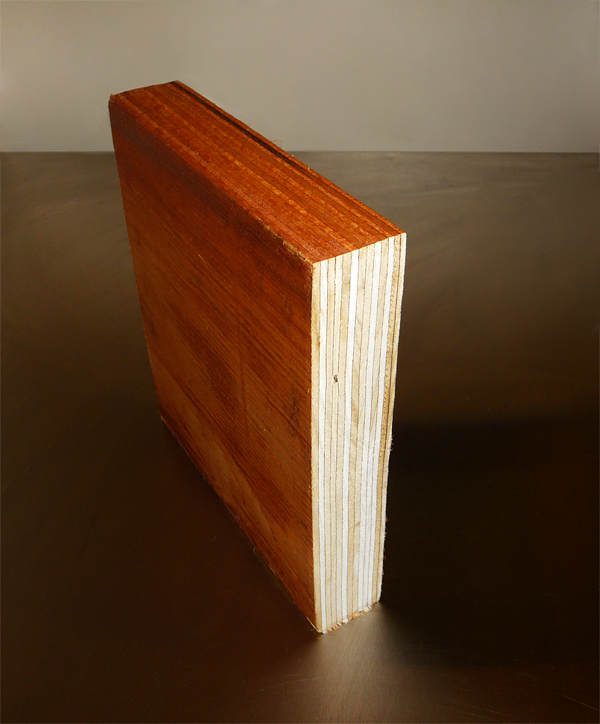
LVL is made of thin wood veneers bonded with grain parallel into billets, and PSL is made of long veneer strands pressed into large sections; both are structural composite lumber with uniform, high design values. They replace sawn lumber where strength, straightness, or long spans matter, but member sizes, ply connections, and moisture exposure follow manufacturer evaluation reports.
Cols
Terminology
- SCL: structural composite lumber; family including LVL, PSL, LSL, and OSL
- LVL: laminated veneer lumber; veneers bonded parallel to the length
- PSL: parallel strand lumber; long strands aligned and pressed; large solid sections
- LSL: laminated strand lumber; shorter strands; studs, rim board, headers
- Ply: single LVL member, commonly 1-3/4 in. thick; combined into multi-ply beams
- E rating: modulus of elasticity grade, for example 2.0E
- Rim board: perimeter member in floor framing, often LSL or OSB
- ESR: ICC-ES evaluation report listing design values and use
Standards
Sizes
- LVL: 1-3/4 in. plies; depths from about 2-1/2 in. up to 48 in. for some products; lengths to about 80 ft
- PSL: wide beams and columns in solid sections; sizes per manufacturer
- Multi-ply LVL beams fastened per manufacturer nailing or bolting schedules
Test standards
- ASTM D5456: structural composite lumber evaluation
- ICC-ES evaluation reports for each manufacturer's products
- AWC NDS: design
Materials
- LVL: headers, beams, flanges of I-joists, and tall studs
- PSL: heavy beams and columns; can be preservative treated by some manufacturers
- LSL: studs, rim board, and headers
- Fasteners: nails, screws, or bolts per ply connection details
Detailing
- Fasten multi-ply members per the manufacturer to share load
- Provide bearing length and lateral support per tables
- Keep untreated SCL dry; use treated products for exposed conditions
- Do not cut, notch, or drill outside manufacturer limits
Uses
Specific uses
- Window and door headers
- Flush beams and girders in floors
- Ridge beams and long rafters
- Columns and posts (PSL)
- Tall wall studs and rim boards
Pros and cons
Pros
- High, consistent strength; straight and stable
- Long lengths without splices
- Smaller sections than sawn lumber
- Widely stocked by lumber dealers
Cons
- Sensitive to moisture unless treated
- Appearance not intended for exposure in most products
- Higher cost per board foot than sawn lumber
- Design values are proprietary to each manufacturer
Manufacturing and cost
Construction
- Logs peeled into veneer or stranded; dried, glued, and pressed into billets; ripped to sizes
- Installed like sawn lumber with hangers and fasteners
Main manufacturers and suppliers
- Weyerhaeuser (Microllam LVL, Parallam PSL, TimberStrand LSL)
- Boise Cascade
- LP Building Solutions
- RedBuilt
- Roseburg
Trade association: APA, The Engineered Wood Association.
Sources
- ICC-ES: ESR-1387 Weyerhaeuser structural composite lumber, https://www.icc-es.org/wp-content/uploads/report-directory/ESR-1387.pdf
- Canadian Wood Council: structural composite lumber, https://cwc.ca/articles/structural-composite/
- Forest Source: structural composite lumber working guide, https://forestsource.io/topics/structural-composite-lumber
- UpCodes: 2024 IBC Chapter 23 wood (2303.1.10), https://up.codes/viewer/department-of-defense/ibc-2024/chapter/23/wood
- Wikimedia Commons: Laminated Veneer Lumber.png, by KLski (CC BY-SA 3.0), https://commons.wikimedia.org/wiki/File:Laminated_Veneer_Lumber.png