Vermiculite
Summary
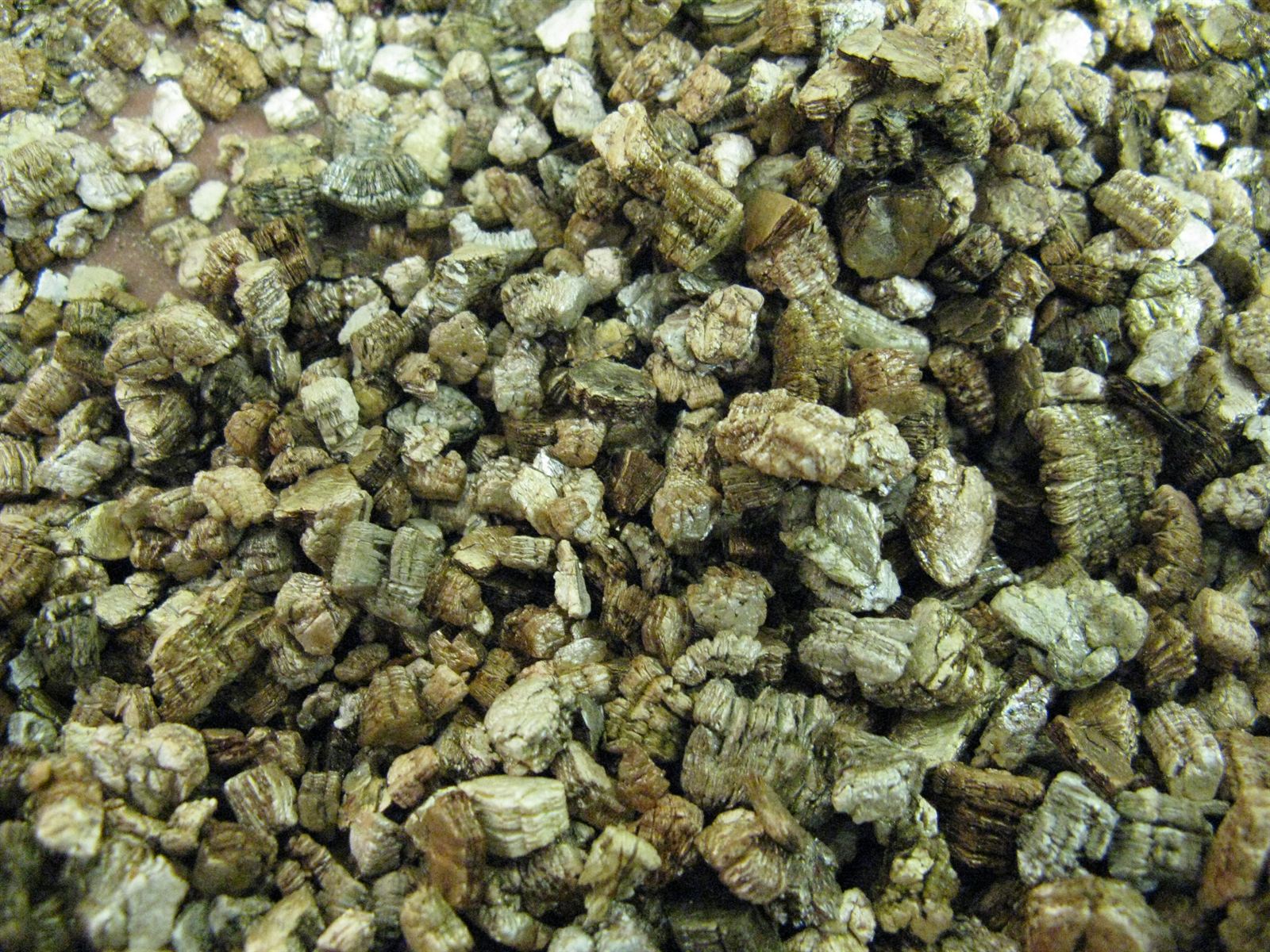
Vermiculite is a hydrated, mica-like silicate that exfoliates into light, accordion-shaped particles when heated. It was a standard loose-fill insulation and fireproofing aggregate, but older vermiculite may contain asbestos from the Libby, Montana mine.
Terminology
- Exfoliated vermiculite: expanded by heat
- Libby vermiculite: from the Libby, Montana mine, contaminated with asbestos
- Cation-exchange capacity: 100 to 150 meq/100 g
History and demand
Sourcing
- 2014: South Africa, Brazil, the US, and China held about 90 percent of mined output
- 1920s: the Libby mine in Montana began; W. R. Grace acquired it in 1963; operations stopped in 1990; it may have supplied about 80 percent of world vermiculite
Composition and production
Raw materials
- Formed by weathering or hydrothermal alteration of biotite or phlogopite
Properties
Physical
- Mohs hardness: 1.5 to 2
- Specific gravity: 2.4 to 2.7 unexfoliated; 0.065 to 0.130 exfoliated (about 4 to 8 lb/ft3)
- Molded shapes: heat cured at up to 180°C for up to 24 hours; service temperatures up to 1,150°C
Uses in buildings
Building elements
- Wall and Roof Insulation: loose-fill insulation for masonry and block
- Fire-Rated Assemblies: aggregate for spray fireproofing and wallboard additive
Pros and cons
Pros
- Very light when exfoliated
- Service temperatures up to 1,150°C in molded shapes
Cons
- Older stock may contain asbestos
- Libby mine contamination led to over 400 deaths and a US EPA public health emergency in 2009
Sustainability
Health
- Government estimates put vermiculite insulation in more than 35 million US homes
- EPA spent $120 million in Superfund money at Libby; W. R. Grace paid $54.5 million in fines
Sources
- Wikipedia: Vermiculite, https://en.wikipedia.org/wiki/Vermiculite
- Wikimedia Commons: Vermiculite1.jpg, photo by KENPEI (CC BY-SA 3.0), https://commons.wikimedia.org/wiki/File:Vermiculite1.jpg