Chillers
Summary
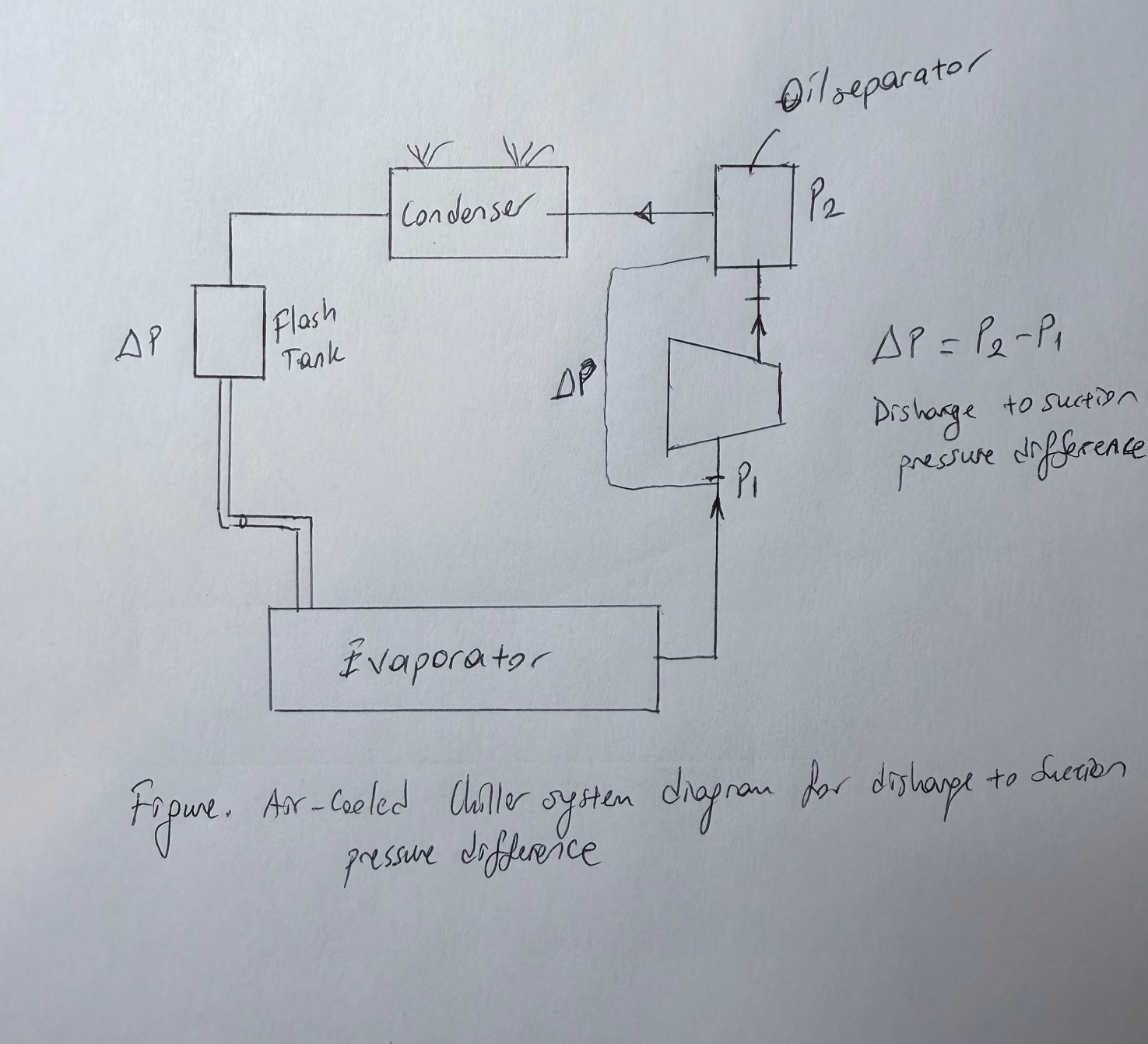
Chillers remove heat from water circulated to air handler and fan coil coils, rejecting it outdoors through air-cooled condenser coils or through condenser water and cooling towers in water-cooled plants. They anchor central cooling plants, so plant type, location, noise, structural loads, cooling tower space, and efficiency at part load must be settled early.
Cols
Terminology
- Air-cooled chiller: outdoor unit rejecting heat to air with condenser fans
- Water-cooled chiller: indoor unit rejecting heat to condenser water and cooling towers
- Compressor types: scroll (small), screw (medium), centrifugal (large), magnetic-bearing oil-free centrifugal
- kW/ton: water-cooled efficiency; lower is better
- EER: air-cooled efficiency; higher is better
- IPLV / NPLV: integrated part-load value at standard or project conditions
- Heat recovery chiller / heat pump chiller: machine that produces hot water from rejected heat
- Primary / variable primary flow: chilled water pumping arrangements
- Cooling tower: evaporative heat rejection for water-cooled plants
Standards
Ratings
- Water-cooled chillers rated in kW/ton and air-cooled chillers in EER at AHRI 550/590 conditions; IPLV reported for part load
- Example incentive thresholds (2026): water-cooled centrifugal 150 to 300 tons at 0.580 kW/ton full load and 0.380 kW/ton IPLV; air-cooled under 150 tons at 16.59 EER IPLV
- Minimum efficiencies set by the energy code
Test standards
- AHRI 550/590: chiller performance ratings
- ASHRAE 15 and 34: refrigerant safety and classification, including machinery rooms
- ASHRAE 90.1 / IECC: minimum efficiency
Components
- Compressors and evaporator: chilled water heat exchange
- Condenser: air-cooled coils or water-cooled shell-and-tube
- Controls: chiller and plant controls
- Pumps, cooling towers, and piping: plant equipment
- Refrigerant monitoring and ventilation: machinery room safety
Detailing
- Provide machinery rooms with refrigerant detection, ventilation, and alarms as required
- Plan air-cooled chiller locations for airflow clearances, noise, and structural support
- Allow tube-pull space for water-cooled chillers
- Locate cooling towers away from intakes and provide water treatment
- Consider heat recovery chillers where simultaneous heating and cooling exists
Uses
Specific uses
- Office towers and campuses
- Hospitals and laboratories
- Data centers
- Universities with district plants
- Large retail and mixed-use projects
Pros and cons
Pros
- Efficient cooling for large loads
- Central plant serves many buildings or zones
- Heat recovery chillers support electrification
- Long equipment life
Cons
- Large plant rooms, towers, and piping
- Water and chemical use for water-cooled plants
- High first cost and specialized maintenance
- Refrigerant safety and machinery room requirements
Manufacturing and cost
Construction
- Chillers set by crane or rigged into plant rooms; piped, wired, and started up by factory technicians
Main manufacturers and suppliers
Trade associations: AHRI and ASHRAE.
Sources
- New Hampshire Saves: 2026 chiller incentives (efficiency thresholds), https://nhsaves.com/wp-content/uploads/2026/01/2026_ChillerIncentives_NewEquipment_1.20.26.pdf
- Aircondlounge: chiller efficiency kW/ton, COP, EER, IPLV, https://aircondlounge.com/chiller-efficiency-calculation-kw-ton-cop-eer-iplv-nplv/
- CSE Magazine: calculating chiller selection, https://www.csemag.com/?p=12586
- Sweets: Division 23 HVAC (23 64 00), https://sweets.construction.com/BrowseByDivision/Heating, Ventilating, and Air-Conditioning (HVAC)
- Wikimedia Commons: Air-Cooled Chiller System Diagram.jpg, by Ridvan Ozbay (CC0), https://commons.wikimedia.org/wiki/File:Air-Cooled_Chiller_System_Diagram.jpg