Zinc
Summary
Zinc is a low-melting metal used in buildings as rolled titanium-zinc sheet (EN 988, ASTM B69) and as the hot-dip galvanizing coating on steel. It forms a self-healing patina, so it suits roofing and wall cladding where long service life and low maintenance are priorities.
Cols
Terminology
- Titanium zinc: architectural zinc alloyed with 0.06 to 0.2 percent titanium plus copper, per EN 988
- EN 988: European standard for rolled zinc for building
- ASTM B69: rolled zinc, coils and sheets cut from strip, and plate
- Patina: protective surface layer that forms from carbon dioxide in the air and rainwater
- Pre-patinated zinc: sheet supplied with the patina already formed (blue-grey)
- Hot-dip galvanizing: zinc coating applied to steel by immersion
History and demand
Invention
- Third millennium BC: brass (copper-zinc alloy) in use in the Aegean and Middle East; Romans made brass by about 30 BC
- Ninth century AD: oldest man-made pure zinc, from Zawar, India; metallic zinc isolated in India by 1300 AD
- 1746: Andreas Marggraf credited with isolating pure zinc in Europe (Anton von Swab distilled it four years earlier); commercially practical by 1752
First uses in construction
- 1805: Jean-Jacques Dony received an imperial decree to develop zinc production at the Vieille-Montagne mine; the first rolled zinc roof, in Liège, is a VMZINC claim; first Paris use is dated 1815 by one source
- 1837: Stanislas Sorel filed a patent (May 10) for a galvanic method of protecting iron from rust, the precursor of hot-dip galvanizing
- Galvanizing was 55 percent of United States zinc use in 2009
Sourcing
- 2025 world mine production was about 13.0 million tonnes; China about 4.1 million, Peru 1.5, Australia 1.1, India 0.87, Mexico 0.78 (USGS 2026 estimates)
Demand trend
- Slowly rising: about 13 million tonnes produced per year, over 30 percent from recycling; ILZSG (October 2026) expects 2027 refined zinc production up 2 percent to 14.21 million tons, and its October 2025 forecast had 2026 refined demand up 1 percent to 13.86 million metric tons
Composition and production
Product forms
- Rolled sheet and coil: standing seam roofing and wall cladding
- Standing seam trays: 0.65, 0.7, or 0.8 mm (0.026, 0.028, or 0.031 in.) sheet, rolled to EN 988 and ASTM B69 in the product reviewed
- Coating on steel: hot-dip galvanizing, the major application for zinc
Properties
Physical
- Density: 7.140 g/cm³ at 68°F, about 446 lb/ft³
- Sheet weight: about 7.18 kg/m² (1.47 lb/ft²) at 1.0 mm (0.039 in.) thickness
Mechanical
- Modulus of elasticity: 108 GPa (about 15,700 ksi)
Thermal and moisture
- Thermal conductivity: about 804 Btu·in./(h·ft²·°F) (116 W/(m·K))
- Coefficient of thermal expansion: 16.7 × 10⁻⁶ in./in./°F (30.08 × 10⁻⁶/K at 68°F)
Fire behavior
- Melting point: 787°F (420°C)
Durability
- Patina: forms in carbon dioxide-bearing air; full development takes from 6 months to 5 years or more depending on climate
- Self-healing: scratched or mechanically damaged areas re-form the patina through exposure to rain and carbon dioxide
- Service life: 50 years under the right conditions (IZA Africa Desk); roofs 80 to 100 years and walls up to 150 years (Construction Canada)
Standards
Material specifications
- EN 988: zinc and zinc alloys, specification for rolled flat products for building
- ASTM B69: rolled zinc
Uses in buildings
Building elements
- Standing Seam Metal Roofing, Metal Wall Panels: zinc roofing and cladding that forms a self-healing patina
- Roof Drainage Systems, Ductwork and Air Distribution, Wood Trusses: galvanized steel gutters, ducts, and connector plates
- Terrazzo: divider strips
Pros and cons
Pros
- Self-healing patina
- Over 30 percent of zinc supply comes from recycled secondary zinc
Cons
- Higher thermal expansion (16.7 × 10⁻⁶ in./in./°F) than copper (9.2 × 10⁻⁶)
- Patina development ranges from 6 months to 5 years or more by climate
- Low melting point of 787°F
Design considerations
Movement
- Expansion about 0.20 in. per 10 ft for a 100°F temperature swing (calculated from 16.7 × 10⁻⁶ in./in./°F)
Finishes and treatments
- Natural patina: forms on exposure to carbon dioxide-bearing air over 6 months to 5 years or more
- Pre-patinated blue-grey: supplied pre-weathered for immediate appearance
- Hot-dip galvanizing: zinc coating on steel
Sustainability
Recycled content and end of life
- Over 30 percent of current zinc supply is recycled secondary zinc; the share is predicted to exceed 50 percent by 2050
- Electric arc furnace dust (15 to 35 percent zinc) is processed mostly by the Waelz process
Manufacturing and cost
Main manufacturers and suppliers
Trade associations: International Zinc Association; American Galvanizers Association.
Sources
- Wikipedia: Zinc, https://en.wikipedia.org/wiki/Zinc
- VMZINC: history, https://www.vmzinc.com/en-gb/about-vmzinc/our-history
- Wikipedia: Stanislas Sorel, https://en.wikipedia.org/wiki/Stanislas_Sorel
- Mining Weekly: ILZSG sees zinc and lead markets in surplus in 2027, https://www.miningweekly.com/article/ilzsg-sees-global-zinc-lead-markets-in-surplus-in-2027-2026-10-19
- London Borough of Camden: titanium zinc specification, https://camdocs.camden.gov.uk/CMWebDrawer/Record/10497295/file/document
- ASTM International: B69 rolled zinc, https://store.astm.org/b0069-21.html
- Construction Canada: Thinking zinc, https://www.constructioncanada.net/thinking-zinc-examining-the-cladding-options/
- Engineering News: the role of zinc in building and construction, https://www.engineeringnews.co.za/article/the-role-of-zinc-in-building-and-construction-2021-10-20
- elZinc: standing seam roofing, https://www.bimobject.com/en/elzinc/product/standing_seam
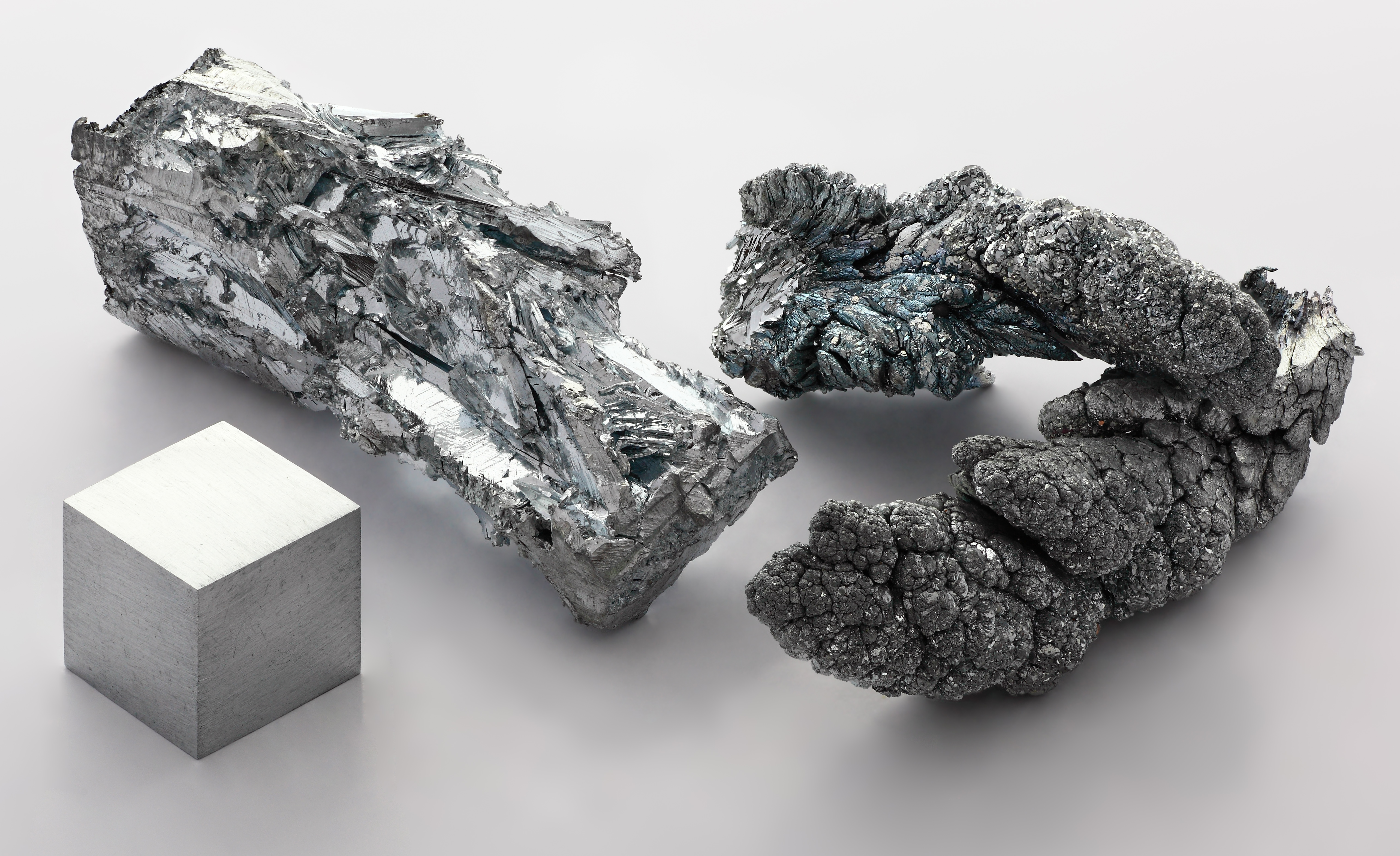
- Wikimedia Commons: Zinc fragment sublimed and 1cm3 cube.jpg, photo by Alchemist-hp (FAL), https://commons.wikimedia.org/wiki/File:Zinc_fragment_sublimed_and_1cm3_cube.jpg
- USGS: Mineral Commodity Summaries 2026, zinc, https://pubs.usgs.gov/periodicals/mcs2026/mcs2026-zinc.pdf
- TrueSource Metals: zinc, https://tsm-hub.pages.dev/metals/zinc