Fire Recovery
Summary
Fire recovery is the assessment, testing, and cleanup of a building and site after a fire, with attention to toxic ash, asbestos, and smoke residue. Clearing debris does not show a site is safe, so testing and confirmation sampling come before rebuilding.
Cols
Scope
- Sequence: environmental assessment, sampling and testing, remediation, then post-remediation confirmation testing
- Re-entry: return only when local authorities authorize it
Common issues
- Ash toxicity: ash and smoke from burned buildings is more toxic than from vegetation-only fires
- Asbestos: asbestos does not burn and may be in the ash; consult the local clean air agency on testing, removal, and disposal
- Higher-risk people: pregnant people, people with respiratory or cardiovascular conditions, and people over 65 should not take part in cleanup
- Soil: one county debris program removed 3 to 6 in. of soil after visually clean debris removal, followed by confirmation sampling; check current state rules
- Insurance: testing and remediation of non-structural contamination is not consistently covered
Coordination
- Federal guidance: EPA publishes guidance on debris and damaged buildings; FEMA publishes a homeowner's guide to remediation of smoke damage; CDC publishes post-wildfire safety guidance
Sources
- Washington State Department of Health: wildfire cleanup, https://doh.wa.gov/tr/node/53089
- Purdue University: after a fire, residential property soil testing and restoration, https://www.preventionweb.net/publication/documents-and-publications/after-fire-considerations-residential-property-soil-testing
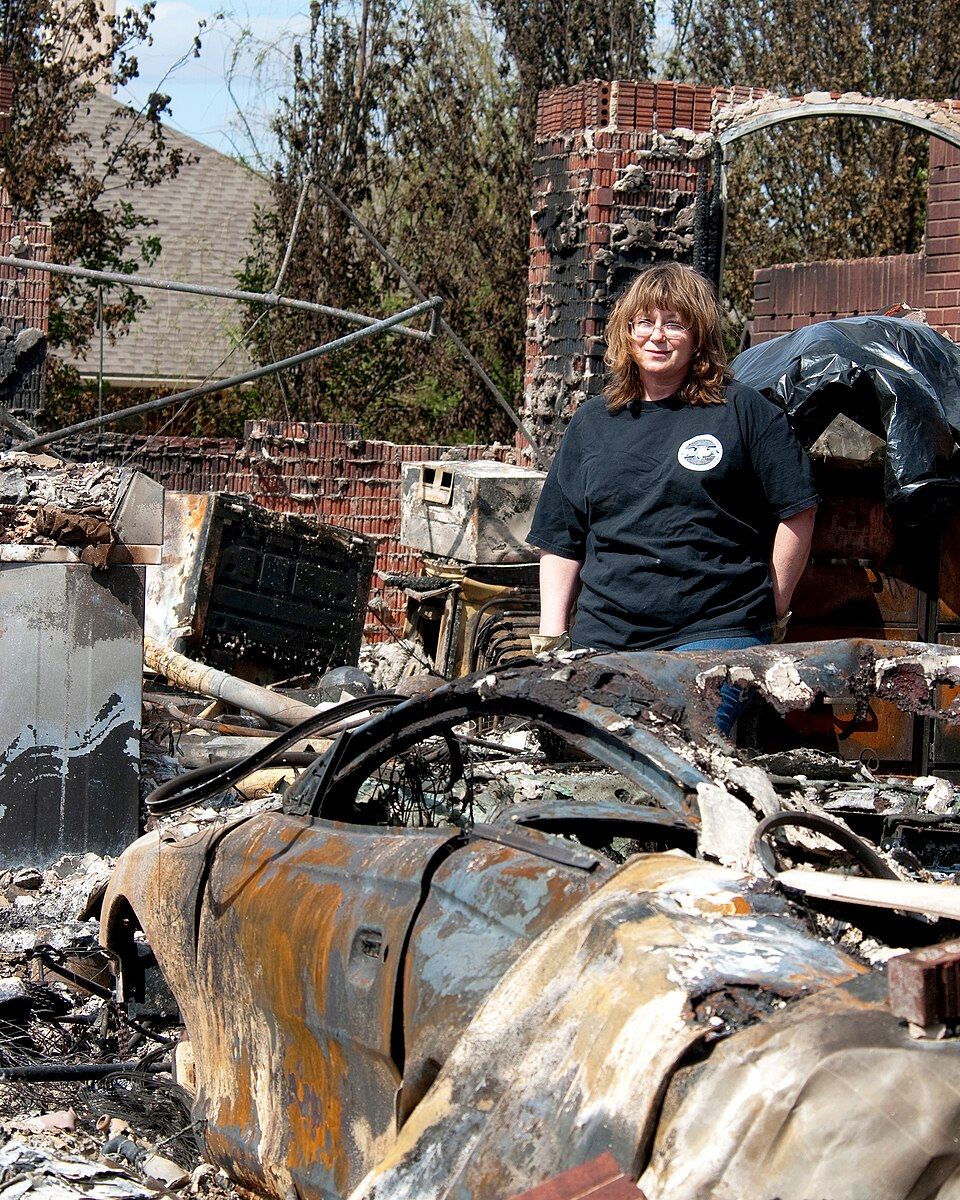
- Wikimedia Commons: FEMA - 40676 - Oklahoma Wildfire damage.jpg, by Karen Nutini (Public domain), https://commons.wikimedia.org/wiki/File:FEMA_-_40676_-_Oklahoma_Wildfire_damage.jpg